A buyer-focused guide to distinguishing Fendi Château’s advertised arrival services from the event-week access, parking, and guest procedures that require current written confirmation.
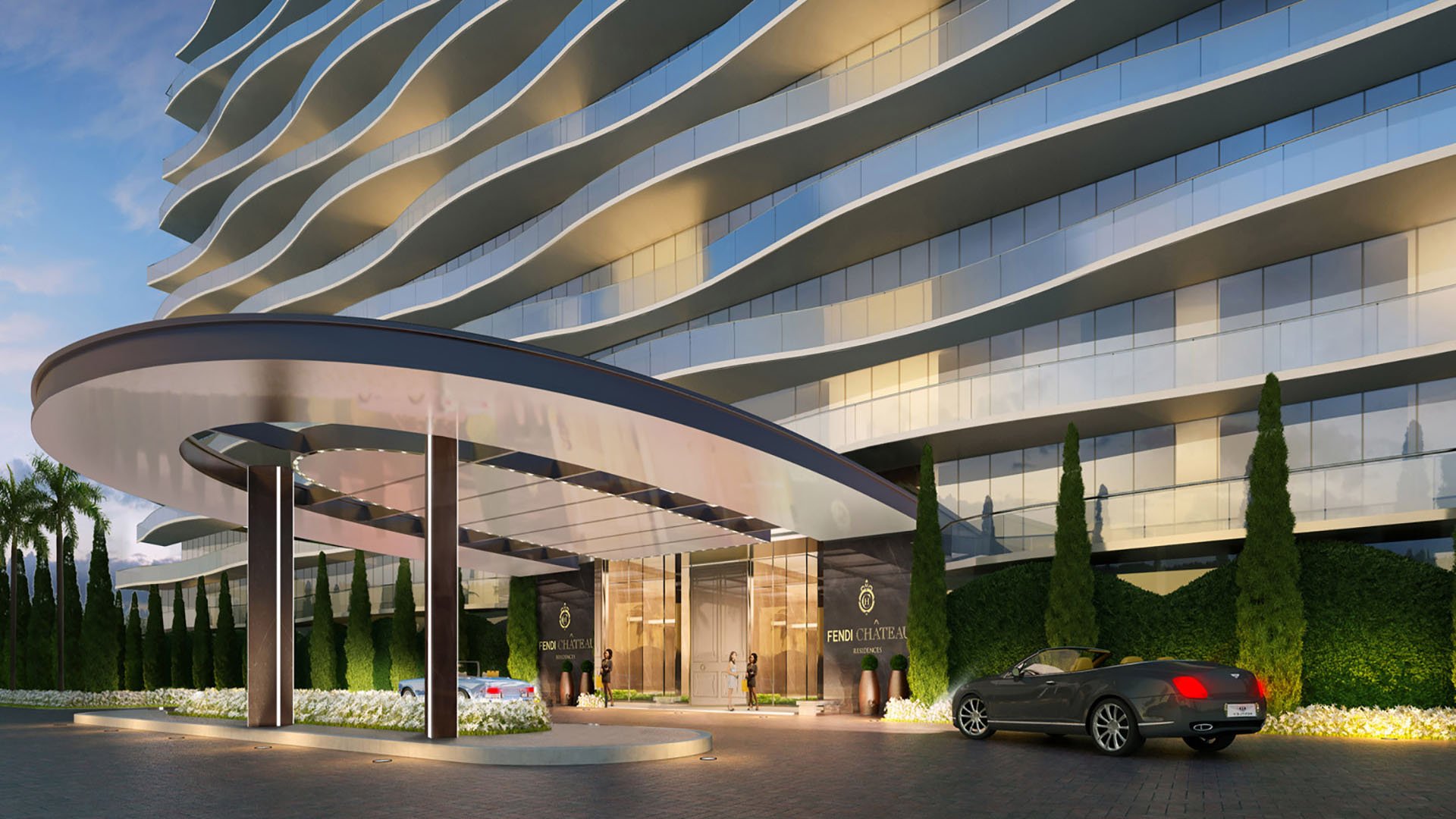
For a residence intended to make South Florida feel effortless, the arrival sequence deserves as much attention as the interiors. At Fendi Château Residences Surfside, the question is not simply whether someone receives the car. It is whether residents and their guests can move from arrival to apartment with predictable, discreet coordination during the weeks that matter to them.
The property is located at 9349 Collins Avenue, Surfside, FL 33154. Advertised features include a gated entrance, 24-hour security, doorman service, and valet service. These describe a service-oriented entrance, not a documented event-week operating plan. Guest preclearance, queue capacity, and valet turnaround times remain open diligence items until confirmed.
The distinction matters: an advertised service is not a guaranteed arrival outcome. Buyers should neither assume frictionless peak-period access nor infer a problem because operating details require a separate conversation.
The advertised services extend beyond the entrance. Concierge service is described as available around the clock, and white-glove service is associated with FENDI Attaché. Those descriptions convey an intended standard of hospitality, but they do not establish which team authorizes visitors or resolves an arrival exception.
Valet service is advertised, with a separate description noting 24-hour availability. Treat that schedule as a marketing representation to confirm with current management, not a promise governing every visit. Covered, garage, and valet parking are also listed, without specifying who may use each option.
For a purchase, request the current association rules and parking documentation applicable to the specific residence. For a lease, seek the same operational clarification alongside the lease terms. Confirm which provisions apply to owners, tenants, visiting family, and other guests. A building-level amenity description cannot settle a particular household’s parking rights.
Start with the actual dates and the household’s anticipated movements. A useful management inquiry outlines an arrival, a departure, and any hosted gathering, then asks whether temporary procedures would affect those plans. Do not assume an event-week protocol exists or that ordinary procedures necessarily change.
Request confirmation of any temporary entrance instructions, vehicle staging arrangements, or visitor authorization requirements. Ask who communicates changes and who can resolve a discrepancy at arrival. The objective is a workable chain of responsibility, not access to sensitive security procedures.
A gated entrance and staffed reception are not evidence of a particular identity-check process. Likewise, 24-hour security does not establish a visitor registration deadline. If special arrangements apply, obtain their effective dates and a written explanation suitable for sharing with guests.
For a household using a driver, distinguish the resident’s entry from the vehicle’s waiting or parking arrangements. Permission to drop someone off should not be assumed to include permission to remain on the property.
Valet diligence should distinguish vehicle handoff from retrieval. A smooth drop-off does not establish how long it will take to receive a car before dinner or a flight. No measured wait times or queue-capacity figures are established here, so a numerical performance claim would be inappropriate.
If practical, arrange an authorized visit during a period relevant to your intended use. Observe where the handoff occurs, how instructions are communicated, and whether arriving vehicles and requested departures interact. Treat a single visit as an observation, not proof of typical performance.
Ask management how residents request retrieval, whether advance requests are available, and what guidance applies when several cars are requested together. Clarify whether guest vehicles are eligible for valet, whether charges apply, and how overnight parking is handled. These are questions to resolve, not established building conditions.
Finally, confirm whether the residence carries assigned parking rights and whether its applicable arrangements permit self-parking. Advertising covered parking, garage parking, and valet service does not establish a valet-only requirement or unrestricted garage access.
Preclearance is useful only if the household understands what authorization means in practice. Before hosting, ask whether advance guest registration is available or required, who may submit it, and how updates are acknowledged. Do not presume a particular registration channel, cutoff time, or identity-check requirement.
Use a hypothetical arrival to clarify the process: a guest reaches the entrance before the resident returns, or a driver arrives with someone whose plans changed that afternoon. Ask what the host should do in each case and who can confirm receipt of the updated instructions.
Keep guest arrivals separate from deliveries and service appointments. A visitor arrangement does not establish rules for a caterer, courier, or household service provider. Request instructions for each category rather than extending one permission to another.
Advertised pools, cabanas, poolside service, and beachside service introduce another hosting consideration. Confirm guest eligibility for those amenities independently of entrance approval. Admission to visit a residence should not be treated as automatic authorization to use every shared facility.
For a buyer also considering Arte Surfside, the useful comparison begins with a consistent set of questions, not an assumed equivalence between buildings. Ask each management team about guest authorization, parking rights, retrieval arrangements, and temporary arrival instructions. Evaluate the answers for clarity and relevance to the household.
Avoid assigning an operational advantage based on branding or service vocabulary alone. A concierge description can express hospitality without defining access authority. A stronger diligence file connects each important use case to a current rule, a responsible contact, and any conditions attached to it.
After confirming the applicable rules, an owner who visits intermittently should prepare a concise household brief. Include the approved arrival contact, guest authorization steps, parking arrangements, and a way to check for temporary changes before travel. Limit personal guest information to what management actually requires.
The same discipline is appropriate when evaluating The Surf Club Four Seasons Surfside. This is a comparison framework, not a statement that its procedures match Fendi Château’s.
Fendi Château also advertises Shabbat elevators. If relevant to the household, confirm their current operating arrangements and how visitors are directed, without assuming a particular schedule. Ultimately, the purchase decision should rest on how well confirmed arrangements support daily life-not on translating an elegant amenity list into unwritten promises.
For a discreet discussion of residence selection and project-specific due diligence, connect with MILLION.
If branded residences are on your mind — as a home or as an allocation — we would be glad to share what we are seeing, privately.
Begin a quiet conversationThe property is identified at 9349 Collins Avenue, Surfside, FL 33154. Confirm the address and parking arrangements applicable to the specific residence during diligence.
Yes, a gated entrance, 24-hour security, and doorman service are advertised. These features do not establish specific visitor-verification procedures.
A specific event-week protocol is not established here. Confirm whether temporary instructions apply to the dates of your intended visit.
Valet service is advertised, including a description of 24-hour availability. Confirm the current schedule and applicable conditions with management.
No measured valet wait times or queue-capacity figures are established here. Evaluate vehicle handoff and retrieval separately rather than assuming a turnaround time.
No valet-only requirement is established. Covered, garage, and valet parking descriptions do not determine a resident’s self-parking rights or guest eligibility.
A guest-registration requirement or deadline is not established here. Ask management whether advance authorization is available or required and how changes are handled.
Guest-valet eligibility and overnight parking conditions require confirmation. Do not infer either entitlement from the general availability of valet service.
Entrance approval should not be assumed to authorize all shared amenities. Confirm guest eligibility separately for the advertised pools, cabanas, and poolside and beachside services.
Yes, Shabbat elevators are included among the advertised amenities. Confirm current operating arrangements if they are relevant to the household.