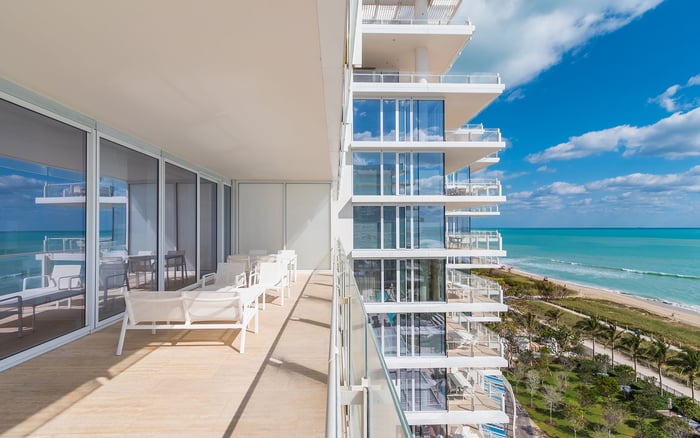
A buyer-focused audit of the documents and operating procedures needed to distinguish hotel amenities from residential parking rights, valet responsibility, and dependable EV access at The Surf Club.

For a buyer considering The Surf Club Four Seasons Surfside, an effortless arrival should be more than an appealing impression. It should rest on residence-specific rights and clear operating procedures. The ownership question is not simply whether someone will take the keys, but what the purchaser can rely on when the property is at its busiest.
Four Seasons Hotel at The Surf Club, at 9011 Collins Avenue, Surfside, Florida 33154, offers valet parking and electric-vehicle charging for hotel guests. Those amenities do not establish deeded residential parking, permanent owner access, or priority at a charger.
That distinction anchors an ownership-readiness audit. Residential parking rights, valet liability allocation, and peak-period charging access remain unresolved here. These are questions to settle before purchase, not evidence of a service deficiency.
Begin with the condominium declaration and amendments, condominium plat, parking schedule, and residence-specific deed or assignment. Ask counsel to reconcile the documents rather than rely on a sales description or an existing owner's customary arrangement.
The written review should identify the number of spaces associated with the residence and their legal classification. Is the entitlement deeded, assigned, a limited common element, or a permission governed by operating rules? Ask whether it transfers with the residence, can be reassigned, or requires separate approval. These are possible classifications to investigate, not confirmed arrangements at The Surf Club.
Then distinguish ownership from use. Confirm whether an owner can access a particular space directly, whether valet handling is required, and what provisions apply to additional vehicles, visitors, household staff, or extended stays.
A hotel parking description cannot answer these questions. Nor should an online parking inventory be treated as a count of residential spaces. The relevant evidence is the documentation tied to the exact residence under consideration.
The relevant stress test is a hotel sellout, holiday arrival, busy restaurant period, or private event. None should be assumed to cause congestion; each is a sensible scenario for management to address in writing.
Ask how owners enter and retrieve vehicles during those periods. Establish whether residential arrivals follow a separate procedure, whether vehicles may be moved to another storage location, and who resolves competing requests. If a retrieval target is offered, clarify whether it is an operational goal or a documented commitment, and identify any exceptions.
Request the after-hours procedure and escalation contact. For a household with several drivers, confirm how authorized users are recognized and whether a visiting family member can retrieve a vehicle without the owner present.
If Arte Surfside is also on the shortlist, apply the same scenario-based questions there. Compare documented arrangements rather than assume that different properties deliver identical parking access.
Valet convenience and valet liability are separate subjects. Request the applicable operating agreement, ticket or electronic claim terms, and insurance certificate. Have counsel and the buyer's insurance adviser identify the responsible operator, relevant coverage, exclusions, and any additional documents needed to understand protection for vehicles in custody.
The practical review should follow the vehicle from arrival to return. Ask how its condition is recorded, how keys are stored, who may drive or relocate it, and how an incident is reported. Confirm claim deadlines, evidence requirements, and the contact responsible for handling a dispute. An insurance certificate alone is not a complete answer about a particular loss.
Charging adds another handoff. Establish who connects and disconnects the vehicle, who authorizes its movement after charging, and how responsibility is allocated for damage involving the vehicle, connector, or charging equipment.
No property-specific liability allocation is established here. The objective is to obtain it before a claim makes the question urgent.
Guest-use EV charging is confirmed. Charger count, connector types, charging speeds, reservation procedures, and pricing remain unspecified here, as do residential priority, dedicated owner chargers, and guaranteed availability during peak occupancy.
Start by confirming resident eligibility and charger location. Then match connector compatibility and charging speed to the household's actual vehicles. A station's presence does not, by itself, establish that it can support the owner's intended departure schedule.
Next, examine allocation: whether reservations exist, how the queue works, whether owners receive priority, and what happens once a vehicle finishes charging. Confirm who moves it, whether permission is required, and whether idle or relocation charges apply.
Ask who maintains the equipment and what procedure applies during an outage. Evaluate any proposed alternative for access, timing, and cost rather than automatically treating it as an equivalent substitute.
For buyers also considering Fendi Château Residences Surfside, use the same vehicle-specific checklist without assuming any charging provision at that property.
A hospitality identity should not substitute for a residence-specific schedule of rights and charges. Request a current written explanation of what is included in ownership costs and what is billed separately. Distinguish parking access, valet handling, visitor use, additional vehicles, and charging rather than accept one broad assurance that parking is included.
Public hotel parking prices are not confirmed owner fees. Likewise, guest reservation restrictions do not establish whether separate residential arrangements exist. Obtain the residential policy itself.
Ask who has authority to change each rule or fee and what notice owners receive. This does not presume that changes are planned. It clarifies which features are durable rights and which depend on operating policies that counsel should evaluate separately.
For a second residence, test a complete arrival and departure sequence: an authorized driver brings the car ahead of the owner, the vehicle needs charging, and retrieval is requested outside ordinary household hours. Ask management to explain each handoff, including permissions, key custody, charging authorization, and the point of contact if plans change.
Before closing, organize the answers into three categories: legally documented rights, written operating procedures, and unresolved questions. Have the appropriate adviser assess each category. A management email can explain a procedure, but counsel should determine whether a promised entitlement needs stronger documentation.
The purchase decision should reflect the household's tolerance for uncertainty. A buyer with fixed departures and an EV-dependent routine may require more explicit arrangements than someone whose vehicle is rarely used. At this level, luxury is not merely attentive service; it is knowing what access and responsibility mean before handing over the keys.
For a discreet discussion of ownership priorities across South Florida, connect with MILLION.
If branded residences are on your mind — as a home or as an allocation — we would be glad to share what we are seeing, privately.
Begin a quiet conversationYes, valet parking is a documented hotel service. That does not establish the parking rights or access procedures attached to a particular residence.
The available information does not establish deeded parking for a specific residence. Counsel should review the deed or assignment alongside the condominium declaration, amendments, plat, and parking schedule.
EV charging stations are confirmed for hotel guest use. Resident eligibility, priority, and any dedicated owner charging arrangements require separate confirmation.
The official guest-use disclosure does not specify charger count, connectors, speeds, reservation procedures, or pricing. Buyers should request current written details matched to their vehicles.
No such guarantee is established by the guest-use disclosure. Ask for written resident allocation, queue, and reservation procedures.
Request owner arrival and retrieval procedures for holidays, hotel sellouts, restaurant peaks, and private events. Clarify whether any retrieval timing is a service goal or a documented commitment.
The property-specific allocation of liability is unresolved in the available information. Counsel and an insurance adviser should review the applicable operator agreement, claim terms, and coverage.
Confirm who connects, disconnects, and moves the vehicle, and who handles incidents involving the car or equipment. Request maintenance and outage procedures as well.
Hotel parking prices are not confirmed residential fees. Obtain a current owner schedule distinguishing parking, valet, visitors, additional vehicles, and charging.
Separate legally documented parking rights from written service procedures and unanswered questions. Have the relevant advisers assess whether the arrangements support the household's actual driving and charging needs.