A buyer-focused framework for examining CORA Merrick Park’s construction budget, recurring service costs, staffing assumptions, and mixed-use expense allocations before committing.
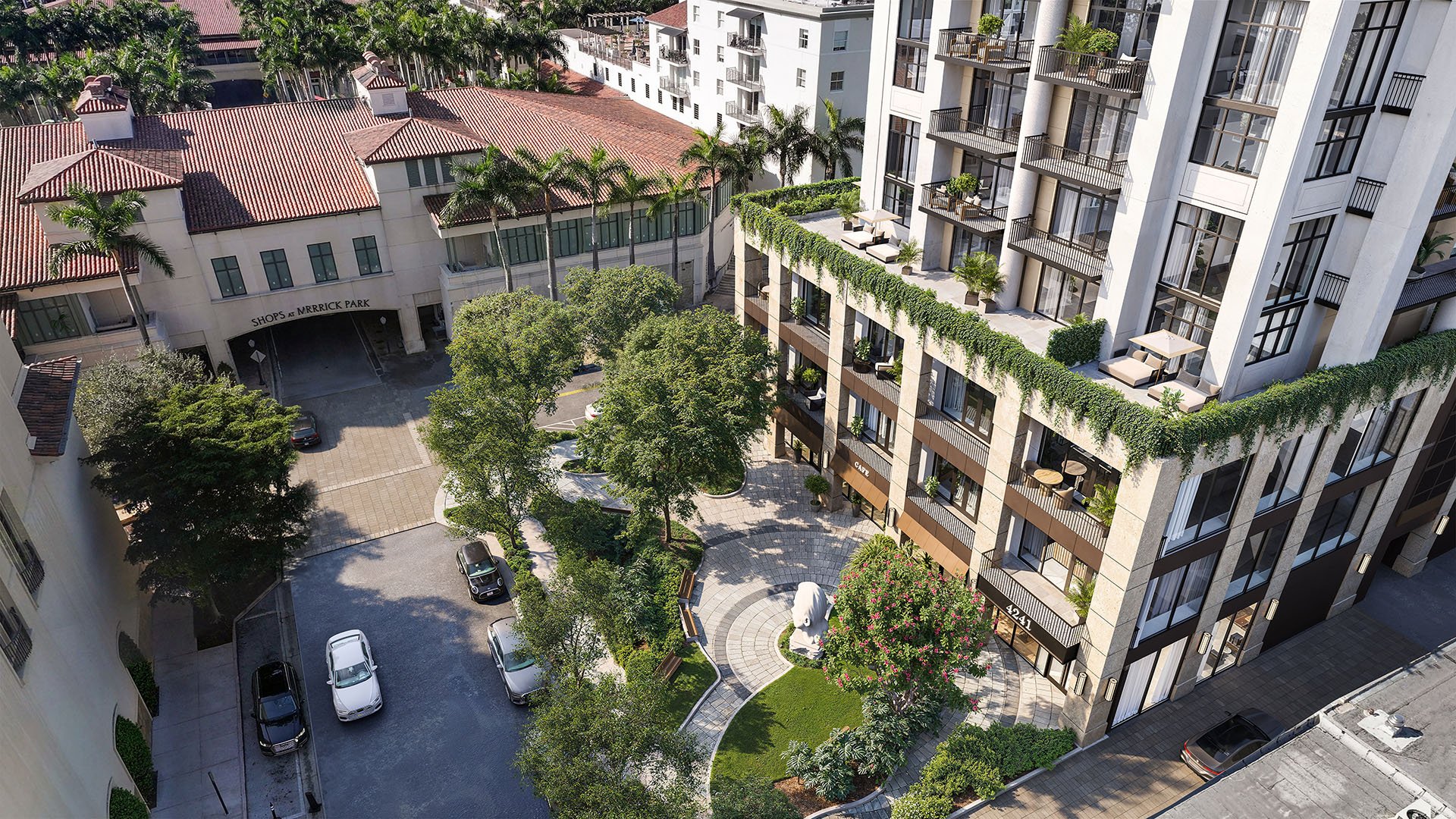
At Cora Merrick Park, the appeal pairs a Coral Gables address across from Shops at Merrick Park with a planned wellness offering. The proposed 13-story mixed-use condominium at 4241 Aurora Street comprises 74 residences. Constellation Group and The Boschetti Group are the developers; Winmar Construction is the general contractor.
For a buyer, the central question is whether the financial and operating documents support the experience being purchased. Construction costs, association expenses, and staffing commitments each require scrutiny. A construction variance does not, by itself, establish a future owner obligation. Nor does a polished amenity description establish its annual operating cost.
No CORA-specific budget overruns, vendor escalation rates, staffing levels, or projected association charges are established here. The appropriate approach is a document-led review-not an assumption that either a problem or a guarantee exists.
Request the current public offering statement, estimated operating budget, reserve schedule, relevant amendments, and purchase agreement. Separately, seek the construction budget, milestone schedule, and material-contract summaries. Access to development-level financial information may require discussion; it may not follow automatically from a purchase inquiry.
Have counsel review the brochure and developer-furnished documents for accuracy and distinguish contractual commitments from descriptions of the intended product.
The current timeline places the start of construction in April 2026, with completion targeted for 2028. The earlier target, set in April 2025, was 2027. Reconcile those expectations with the current schedule, outside closing date, and extension rights. A change in completion targets alone does not establish a contractual breach.
Ask for dates on every budget and schedule. Documents prepared at different stages can appear inconsistent simply because they reflect different assumptions or approval cycles.
The developers secured a $67.5 million construction loan from BHI. That figure represents financing-not the total development budget, committed equity, remaining cost-to-complete, or available contingency. It cannot establish whether construction is on budget.
A useful variance review requires a consistent reconciliation by trade or cost category:
Original budget and approved changes, with the reason for each material revision.
Committed costs, amounts paid, and remaining contractual obligations.
Forecast cost at completion compared with the revised budget.
Remaining contingency and the unresolved exposures it is intended to cover.
Distinguish an approved scope addition from an unanticipated cost increase. Both may raise the forecast, but they reveal different aspects of project control. An unpaid invoice, likewise, is not a saving.
The strongest explanation connects each material variance to scope, procurement, schedule, and funding. If access is limited to a summary, ask whether it uses a consistent baseline and reporting date. Do not translate a development-level variance into a buyer assessment without a documented contractual basis.
Earlier plans included more than 8,000 square feet of ground-floor retail and 13,000 square feet of office space on the second and third floors. Verify those figures against current approved plans, offering documents, and the condominium declaration. Their omission from a later description would not, by itself, demonstrate a reduction in scope.
Expense allocation matters more than headline square footage. Ask how the costs of shared building systems, insurance, security, loading, cleaning, utilities, and maintenance would be divided among uses. Confirm who controls service standards and approves changes to shared contracts.
For a buyer also considering Ponce Park Coral Gables, compare documented owner obligations rather than treating headline monthly charges as equivalent. Each property requires its own allocation analysis.
Village of Merrick Park municipal lease and parking records should not be treated as CORA condominium operating contracts or evidence of its private construction budget.
An opening-year service price is only the starting point for contract diligence. Request a schedule of material services that identifies the contracting party, commencement date, initial term, renewal provisions, and termination rights. Distinguish signed agreements from estimates or proposals.
For each agreement, establish whether increases are fixed, index-linked, triggered by renewal, or supplemented by pass-through costs. Check caps, floors, and notice requirements, and determine whether separate labor or insurance adjustments can apply alongside the stated annual increase.
Replacement responsibilities deserve equal attention. Do not assume a maintenance fee includes equipment replacement, major repairs, consumables, or emergency callouts unless the agreement says so. Minimum staffing provisions and insurance requirements should also reconcile with the operating budget.
Ask the preparer to show how the estimated budget changes as contractual increases take effect. This is a sensitivity review, not a prediction of CORA’s future charges. Its purpose is to clarify exposure before a buyer relies on an introductory figure.
Luxury service depends on coverage, not merely headcount. Request hours of operation and the number of employees required on each shift for every proposed function. Identify which roles would be in-house, outsourced, shared, or provided through an amenity operator.
The payroll calculation should account for wages, benefits, payroll burden, overtime, training, and relief coverage. Ask how holidays, absences, and annual wage increases are treated. A continuously staffed position requires a different model from a role scheduled for limited daily hours.
Compare the staffing worksheet with vendor minimums and amenity hours. Where an outsourced agreement includes labor, clarify whether the association budget also carries that expense elsewhere. Conversely, confirm that every service promise has a corresponding labor allowance.
Planned amenities include red-light therapy, contrast hydrotherapy pools, a rooftop pool deck, a padel court, and a 5,000-square-foot public park. Plans call for wellness programming developed with Lamarca Well. Certification through the International WELL Building Institute is being pursued; it is not confirmed.
For each feature, request operating hours, attendant requirements, maintenance obligations, management fees, and equipment-replacement reserves. For the public park, establish who is responsible for upkeep rather than assuming the residential association bears the cost.
Buyers also evaluating The Well Coconut Grove can apply the same discipline: compare documented service access and financial responsibilities, not wellness terminology alone. This does not imply equivalent amenities or contracts.
The final review should establish a clear connection between promised services, contracts, budget allowances, and responsibility for future replacement. Unresolved items warrant written clarification and review with the buyer’s legal and financial advisers.
At CORA, the objective is not to discount the lifestyle proposition. It is to establish what supports it, what may change, and which obligations would belong to the owner.
For a discreet conversation about your South Florida property search, connect with MILLION.
If branded residences are on your mind — as a home or as an allocation — we would be glad to share what we are seeing, privately.
Begin a quiet conversationThe planned 13-story mixed-use condominium is at 4241 Aurora Street in Coral Gables, across from Shops at Merrick Park.
Constellation Group and The Boschetti Group are the developers. Winmar Construction is identified as the general contractor.
The project is planned to contain 74 residences. Buyers should confirm the current configuration in the offering documents.
Completion is targeted for 2028, following an earlier 2027 target. Buyers should reconcile those expectations with their purchase agreement, outside closing date, and extension rights.
No. The financing amount does not establish total development cost, committed equity, remaining cost-to-complete, or available contingency.
No CORA-specific overruns are established here. A meaningful review requires the original budget, approved changes, committed and paid costs, forecast at completion, and remaining contingency.
Check how increases are calculated, when they begin, and whether caps, floors, or additional pass-through costs apply. Review renewal and termination provisions alongside the initial price.
Reconcile coverage hours and employees per shift with wages, benefits, payroll burden, overtime, training, and relief coverage. Distinguish outsourced services from in-house roles to identify possible gaps or duplication.
Certification through the International WELL Building Institute is being pursued, not confirmed. Buyers should separately verify wellness operating hours, staffing, maintenance, and replacement responsibilities.
They help determine which costs belong to residential owners and which belong to commercial uses. Current declarations and agreements should clarify responsibility for shared systems and services.