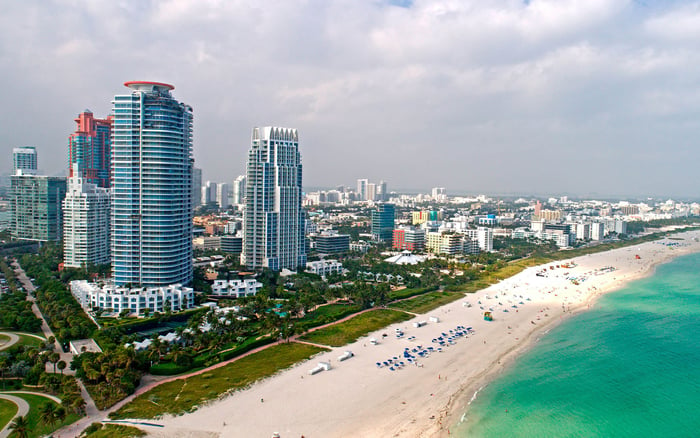
In a luxury condominium, the elevator label matters less than the complete route from arrival to residence. Buyers should examine who shares the cab and landing, how guests are credentialed, where service traffic travels, and whether the arrangement will remain persuasive at resale.
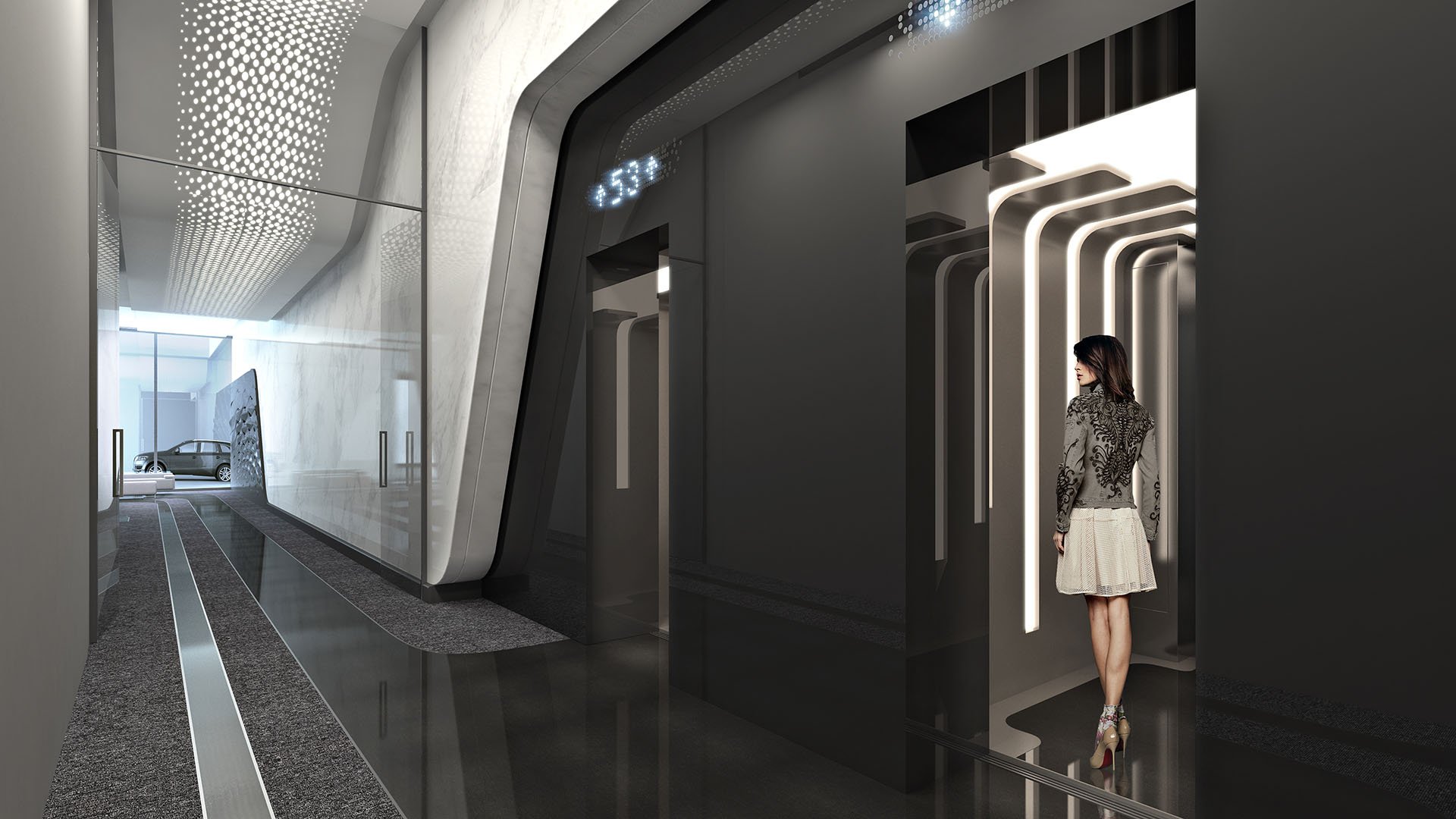
In South Florida's upper tier, elevator arrival is part of the residence's architecture. It shapes the transition from public space to private life, influences how guests are received, and determines whether deliveries or household staff cross the home's formal threshold. Yet “private elevator” is not a standardized configuration. The phrase can describe a dedicated cab, direct entry into a residence, or a shared cab that opens into a residence-specific foyer or vestibule.
A semi-private elevator typically reduces shared circulation without eliminating it. The cab, landing, or both may serve a limited number of homes. That arrangement can still feel discreet, particularly in a boutique building with few residences per floor, but it differs from an elevator dedicated to one home from the lobby or garage to a private foyer.
The meaningful luxury is not the label, but control of the entire arrival sequence.
For buyers comparing Brickell, Fort Lauderdale, West Palm Beach, and Delray Beach, the central question is functional: who can enter each part of the route, under what conditions, and where does that route meet the residence?
The most exclusive configuration is a dedicated elevator serving a single residence. In this arrangement, the journey from the lobby or garage terminates at a private foyer associated with one home. It minimizes encounters and creates the clearest sense of separation.
More commonly, a shared elevator cab uses credentialed access to reach individual floors or private foyers. This configuration can deliver an intimate arrival while retaining shared vertical infrastructure. It should not, however, be confused with a genuinely dedicated cab. A buyer should establish whether another resident can summon the same elevator, whether neighboring homes share the landing, and whether the doors open directly into the living space or into a secured vestibule.
Semi-private access may involve a small number of homes per floor or a limited shared landing. The privacy experience can be excellent, but residence-specific details matter. A building-wide description may not explain the precise cab, landing, and foyer arrangement for an individual home.
Visitor control depends on the complete access chain. Buyers should trace a guest's path from the building entrance through lobby authorization, elevator credentialing, floor selection, landing access, foyer entry, and the residence door. A system is only as private as its least controlled point.
A private foyer can provide a valuable buffer, even when the cab itself is shared. When evaluating a residence at Baccarat Residences Brickell, buyers should verify the exact elevator configuration rather than rely on terminology alone. Elevator language does not, by itself, explain guest credentialing, service routing, or whether a cab is dedicated exclusively to one home.
The foyer's legal and operational status also merits scrutiny. Buyers should confirm whether it is part of the unit, a limited common element, or common space controlled through access credentials. That distinction may affect decorating rights, maintenance obligations, emergency access, and the association's authority over the area.
For unannounced guests, vendors, and household staff, ask whether access requires concierge release, resident approval, a time-limited credential, or another protocol. Also test what happens when two parties request the same shared cab. A polished presentation cannot replace this practical exercise.
A beautiful private arrival can lose its composure if deliveries, moves, maintenance teams, and staff use the same foyer without a carefully managed protocol. Private or dual private elevators do not automatically indicate a separate service elevator. The resident system and the building's back-of-house circulation must be evaluated independently.
Ask where groceries, luggage, flowers, furniture, and contractor materials enter. Determine whether staff can reach the residence without crossing the formal foyer, whether deliveries are brought upstairs or held below, and how move-ins are scheduled. Emergency access should also be understood, including how building personnel can override credentials when necessary.
For buyers considering Forté on Flagler West Palm Beach, the same diligence applies: request the operating rules for deliveries, staff, moves, and emergency entry. A project's name or marketing language should never substitute for residence-specific documents and an in-person review.
The same discipline applies in Fort Lauderdale. Never assume that one listing description defines every home in a multi-building community or every residence within a tower.
Direct elevator entry can be dramatic, but it is not automatically superior to an enclosed foyer. A vestibule can soften sound, provide visual separation, and prevent a guest from stepping immediately into the principal living area. It may also create a more gracious pause between the elevator and the home.
The ideal solution depends on the floor plan and household. Owners who entertain frequently may favor a formal arrival gallery. A family with staff may prioritize a distinct service path. A collector may value control over sightlines and wall space. A second-home owner may focus on credential management and the ability to grant temporary access remotely, if the building permits it.
Buyers reviewing The Berkeley Palm Beach should similarly assess how the elevator, foyer, residence door, and service route work together. The goal is to understand the actual arrival sequence rather than infer it from a single feature label.
Resale buyers often interpret private elevator access as shorthand for privacy, scarcity, and elevated service. That perception can strengthen a residence's presentation, particularly when the arrival is intuitive, secure, and architecturally resolved. There is, however, no reliable universal percentage premium. Any precise uplift should be treated cautiously rather than presented as a general rule.
Elevator access is one element of the complete value proposition. Location, views, floor plan, condition, amenities, building brand, and operating quality remain central. A well-designed semi-private arrangement may be more persuasive than a nominally private system with awkward direct entry, unclear guest controls, or frequent service crossover.
This is why buyers should treat elevator terminology as a prompt for diligence, not a conclusion. At resale, the most defensible advantage is an experience a prospective purchaser can immediately understand: controlled entry, minimal shared circulation, a composed foyer, and service procedures that preserve the home's privacy.
Request the floor plan, elevator diagram, condominium documents, access-control rules, and move procedures. Confirm the number of residences served by each cab and landing. Identify whether the elevator runs from both the lobby and garage, and establish who can select the residence's floor.
Then conduct an in-person test. Travel the route as an owner, guest, delivery person, and staff member. Observe door timing, sightlines, sound transfer, waiting time, and what happens when another resident calls the cab. Verify whether the foyer belongs to the unit and whether neighboring residents or building personnel can access it.
Finally, separate the formal arrival from the service plan. Ask about deliveries, moves, maintenance, emergency overrides, and any route that crosses the resident foyer. The strongest choice is the one whose physical design and operating rules remain coherent long after the sales presentation ends.
For discreet guidance comparing private and semi-private elevator residences across South Florida, connect with MILLION.
If branded residences are on your mind — as a home or as an allocation — we would be glad to share what we are seeing, privately.
Begin a quiet conversationIt may mean a dedicated cab, direct residence entry, or a shared cab opening into a residence-specific foyer. Buyers should verify the exact configuration.
A semi-private elevator limits shared circulation but does not eliminate it. A small number of residences may share the cab, landing, or both.
No. A shared, credentialed cab can open into a private foyer, while a dedicated elevator serves only one residence.
Confirm who authorizes guests, how credentials work, which floors they can select, and whether neighbors can access the landing or foyer.
Not necessarily. Service elevators, delivery routes, staff circulation, and move procedures should be confirmed separately.
Its classification may affect decorating rights, maintenance duties, emergency access, and association control. Buyers should review the condominium documents.
They can, depending on the building and residence configuration. Buyers should verify the arrangement for the specific home under consideration.
No reliable universal percentage premium is established. Resale perception also depends on location, views, floor plan, condition, amenities, and building quality.
No. A vestibule may improve visual separation, acoustics, security, and the formality of the arrival sequence.
Review plans and governing documents, then test the route in person as an owner, guest, staff member, and delivery person.