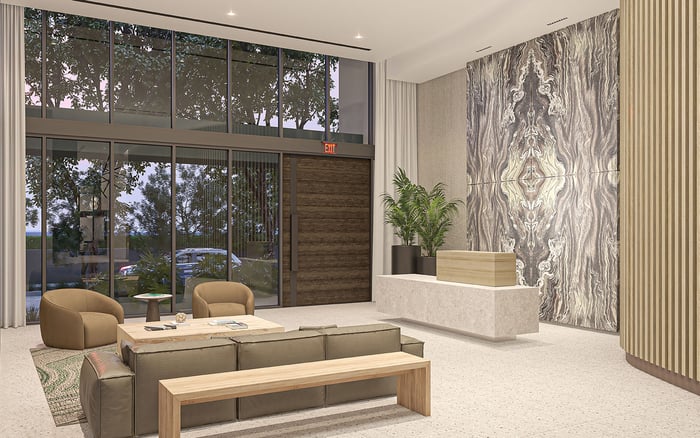
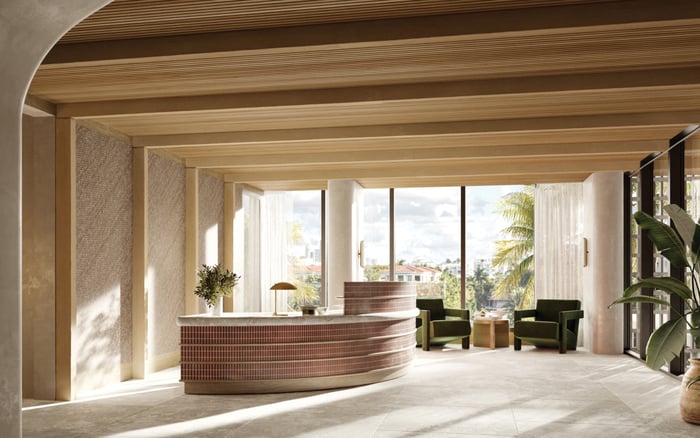
At Four Seasons Residences Coconut Grove, private elevator access brings discretion into the daily journey home. Its practical relevance extends to residents, guests and staff, while its resale value remains a matter of buyer preference rather than a guaranteed premium.

At Four Seasons Residences Coconut Grove, private elevator access is presented as a defining element of arrival. That distinction matters because condominium privacy is not confined to the residence itself. It begins along the route from the building entrance to the home.
Controlled vertical circulation can reduce exposure to shared arrival spaces, creating a more discreet transition between public and private life. For buyers accustomed to single-family living, this can make a vertical residence feel more like a personal sanctuary. For those familiar with branded residences, it also demonstrates how service-oriented positioning and residential seclusion can coexist.
The point is not simply that an elevator provides efficient movement. Its greater value lies in choreography: who enters, where paths intersect and how quickly the atmosphere shifts from building to residence. Here, arrival becomes part of the luxury experience rather than a purely mechanical function.
Elevator configuration influences repeated moments that may seem insignificant during a showing. Returning home, leaving for an appointment, receiving a delivery and welcoming friends all involve circulation. Over time, the quality of those movements becomes part of a residence's lifestyle value.
Private access may reduce casual encounters in shared elevator areas and make departures feel less exposed. It can also create a calmer threshold, particularly for owners who value discretion or maintain demanding schedules. These are experiential advantages, not abstract amenities. They shape the cadence of the home each day.
Buyers comparing Coconut Grove options may also consider the island setting of Vita at Grove Isle. The useful question is not which address is universally superior, but which circulation model best suits the owner's habits, expectations and preferred degree of separation.
A private arrival route also shapes how others interface with the home. Guests may experience a more deliberate welcome, with the transition into the residence beginning before they cross its interior threshold. That sense of occasion can be especially persuasive when the home is used for entertaining.
Household staff and service personnel present a different set of considerations. Controlled access can support clearer boundaries, but buyers should examine how operating protocols coordinate residents, guests, deliveries and service visits. Private elevator access alone does not explain every circulation path.
Prospective owners should ask how access is authorized, how visitors are announced and how staff movement is managed. They should also clarify whether the elevator opens into the residence, a private vestibule or another controlled threshold for the specific home under consideration. No single configuration is established for every residence, making unit-specific confirmation essential.
The design and architecture of the threshold deserve the same scrutiny as the elevator designation. A well-composed arrival should feel intuitive, secure and visually connected to the home. Lighting, sightlines, door placement and the transition into principal rooms can determine whether privacy feels elegant or merely procedural.
During a private tour, buyers should walk the complete route rather than judge the residence by its interiors alone. They can note where shared spaces begin and end, how guests are received and whether the arrival supports daily routines. This is also the time to understand access controls and operating procedures without inferring details from marketing language.
A broader neighborhood comparison might include The Well Coconut Grove. Such a comparison can help clarify a buyer's priorities around branding, privacy and the transition home, though the decision should remain residence-specific.
Private elevator access can become part of a future resale narrative for buyers who prioritize discretion and controlled access. It is easy to communicate, immediately experienced during a tour and relevant to daily ownership. Those qualities may help distinguish a residence when prospective purchasers assess arrival alongside views, amenities and interiors.
Lifestyle appeal, however, should not be confused with proof of a higher sale price. No transaction data, comparable-sales analysis or market study supplied here quantifies a premium attributable to the elevator feature. Value will still depend on the residence as a whole and the priorities of the buyer considering it.
The prudent interpretation is that arrival privacy can strengthen positioning rather than guarantee an outcome. Its resale relevance is likely greatest when the physical configuration, access protocols and overall presentation deliver the discretion the feature implies. A compelling label attracts attention; a convincing experience sustains it.
What does private elevator access contribute to the residence? It makes privacy part of the transition from the building entrance to the home and can reduce exposure to shared arrival spaces.
Does every elevator open directly inside a residence? The configuration is not established for every home. Buyers should confirm whether access is direct, vestibule-based or otherwise controlled for the specific residence.
Why does the arrival sequence matter in daily life? It shapes repeated movements into and out of the home, influencing convenience, discretion and the sense of sanctuary.
Can private access affect the guest experience? Yes. It can create a more deliberate welcome and shape how guests transition from the building into the residence.
How can elevator planning affect household staff? Controlled access can shape how staff and service personnel interface with the home, subject to the building's operating protocols.
Is private elevator access only a status feature? No. It reinforces luxury positioning while carrying functional implications for circulation, privacy and daily routines.
What should a buyer verify during a tour? Walk the full arrival route and confirm the threshold configuration, visitor procedures, access controls and service flow.
Should arrival privacy be weighed against views and amenities? It should be assessed alongside them. For some buyers, circulation and discretion are as consequential as visible interior features.
Does a private elevator guarantee stronger resale value? No. It can support a persuasive resale narrative, but the available facts do not establish a guaranteed price premium.
Who is most likely to value this feature? Buyers who prioritize discretion, controlled access and a sanctuary-like transition into the home may find it especially relevant.
For a tailored shortlist and next-step guidance, connect with MILLION.
If branded residences are on your mind — as a home or as an allocation — we would be glad to share what we are seeing, privately.
Begin a quiet conversation