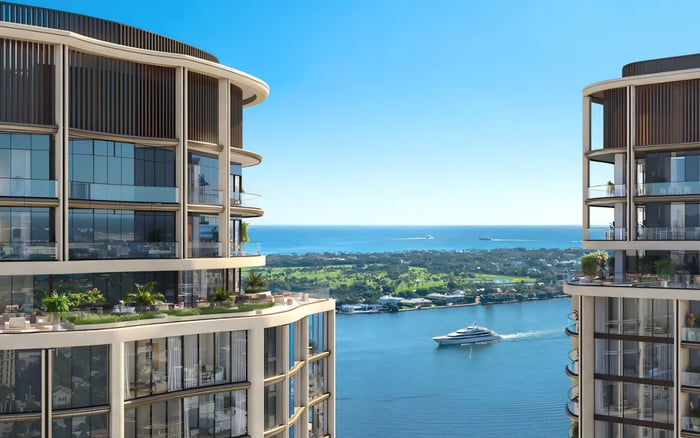
A buyer-focused framework for evaluating how resident-only private dining could affect daily ownership, privacy, entertaining, costs, access, and long-term condominium operations in West Palm Beach.

Buyers exploring South Flagler House West Palm Beach should evaluate private dining through the practical demands of daily ownership. The central question is not simply how a dining space looks, but how access, service, governance, and recurring costs would affect residents over time.
Resident-only hospitality can be understood as a service model intended for a defined residential community rather than the general public. Its usefulness depends on the final operating structure, so buyers should avoid assuming specific hours, menus, staffing levels, event formats, or charges without reviewing current project and condominium documents.
A private dining program may give owners another setting for meals or gatherings outside their individual residences. Whether that creates meaningful convenience depends on availability, reservation procedures, guest allowances, service standards, and the types of occasions the space can accommodate.
For owners who entertain, an in-building option could reduce some off-property planning. It could also help keep larger or more formal gatherings separate from the private residence. Those potential benefits remain conditional on the program's actual rules and execution.
Buyers should ask how routine use differs from private-event use. Important distinctions may include booking priority, notice requirements, capacity limits, cancellation terms, guest access, and separate event charges. None should be assumed before they are confirmed in governing materials.
The phrase “resident-only” suggests controlled access, but the precise boundaries require verification. Buyers should determine who qualifies for access, whether residents may bring guests, how private events are handled, and whether any operators or service providers can admit nonresidents.
Privacy also depends on circulation and operations. A controlled entry policy may have limited value if event traffic, deliveries, staffing, or scheduling are not managed carefully. Prospective owners should therefore consider both the written access rules and the practical systems supporting them.
Hospitality is an ongoing operation. Its ownership impact can include staffing, food and beverage service, cleaning, maintenance, reservations, insurance, and management oversight. Buyers should establish which costs are part of common expenses, which are charged per use, and whether minimum spending or separate event fees apply.
Governance is equally important. Review who controls the program, who can change its hours or service scope, and what authority the condominium association may have after turnover. Buyers should also ask how performance issues would be addressed and whether a third-party operator could be replaced.
The operating budget deserves the same attention as the physical dining environment. A compelling concept can become less useful if access is limited, service is inconsistent, or recurring expenses do not align with resident demand.
A disciplined comparison should focus on documented services rather than the number of amenities listed in marketing materials. Buyers can also review Forté on Flagler West Palm Beach, The Ritz-Carlton Residences® West Palm Beach, and Mr. C Residences West Palm Beach as internal project-navigation options when assembling a local comparison set.
The useful questions remain consistent across projects: Who may use each space? How are guests treated? What is included in common charges? Which services require separate payment? Who manages operations, and how can the program change?
Project links alone do not establish comparable features or service levels. Current disclosures, budgets, contracts, and governing documents should control the analysis.
Before making a purchase decision, buyers should request the latest materials describing the private-dining program and compare them with the condominium documents and budget. Any differences between marketing language and binding documents should be clarified in writing through the buyer's appropriate professional advisers.
A focused review should address:
Eligibility and access controls
Guest and private-event policies
Reservation priority and cancellation rules
Hours and service scope
Staffing and management responsibility
Common expenses and per-use charges
Minimum spending, if any
Procedures for changing or discontinuing service
Insurance, maintenance, and operating obligations
Association authority after turnover
Resident-only private dining may influence convenience, privacy, and entertaining, but its value cannot be separated from operations. The strongest ownership assessment is based on verified rules, transparent costs, and a service structure that matches the buyer's expected pattern of use.
What does resident-only private dining mean? It generally describes dining access limited by residential eligibility rather than open public admission. The exact definition and permitted users should be confirmed in current governing documents.
Does the article confirm specific dining hours or menus? No. Buyers should verify hours, menus, and service formats directly in the latest project materials.
Can residents bring guests? Guest access cannot be assumed. Review the applicable guest limits, registration requirements, and event rules.
Are private events necessarily permitted? Not necessarily. Event eligibility, capacity, notice, staffing, and charges require confirmation.
Is dining service included in common charges? The cost structure should be verified. Some operating expenses may be shared, while food, beverage, events, or other services may be billed separately.
Why does the operator matter? The operator can affect staffing, consistency, reservations, and service delivery. Buyers should confirm who is responsible and how that relationship may change.
Can the program change after purchase? Services may be subject to governing documents, contracts, budgets, and association authority. Buyers should review the procedures for modifying or discontinuing the program.
How should buyers compare private dining across projects? Compare documented access, costs, management, availability, and guest policies rather than relying only on amenity descriptions.
Does private dining guarantee stronger resale value? No. Any resale effect is uncertain and may depend on execution, operating costs, resident use, and future buyer preferences.
What should a buyer review before committing? Review current disclosures, budgets, contracts, rules, and governing documents with appropriate professional advisers before relying on the hospitality concept.
When you're ready to tour or underwrite the options, connect with MILLION.
If branded residences are on your mind — as a home or as an allocation — we would be glad to share what we are seeing, privately.
Begin a quiet conversation