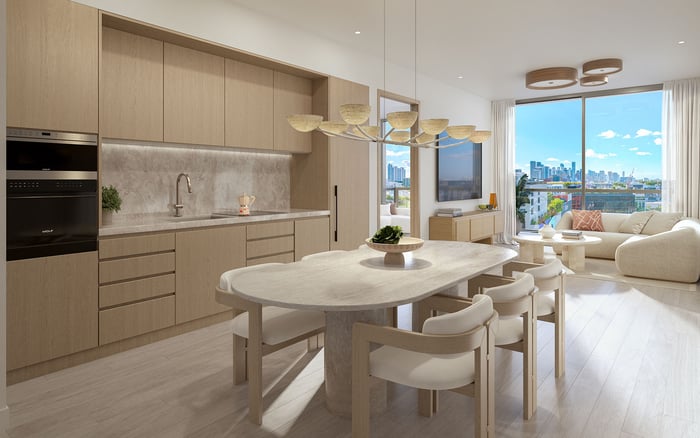
A considered absence plan for a Wynwood condominium should connect humidity and leak alerts with authorized access, accountable service, and itemized costs, without surrendering privacy.

Leaving a Wynwood residence for an extended stay elsewhere should not mean choosing between privacy and protection. The objective is controlled care: knowing what is monitored, who may enter, what they may do, and how you will be informed when intervention is necessary. A discreet absence plan settles those questions before an alert arrives.
For buyers considering Frida Kahlo Wynwood Residences, the questions extend beyond finishes and everyday convenience. Ask how the governing documents address unoccupied residences and where association responsibilities end. Treat monitoring, private oversight, and emergency response as separate services unless written terms establish otherwise. These are due-diligence questions, not representations about a particular project's services.
The essential distinction is simple: an alert is not an intervention. A phone notification does not establish that someone has authority to enter, assess the condition, or engage a contractor.
Before departure, ask management to explain the association's access procedures for maintenance, repairs, and damage prevention. Have counsel clarify how applicable Florida condominium law and the declaration define those rights, including the purposes and circumstances in which entry is permitted.
For non-emergency access, request a written explanation of notification practices, scheduling, and entry documentation. Do not assume that permission for one maintenance visit establishes unrestricted access, or that every type of entry follows the same notice requirements.
Genuine emergencies need a separate protocol. Discuss how management would respond to smoke escaping through a window or water flowing beneath a door if you could not be reached. Have counsel confirm when entry may proceed without advance owner approval rather than relying on private instructions that promise an absolute veto.
Ask counsel to distinguish abandoned-unit provisions from the procedures applicable to your planned absence, including any notice requirements and permitted preservation work. Document your absence and current contact arrangements with management rather than assuming that either routine-entry or abandoned-unit procedures automatically govern every situation.
Confirm whether your declaration, applicable rules, or access procedures require a key or another means of entry. Review those requirements with management and, where necessary, counsel before deciding how emergency access will work.
Ask whether any periodic inspections apply to an unoccupied residence, who must arrange them, and how visits should be recorded. Do not assume weekly or biweekly visits are required-or that no obligations apply-without reviewing the relevant documents and legal requirements.
If your search extends to the Design District and Kempinski Residences Miami Design District, apply the same document review to your comparison. Ask for written definitions of included oversight and separately contracted care. A project's identity is no substitute for its actual access and service terms.
For humidity monitoring, ask a qualified professional to establish a plan appropriate to the residence rather than adopting a generic numerical threshold. The proposal should identify sensor locations, alert settings, who reviews readings, and which conditions should trigger an on-site assessment. Confirm any HVAC-related requirements with the building and relevant service professionals.
Keep environmental monitoring distinct from water-leak detection. Request a written explanation of what each proposed device detects, where it will be installed, and what its alerts mean. Do not assume a leak notification automatically shuts off water or that any shutoff function is required by law.
Connectivity deserves its own questions. Ask what happens if internet service or power is interrupted, whether a loss of communication generates a notification, and who is responsible for restoring service. Request an end-to-end test before departure, including confirmation that the designated responder receives the alert.
Most importantly, establish the handoff from notification to action. Who acknowledges the event? Who evaluates urgency? Who can attend? Assign each responsibility explicitly rather than leaving it implicit in the word monitoring.
Prepare a written access protocol identifying authorized entrants and permitted purposes. Distinguish scheduled condition checks from contractor access and emergency intervention. Specify how access credentials are held, who may share them, and how authorization is withdrawn when an engagement ends.
For routine service, request a concise entry record showing who attended, when, why, and what was observed or changed. Define photography boundaries so documentation remains relevant to maintenance rather than becoming an unnecessary record of personal possessions. Limit access to monitoring accounts and service records to those who need it.
For an Edgewater comparison such as Aria Reserve Miami, ask the same privacy questions. Clarify the division between association access, owner-authorized vendors, and any separately purchased oversight. Do not infer those arrangements from a residential project's name or presentation.
Set spending limits and escalation contacts in advance. Specify which decisions require approval while preserving a workable response to genuine emergencies and recognizing the association's lawful access rights.
Request itemized proposals rather than a single reassuring monthly figure. Separate equipment, installation, connectivity, subscriptions, scheduled inspections, emergency call-outs, contractor coordination, and remediation management. Ask which charges recur during the absence and which arise only after an incident.
Compare proposals against the same requested scope. A notification-only service and one with an authorized on-site responder meet different needs. Establish whether attendance is included, how availability is defined, and whether after-hours work carries additional charges. Ask each provider to identify exclusions and any response-time commitments.
Do not treat a quoted package as a Wynwood-wide price benchmark. The more useful comparison is whether the fee covers the responsibilities you need. Keep routine oversight, emergency attendance, and remedial work separately visible so an attractive base price does not obscure the cost of intervention.
Before departure, review a short scenario with management and your private provider: an alert arrives, you cannot be reached, and water may be entering the residence. Confirm who can attend, how access is obtained, what spending authority exists, and how the event will be documented.
If active water intrusion is found, the response should prioritize stopping it when safe, arranging emergency drying or dehumidification, and obtaining professional moisture assessment. Acknowledging an alert is not the same as resolving it.
The most reassuring absence plan is neither unrestricted access nor complete isolation. It is a documented arrangement that protects the residence while keeping entry, decisions, and expenditure accountable.
Explore South Florida residences with a more considered ownership perspective at MILLION.
If branded residences are on your mind — as a home or as an allocation — we would be glad to share what we are seeing, privately.
Begin a quiet conversationRequest management's written access procedures and have counsel clarify the association's rights under applicable law and the declaration. Distinguish maintenance access from emergency intervention.
Do not rely on a single notice period for all circumstances. Ask management and counsel to clarify the requirements for routine, emergency, and abandoned-unit entry.
Ask counsel how those provisions differ from the procedures applicable to your planned absence. Document your absence and current contact arrangements with management.
Review the declaration, applicable rules, and access procedures with management and, where necessary, counsel. Confirm how lawful entry will be accommodated before departure.
Review the relevant documents and legal requirements rather than assuming a weekly or biweekly schedule applies. Ask who must arrange any required visits and how they should be recorded.
Have a qualified professional establish appropriate settings for the residence and confirm relevant building requirements. Do not assume a generic threshold suits every unit.
Do not assume it does. The service agreement should identify who acknowledges alerts, who can attend, and what access and spending authority they hold.
Do not assume a detection device includes automatic shutoff. Request a written explanation of equipment functions and the response each alert triggers.
Request separate charges for equipment, installation, connectivity, subscriptions, inspections, emergency call-outs, contractor coordination, and remediation management.
The response should prioritize stopping intrusion when safe, arranging emergency drying or dehumidification, and obtaining professional moisture assessment.