A discreet buyer’s framework for evaluating what backup power actually supports in South Beach, from elevator operation and private cooling to secure communications, permitting, and ownership costs.
In South Beach, the most meaningful question about a generator is not whether one exists, but what daily life would look like while it operates. Could an owner reach the residence by elevator, retreat to a cooled bedroom, preserve refrigerated essentials, and communicate privately with staff? These are distinct expectations, each requiring a documented answer.
A buyer considering Apogee South Beach should request the same evidence-led review appropriate to any luxury condominium: separate descriptions of building emergency power and backup serving the individual residence. Neither a project’s positioning nor the phrase “generator equipped” establishes the scope of either.
The recommendations below are due-diligence questions, not legal requirements or assurances about any named property. The objective is a written account of supported services, operating limits, and responsibilities when utility power is unavailable.
Begin with an electrical one-line diagram and emergency-panel schedule. Ask the building’s qualified technical team to identify which systems are connected, which are excluded, and which rely on another component that also needs power. Keep unit-level and common-area answers distinct.
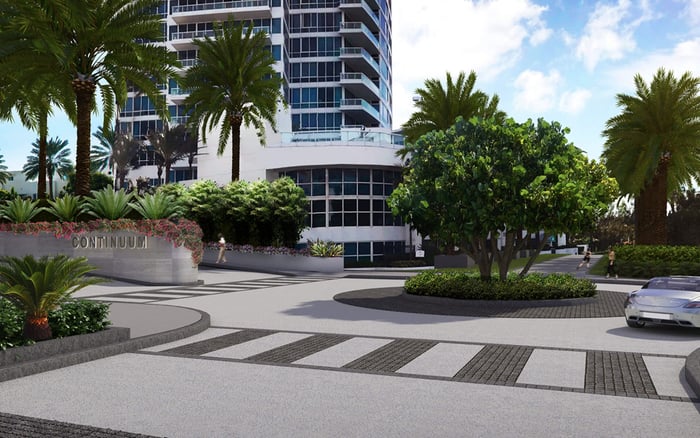
For a purchase at Continuum on South Beach, for example, request a residence-specific schedule alongside the building’s emergency-power description-not a general statement about backup availability. This is a request for documentation, not a statement about that property’s equipment.
Request the fuel-autonomy calculation, integrated-load test results, and service records together. Have the reviewer reconcile their operating assumptions. A runtime statement should specify the loads it assumes; a test record should identify the systems actually operated. Seek clarification wherever the descriptions do not align.
An elevator audit should begin with three explicit categories: recall, passenger rescue, and normal service. Ask which category the documented backup scope supports and who verifies that operation. Do not accept “elevator backup” as a complete description.
Then make the inquiry practical. Which elevator is included? What operating restrictions apply? Who authorizes its use, and what instructions would residents receive? Ask the responsible elevator professional and building management to confirm the answers in writing.
For an owner who values discreet arrival, review access along the entire intended route. Ask whether entry controls, intercoms, and relevant doors are included in the backup schedule. The purchase decision should reflect the documented experience, not an assumption that elevator power preserves every part of private access.
Cooling deserves a room-by-room review. Ask which HVAC zones are backed up and whether the documented scope supports the spaces that matter most to your household. Identify bedrooms, principal living areas, and other priority rooms without assuming that a building-level system serves the residence during an outage.
At Five Park Miami Beach, as with any prospective address, a buyer should seek a clear comparison between desired comfort and documented backup scope. Request confirmation of which cooling loads have been tested simultaneously with elevators, refrigeration, and other supported equipment.
Treat refrigeration with equal precision. Request identification of each backed-up circuit serving refrigerators, freezers, or specialty storage. Ask whether the test configuration reflects the appliances currently in the residence. A generic reference to kitchen power is less useful than an equipment-specific schedule reviewed by the appropriate professional.
For second-home buyers, communications and controlled access merit their own review. Ask whether the backed-up circuit schedule includes network equipment, cameras, access controls, intercoms, gates, and any cellular failover device. Request a description of what has actually been tested; the presence of a device is not proof of continuity.
A buyer evaluating Setai Residences Miami Beach can frame the inquiry around personal routines: contacting management, admitting authorized staff, and checking the residence remotely. Each desired function should have an identified technical scope and a responsible contact.
Ask the communications provider and building team to distinguish local equipment power from external service availability. Request procedures for authorized entry if the preferred electronic route is unavailable. The privacy audit should establish who can enter, who can approve access, and how those decisions are communicated.
Permitting and placement are separate from performance. In Miami-Dade, portable generators supplying a few appliances and lights through direct connections can be used without a building permit. Connecting a portable generator to a building’s electrical system requires an electrical permit and an approved transfer arrangement. Permanently installed exterior generators require a building permit.
For a Miami Beach property, confirm the applicable municipal review. The city has a residential generator permit checklist, and projects may also require Planning Board review. Flood regulations impose elevation requirements on electrical, HVAC, cable, telephone, and other service facilities in new residential construction and substantial improvements.
Where right-of-way placement is involved, the procedure calls for four scaled site-plan sets, at least 11 × 17 inches, showing right-of-way dimensions and property lines. It also requires location approval from Code Compliance/Environmental before permit issuance, Fire Department approval, insurance documentation, and a security deposit. Do not apply that procedure automatically to every private-lot installation.
Professional installation is broadly estimated at $2,000-$6,000, with routine maintenance at approximately $200-$500 annually. The installation figure is not an all-in generator-system price. A separate broad estimate for whole-home standby installations in Miami is $6,000-$14,000 all-in. Neither installation range is a quotation for a South Beach luxury residence or condominium system.
Do not add those installation estimates together. Obtain a property-specific proposal identifying equipment, installation scope, approvals, testing, and ongoing service. Confirm current municipal fees separately. Ask what is excluded and which responsibilities belong to the owner versus the condominium association.
For an existing installation, request service records and written response-time commitments. Have the proposal distinguish routine maintenance from outage support, and ask how it addresses fuel assumptions and replenishment responsibilities. Evaluate the service agreement against the household’s expected use, not merely its annual price.
Before committing, assemble a concise schedule of supported services, exclusions, test evidence, fuel assumptions, and accountable contacts. Have qualified professionals resolve discrepancies between plans, equipment schedules, and operating descriptions. The luxury standard is clarity: knowing which parts of private life the documented system is designed and tested to preserve.
Explore South Beach residences with a more exacting perspective on ownership through MILLION.
If branded residences are on your mind — as a home or as an allocation — we would be glad to share what we are seeing, privately.
Begin a quiet conversationNo. Request separate descriptions of building emergency power and the circuits serving the individual residence.
Ask whether the documented scope covers recall, passenger rescue, or normal service. Confirm operating restrictions and who verifies the stated capability.
Identify the backed-up HVAC zones and the rooms they serve. Request test evidence showing which cooling loads operated simultaneously with other supported systems.
Request a circuit schedule identifying each supported refrigerator, freezer, or specialty-storage appliance. Ask whether testing reflects the equipment currently installed.
Review network equipment, cameras, access controls, intercoms, gates, and any cellular failover device. Ask separately about local equipment power and external service availability.
Request the electrical one-line diagram, emergency-panel schedule, fuel-autonomy calculation, integrated-load test results, service records, and response-time commitments.
Under Miami-Dade guidance, connecting a portable generator to a building’s electrical system requires an electrical permit and an approved transfer arrangement.
No. Those procedures concern right-of-way placement and should not automatically be applied to every private-lot installation.
The $2,000–$6,000 range covers professional installation, while the separate $6,000–$14,000 Miami range is an all-in whole-home standby estimate. Neither is a South Beach luxury-property quotation.
A broad consumer estimate places routine maintenance at approximately $200–$500 annually. Obtain property-specific pricing and clarify whether outage support is included or separate.