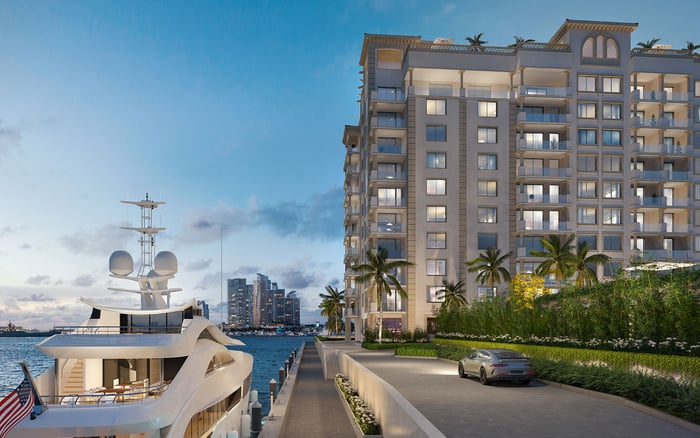
For Miami-Dade waterfront buyers, discreet leak response deserves the same scrutiny as design and amenities. Review access authority, remediation protocols, vendor credentials, owner communications, and cost controls before relying on a building’s service promise.

A waterfront residence is judged by its light, proportions, and arrival experience. Its management warrants equally close scrutiny when water enters a ceiling, cabinetry, or an adjoining apartment. For a Miami-Dade buyer, the question is not simply whether someone answers the telephone. It is whether the response combines clear authority, competent execution, controlled access, and an accountable record.
Waterfront due diligence should include a review of the building’s leak procedures before closing. When evaluating a residence at The Perigon Miami Beach, request the applicable management documents rather than inferring operational standards from architecture or positioning. No particular response protocol is established here for this or any other named project.
Discretion should be built into the response, not assumed from the address. Speed and cost control deserve the same discipline: written confirmation, not a reassuring adjective.
Florida’s condominium framework addresses association access for maintenance, repair, or replacement of common elements and portions of units maintained under the declaration, as well as access necessary to prevent damage to common elements or a unit. The declaration is central to understanding those maintenance obligations. Where damage appears does not, by itself, determine responsibility.
Distinguish that framework from the emergency powers in Florida Statute §718.1265. Those powers are subject to statutory conditions, including a declared state of emergency. They are not blanket authority for every routine plumbing leak.
When applicable, the emergency provision permits associations to contract for debris removal and measures to prevent or mitigate fungus, mold, or mildew. Authorized mitigation can include removing wet drywall, insulation, carpet, cabinetry, fixtures, and personal property, including specified work involving items an owner would otherwise insure or replace.
That authority does not settle final restoration or insurance responsibility. Nor does an unreachable owner automatically authorize every proposed intervention. Request the declaration, applicable access provisions, and management’s written escalation procedure. Have counsel review unresolved questions of authority or responsibility.
Round-the-clock availability is not a documented arrival-time guarantee. Ask who receives an overnight alert, who can dispatch the contractor, and what happens when the preferred crew cannot attend. Distinguish telephone coverage from commitments to mobilize and arrive.
For a Brickell buyer considering Una Residences Brickell, these questions belong alongside the review of residence plans and ownership documents. Request any building-specific service agreement and examine its scope, exclusions, escalation contacts, and backup arrangements.
A practical incident record should capture discovery, notification, access, dispatch, arrival, and work performed. Ask whether management can produce that chronology and identify a single coordinating contact. The objective is not an invented universal response target, but a building-specific commitment that can be checked against events.
A mold protocol should define actions and completion criteria, not merely promise treatment. Ask the proposed contractor to explain containment, whether negative-air equipment is appropriate, which compromised materials may require removal, and how the moisture source will be addressed.
Ask how unaffected rooms and neighboring residences will be protected during work. For valuable interiors, request a documented plan for handling cabinetry, fixtures, furnishings, and personal property before removal or disposal, subject to necessary authorized mitigation.
Advertised descriptions of containment with negative-air equipment, compromised-material removal, moisture-source treatment, and air-quality verification are starting points for questions. They are not proof that the same procedure will be delivered for a particular incident.
Request a written scope identifying who will assess conditions, perform remediation, and determine completion. If air-quality verification is proposed, ask what it entails, who performs it, and what documentation the owner receives. Do not treat a marketing phrase as a defined clearance standard.
Vendor selection should distinguish published credentials from current verification. Request applicable license details, current insurance documentation, and evidence supporting any certification claim. Confirm that the credentials apply to the entity and scope proposed for the residence.
An advertised combination of extraction, mold remediation, and reconstruction may offer a convenient coordination model. It does not establish that every task will be handled by the same personnel or under the same authorization. Ask which work is performed directly, which is subcontracted, and who remains accountable.
In Sunny Isles Beach, a buyer reviewing Turnberry Ocean Club Sunny Isles can use the same checklist without assuming that the building retains a particular contractor. Request the current vendor arrangement, backup coverage, and any owner-selection restrictions in the governing documents.
Directory inclusion and accreditation should not substitute for technical review or license checks. Nor does an advertised service territory establish a Miami-Dade-approved contractor designation.
Privacy is an operating requirement to discuss, not a guaranteed feature of restoration. Ask who may enter, how personnel are identified, whether access is logged, and who supervises work inside an unoccupied residence.
Set expectations for incident photography: what must be documented, who receives images, and how unnecessary exposure of personal belongings will be avoided. Clarify storage, sharing, and retention rather than assuming a confidentiality policy exists.
For buyers considering Surfside residences such as The Surf Club Four Seasons Surfside, discreet service should be evaluated through these specific questions. Discuss contractor routes, elevator coordination, and communications with neighboring owners as practical planning matters, not verified project features.
Privacy measures should support necessary damage prevention, not obstruct authorized access. The goal is proportionate entry and information handling, supported by a clear record.
An owner who travels should establish primary and alternate contacts, a local representative where appropriate, and preferred communication channels. Confirm who can receive updates and who can approve work within the authority validly delegated to them.
A useful proposed sequence begins with an alert describing known conditions and immediate measures, followed by a written scope and updates when findings, cost, or access needs change. At completion, request photographs, work records, invoices, and any agreed verification documents.
This is practical guidance, not a statutory notification template or universal deadline. Ask management to distinguish its communication policy from legal obligations and explain how it proceeds when contacts do not respond.
Do not assume a universal restoration price or allocation of expenses. Ask for an itemized scope separating immediate mitigation from subsequent repair, with labor, equipment, removal, disposal, testing where proposed, and reconstruction identified as applicable.
Clarify who authorizes additional work, how changes are documented, and which costs remain unresolved. Review the declaration and relevant insurance terms rather than assuming the association pays because it arranged access or dispatched a contractor.
The strongest service proposition is a response that can be explained: lawful access, appropriate mitigation, verified credentials, measured disclosure, and traceable spending. Those are the standards worth bringing into a purchase decision.
For a considered approach to Miami-Dade waterfront ownership, explore MILLION.
If branded residences are on your mind — as a home or as an allocation — we would be glad to share what we are seeing, privately.
Begin a quiet conversationNo. Ask for written dispatch and arrival commitments, exclusions, and backup arrangements rather than treating availability as a response-time guarantee.
No. Its emergency powers are subject to statutory conditions, including a declared state of emergency, and should not be treated as blanket authority for routine leaks.
The condominium declaration is central to that determination within Florida’s condominium framework. The location of visible damage alone does not establish responsibility.
When the statutory emergency powers apply, specified mitigation can include removing wet cabinetry and other affected materials to prevent further damage. That does not settle final repair or insurance responsibility.
No. The association must assess its applicable authority and the proposed scope rather than treating failed contact as unrestricted permission.
Request a written scope addressing containment, compromised materials, the moisture source, and completion criteria. If air-quality verification is proposed, clarify who performs it and what documentation is provided.
They are a starting point, not independent confirmation of current status. Verify applicable credentials and request current insurance documentation for the entity performing the work.
Request an access plan covering personnel identification, entry records, supervision, and incident photography. Clarify how images and personal information will be shared and retained.
The proposed initial alert, written scope, progress updates, and completion package are practical guidance, not a statutory template. Confirm the building’s policy and applicable legal obligations.
No. Review the declaration, relevant insurance terms, and incident-specific scope to distinguish mitigation authority from final financial responsibility.