A buyer-focused examination of how arrival, lobby composition, vertical circulation, security, and staff movement can shape residential discretion within a mixed-use hotel and branded-residence setting.
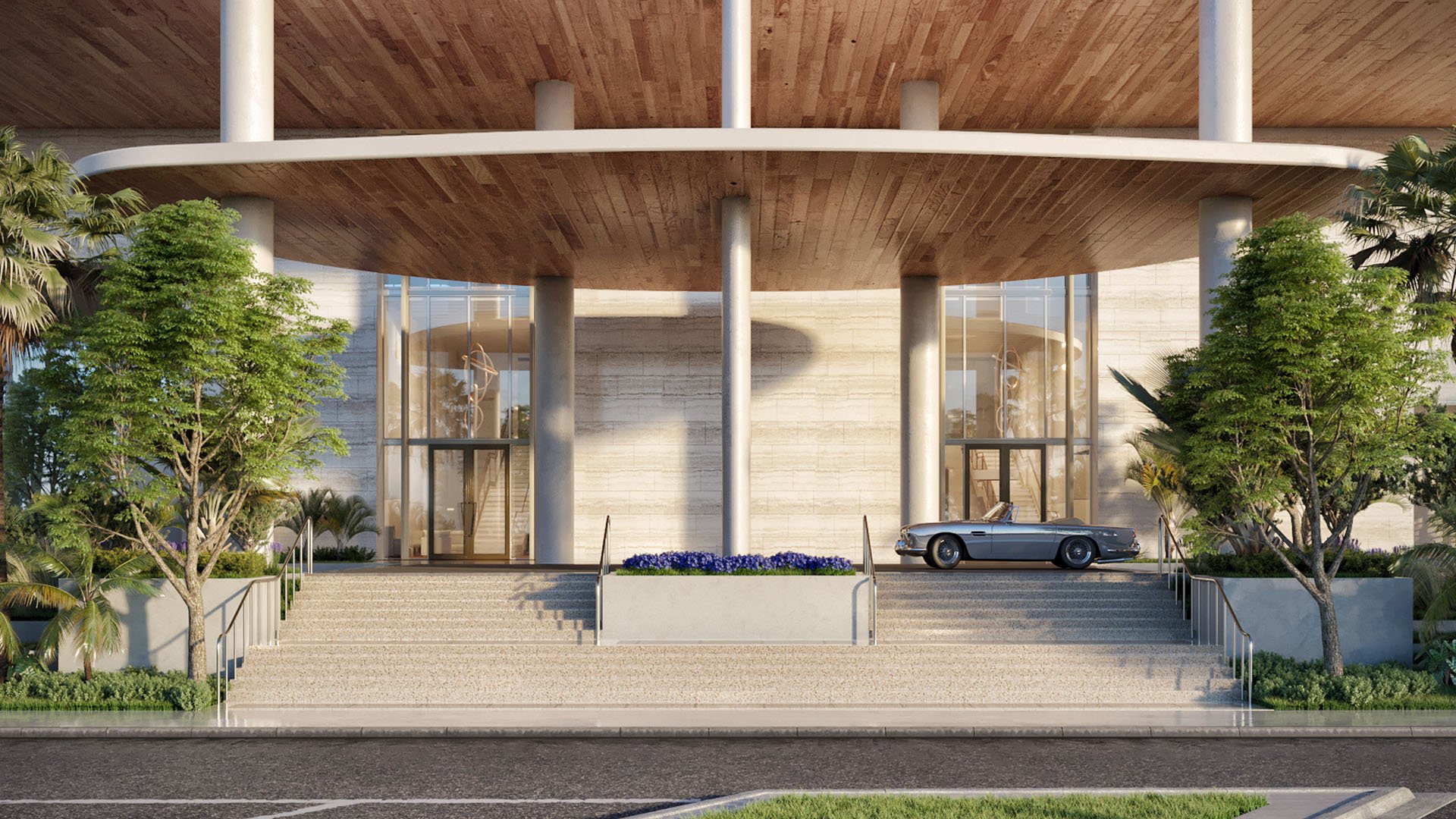
At Four Seasons Hotel & Private Residences Fort Lauderdale, buyers should examine how hotel and residential activity relate within the property. The central design question is how transient hotel activity is managed alongside the private daily experience owners expect.
The relevant question is not simply whether access is controlled. Privacy can emerge through a sequence of spatial and operational layers, beginning at the curb and continuing through entrances, lobby areas, elevators, residential corridors, and service routes. Each transition can either reinforce discretion or make hotel traffic more visible in residential life.
For buyers considering branded residences on Fort Lauderdale Beach, this sequence merits the same scrutiny as views, finishes, and amenities. It can affect how exclusivity feels during routine operations, busy weekends, and periods of heightened visitor activity.
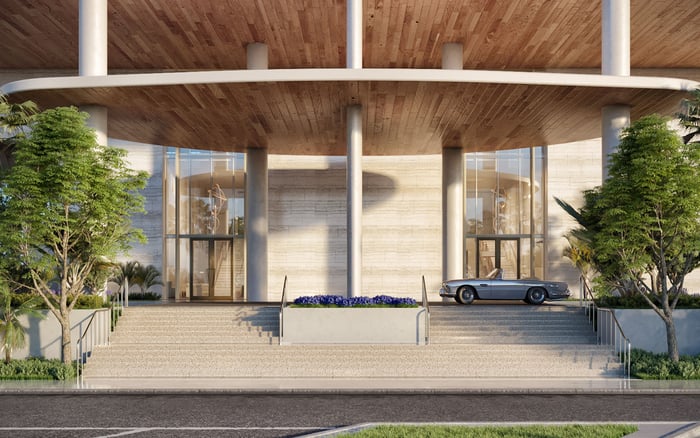
Arrival is the first test of privacy. A well-resolved approach should make the resident journey intuitive while managing the movement of hotel guests, visitors, vehicles, and staff. The objective is not necessarily complete visual isolation, but a sense that residential movement remains composed rather than absorbed into transient traffic.
Buyers should observe where vehicles pause, how pedestrians approach, and whether wayfinding creates clarity without theatrical barriers. The consequential details are experiential: waiting times, sightlines, crowding, and the number of moments when an owner must negotiate hotel circulation.
Lobby composition is a principal instrument for distinguishing residential circulation from hotel activity. In a mixed-use property, a beautiful room alone is insufficient. Its organization should direct different users toward their appropriate destinations while preserving the calm expected in owner-facing spaces.
Consider how reception points, seating, corridors, doors, and elevator approaches shape movement. Does the residential path feel legible? Can visitor groups gather without obstructing it? Are access-control points positioned discreetly? These questions may reveal more than a quiet visit conducted outside peak hotel periods.
The precise lobby configuration at the Four Seasons property should be confirmed directly. Buyers should not presume a fully separate residential entrance or dedicated lobby unless those arrangements are specifically documented. A stronger evaluation follows the complete route and considers whether its layers collectively provide discretion.
This emphasis on circulation sits naturally within design and architecture, but it is equally operational. Even visually compelling separation can underperform if daily management allows hotel traffic to spill into residential paths.
Elevator zoning and controlled vertical circulation can help prevent unrestricted movement between hotel and residential areas. Here, architectural intent, credentials, visitor permissions, and management protocols may converge.
The number of elevator banks and the credential technology are not specified, so buyers should treat those details as due-diligence questions rather than settled features. Ask which floors each user category can access, how residential guests are authorized, what happens when credentials fail, and whether trips to shared amenities alter the usual route.
A useful local comparison may include St. Regis® Residences Bahia Mar Fort Lauderdale. The purpose is not to reduce privacy to a feature checklist, but to ask how each ownership experience manages the transition from public hospitality to private vertical circulation.
Security systems can reinforce the separation of residents, hotel guests, visitors, and service personnel. In a luxury residential environment, effective control should feel assured yet unobtrusive. Owners should be able to move naturally, while unfamiliar users encounter clear limits.
The staffing model and specific access technology at the Four Seasons property are not detailed here. Buyers can nevertheless examine the outcomes: whether entry points appear consistently observed, visitor procedures are intelligible, and residential corridors seem protected from casual hotel movement.
Privacy also depends on changing conditions. Ask how access is managed during events, holidays, high occupancy, deliveries, and shift changes. These periods can reveal whether the system is genuinely layered or overly dependent on a single checkpoint.
Hospitality service is most discreet when it appears when wanted and recedes when complete. Staff circulation therefore forms another layer of privacy. Buyers should examine whether service can reach residences without generating unnecessary traffic through owner-facing spaces.
Ask how housekeeping, maintenance, food delivery, packages, and urgent repairs move through the property. The goal is not to demand invisible operations at every moment, but to determine whether routine service movement remains orderly and residential routes retain their character throughout the day.
A tour of The Ritz-Carlton Residences® Fort Lauderdale can provide another local point of reference for questions about branded service and owner circulation. Each project should be judged on its documented arrangements and observed performance, not on broad assumptions attached to a hotel flag.
For buyer's guides focused on privacy, the most revealing inspection is a complete journey rather than a static amenity tour. Start at the curb, enter as an owner would, proceed to the elevator, consider a visitor's route, and ask how staff reach the residence. Then repeat the exercise mentally during a crowded hotel arrival or event.
Request clear explanations of access permissions, guest authorization, shared-amenity circulation, after-hours procedures, deliveries, and operational exceptions. Confirm which elements are architectural and which depend on staffing or policy. Buyers should also ask how operational changes are communicated to owners.
Ultimately, the quality of separation between hotel and residential flows can shape daily experience. At Four Seasons Hotel & Private Residences Fort Lauderdale, the buyer's task is to understand how the lobby, elevators, security, and staff-flow layers work together to balance resort ease with residential discretion.
Is privacy created by one controlled entrance? No. Buyers should assess connected layers spanning arrival, lobby circulation, elevators, security, and service movement.
Does the property have a fully separate residential entrance? That configuration is not confirmed here, so buyers should verify it directly.
Are there dedicated residential elevator banks? The number and allocation of elevator banks are not specified and should be confirmed during due diligence.
What should buyers examine in the lobby? Follow sightlines, waiting areas, reception points, elevator approaches, and potential conflicts with hotel traffic.
Why does elevator zoning matter? It can help organize authorized access and limit movement between hotel and residential areas.
Is biometric access confirmed? No specific credential technology is established here, so buyers should ask which system is currently used.
How can hotel events affect residential privacy? Buyers should investigate how circulation controls and staff procedures respond when visitor and group traffic increases.
Why is staff flow relevant to owners? The routes used for service, maintenance, deliveries, and repairs can influence activity in owner-facing spaces.
Can residents and hotel guests share amenities? Any shared amenities and differentiated access arrangements should be confirmed directly rather than assumed.
What is the best way to assess privacy before buying? Trace the complete owner, visitor, and service journeys, then request documentation for access and operating procedures.
If you'd like a private walkthrough and a curated shortlist, connect with MILLION.
If branded residences are on your mind — as a home or as an allocation — we would be glad to share what we are seeing, privately.
Begin a quiet conversation