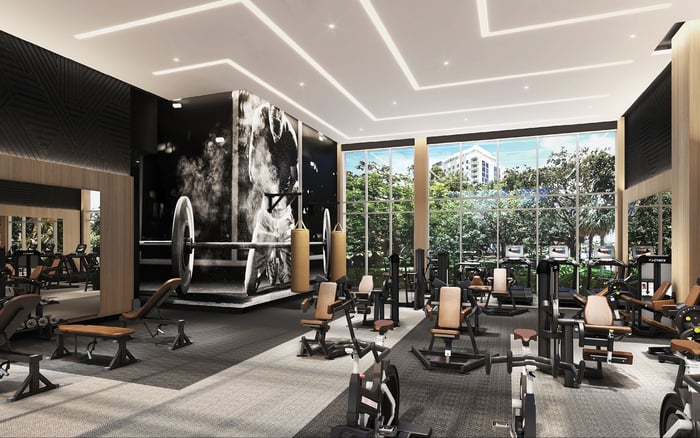
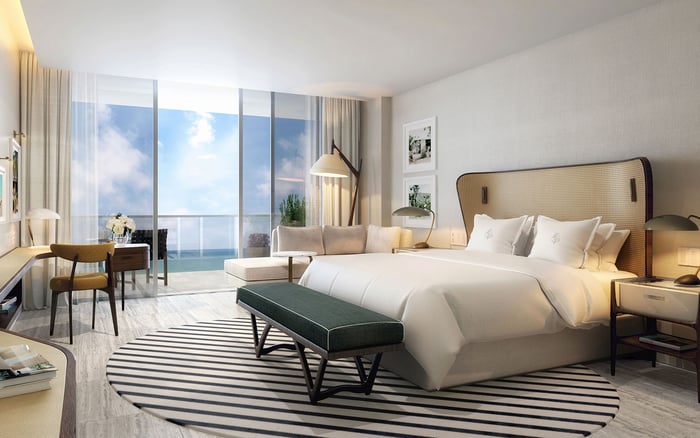
At a hospitality-led residence, privacy depends on circulation design as much as service. Buyers should assess how public dining, valet activity, deliveries, and credentialed routes intersect with the residential experience.
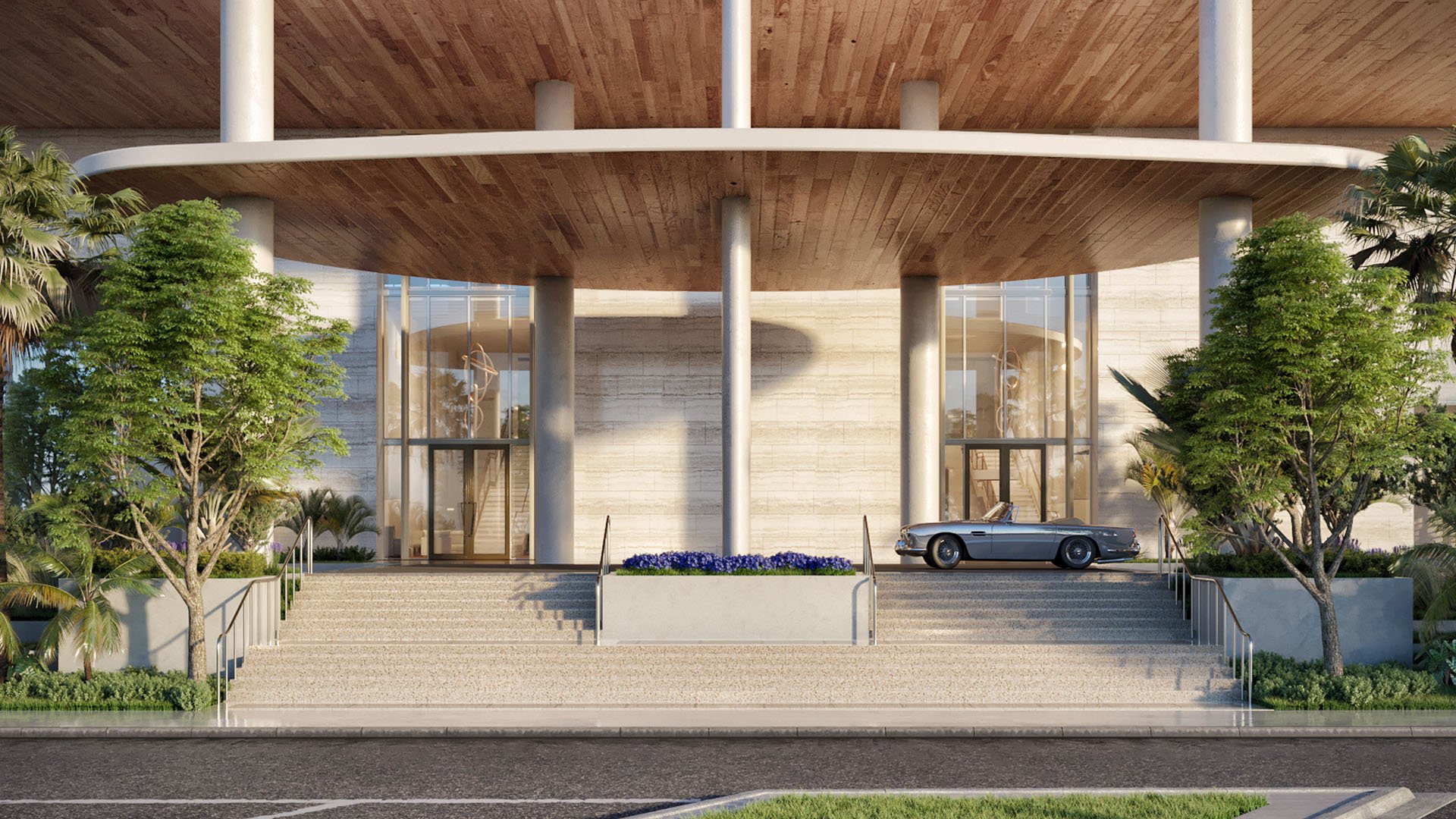
At Four Seasons Hotel & Private Residences Fort Lauderdale, the appeal centers on private ownership combined with a hospitality setting. That combination also gives buyers a more nuanced due-diligence assignment. A residence within a mixed-use property does not operate like an isolated condominium because residents may share the broader property with hotel guests, restaurant patrons, employees, vendors, and service personnel.
This distinction matters when comparing branded residences across South Florida. Hospitality can make ownership convenient, while public-facing uses create an operating rhythm that should be understood spatially. The most useful questions concern where each group arrives, waits, parks, works, rides, and departs.
In mixed-use luxury, privacy is created by circulation design, not branding alone.
A public restaurant brings a different circulation pattern from a residents-only amenity. Dining activity can affect vehicle arrivals, pedestrian movement, guest pickup, valet demand, employee access, and service traffic. The practical impact depends on the restaurant’s placement, operating practices, and relationship to residential spaces.
Buyers considering residences near hospitality terraces or arrival areas should study orientation, elevation, glazing, and the relationship between outdoor seating and private rooms or balconies. An active setting does not establish a noise problem, but it does make unit-specific review important.
The same principle applies when comparing other hospitality-associated properties in Broward County. The useful comparison is operational rather than purely aesthetic: restaurant placement, event routes, arrival sequencing, and the degree of physical separation around residential areas.
Restaurant privileges can be valuable, but priority access should not automatically be interpreted as resident-exclusive dining. Buyers should determine who may use each venue, how reservations are handled, and whether private events can affect normal circulation.
This is both the attraction and the tradeoff of a condo-hotel environment. Owners may enjoy sophisticated services without leaving the property, yet those services require kitchens, loading activity, storage, staffing, and carefully managed back-of-house routes. The residential experience depends not only on what can be requested, but also on whether fulfillment occurs without disrupting private corridors or elevator access.
Prospective purchasers should request a physical circulation map rather than rely solely on general assurances of privacy. The map should identify routes for residents, hotel guests, diners, employees, vendors, deliveries, and valet staff. It can reveal where paths remain separate, where they overlap, and which doors or elevators require credentials.
Security in a mixed-use property is not defined by a single desk or camera. It is a sequence of controlled transitions from the curb or parking area to the residence. Buyers should determine whether residential arrivals have a distinct entrance, whether elevators are dedicated or access-restricted, and whether hotel or restaurant users can approach residential lift areas.
The extent of separation at this property should be confirmed through current condominium documents, management protocols, and an on-site walk-through. Broad promises concerning privacy or security do not, by themselves, explain the access-control architecture.
A practical inspection begins at the curb during an active period. Follow the resident route from vehicle handoff or parking to the lobby, elevator, and private floor. Then examine how a diner, hotel guest, delivery worker, and employee would enter. Ask which transitions are credentialed, who monitors them, how temporary access is issued, and whether protocols change after hours.
Buyers touring The Ritz-Carlton Residences® Fort Lauderdale and St. Regis® Residences Bahia Mar Fort Lauderdale can apply the same route-by-route test. A hospitality name cannot substitute for understanding doors, lift banks, parking interfaces, and service corridors.
Acoustic due diligence is most useful when it is specific. Rather than asking whether a property is quiet, identify potential sources and the times when each is active. Relevant areas can include a restaurant terrace, valet lane, loading point, service elevator, mechanical zone, or event route. Unit position may matter as much as floor height because exposure varies across façades, terraces, and arrival courts.
Visit more than once and at different times. A daytime showing may not reflect evening dining activity, while an evening visit may not reveal deliveries or daytime servicing. Inside the residence, pause in bedrooms, living areas, and outdoor spaces. Open and close doors, assess the apparent performance of the glazing, and distinguish between activity that is audible and activity that is merely visible.
A mixed-use format is not evidence of a specific nuisance at Four Seasons. It is a reason to test a residence under realistic operating conditions. For some owners, the animation of a polished hotel setting is part of the appeal. The objective is to confirm that the selected unit’s exposure matches the buyer’s preference for energy, convenience, and seclusion.
Due diligence should extend beyond finishes and amenity photography. Review current condominium documents and operating rules for restaurant activity, outdoor music, private events, deliveries, valet staging, loading, and after-hours access. Ask which party can modify operating practices, what notice residents receive, and how concerns move from management to resolution.
The most revealing questions are concrete. Can a commercial event alter a normal arrival route? Where do restaurant deliveries wait? Are service elevators shared at any point? How are vendors credentialed? What happens when valet capacity is under pressure? Answers should be reconciled with the physical plan and written rules rather than treated as standalone assurances.
For the right buyer, a hospitality-led residence in Fort Lauderdale can offer an appealing integration of private living, dining, and hotel service. An informed purchase is not based on avoiding activity, but on understanding how the property contains it and whether that arrangement fits the buyer’s expectations.
For private guidance on evaluating access, acoustics, and ownership at South Florida’s premier residences, consult MILLION.
If branded residences are on your mind — as a home or as an allocation — we would be glad to share what we are seeing, privately.
Begin a quiet conversationIt is presented as a hotel and private-residence property rather than a residential-only condominium.
They can add patron arrivals, valet demand, employee movement, deliveries, and activity near shared or adjacent spaces.
No. It makes unit-specific acoustic and circulation review important, but it does not establish a nuisance.
Buyers should trace the route from vehicle handoff or parking through the lobby, elevator, and residential floor.
Confirm whether elevators are dedicated or access-restricted and identify any points where different user groups may share routes.
Review the paths used by employees, vendors, deliveries, restaurant operations, valet staff, and waste removal.
Visit at different times so the review can reflect changing dining, servicing, arrival, and valet activity.
Review current condominium documents, operating rules, access protocols, and provisions concerning events, deliveries, valet staging, and loading.
Evaluate bedrooms, living spaces, balconies, glazing, orientation, and proximity to terraces, arrival areas, and service zones.
No. Privacy depends on physical separation, credentialed transitions, operating rules, and consistent management practices.