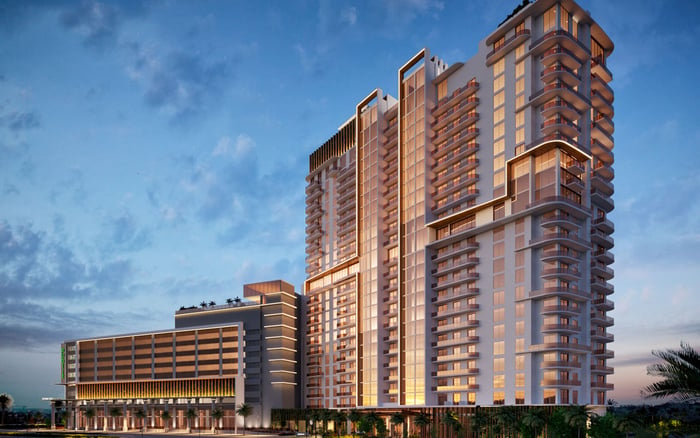
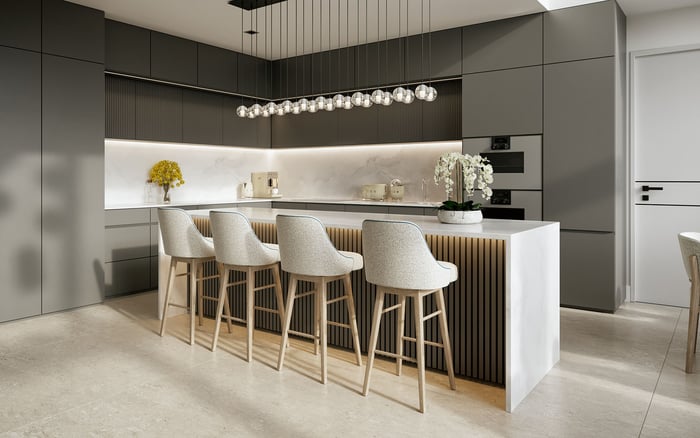
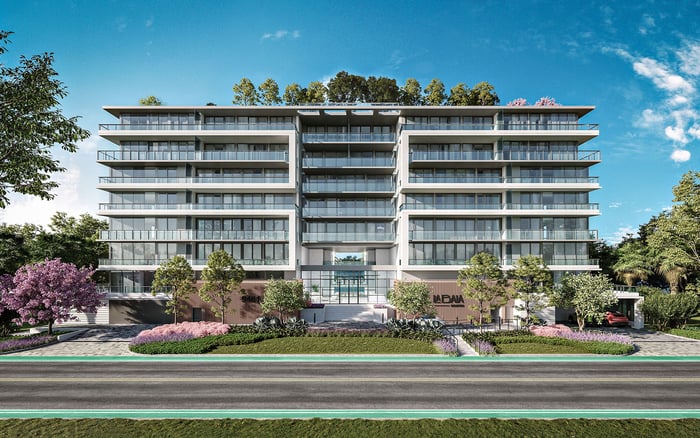
Shoma Bay and Continuum offer distinct visions for working close to home. This practical comparison separates advertised workspace amenities from the privacy, telecommunications and emergency-power commitments buyers should confirm before relying on them.
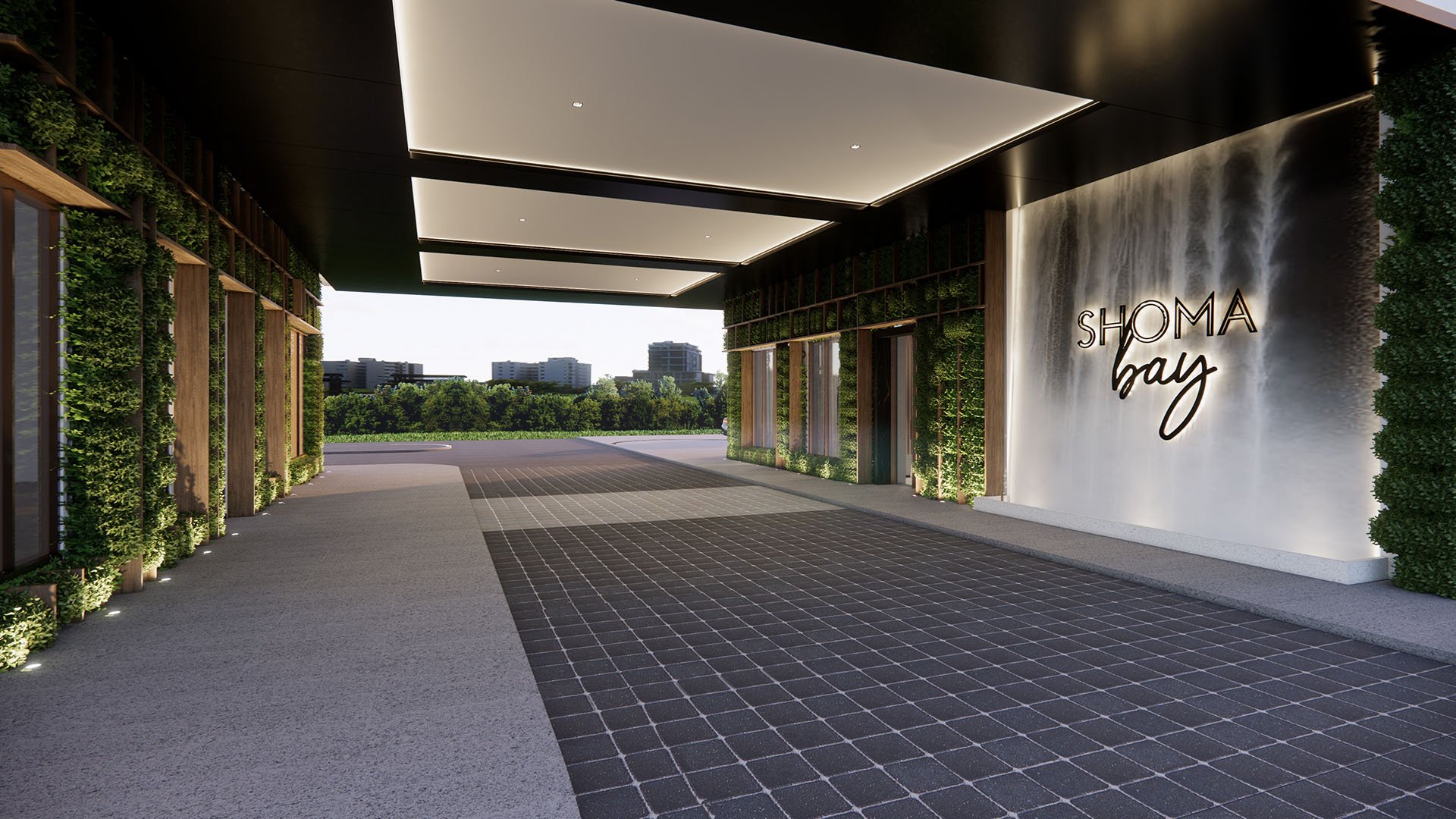
For a buyer whose residence also anchors a working life, luxury includes the ability to take a sensitive call, convene a meeting and stay connected when ordinary routines are interrupted. An attractive lounge addresses only part of that brief. Privacy, telecommunications and emergency power warrant separate scrutiny.
Shoma Bay and Continuum Club & Residences present two distinct approaches to residential workspace. Shoma Bay specifies the size of its coworking lounge; Continuum identifies several settings, including pods, a boardroom and outdoor work areas. Neither project's reviewed materials verify generator-backed connectivity or a written business-continuity commitment. That remains an unresolved specification, not evidence that backup systems will be absent.
The practical comparison is between advertised settings and documented operating assurances. Neither substitutes for the other.
Planned at 1850 John F. Kennedy Causeway, Shoma Bay North Bay Village is described as a 333-residence condominium with more than 60,000 square feet of amenities. Its advertised 2,600-square-foot coworking business lounge includes a coffee bar, giving buyers a defined footprint to evaluate rather than a general promise of collaborative space.
The broader planned offering includes a resident lounge and bar, spa, hammam, fitness center, golf simulators, pet spa and children's club. For someone seeking to fit the workday into a wider residential routine, that combination may appeal. The lounge's dimensions, however, do not establish seating capacity, availability or suitability for confidential conversations.
Telecommunications require a separate assessment. Carrier choice, physically redundant fiber routes, dedicated resident bandwidth and contractual continuity commitments remain unestablished in the reviewed workspace descriptions. The amenity descriptions also leave generator capacity and emergency-power coverage for telecommunications equipment and workspaces unresolved. Buyers should evaluate the lounge as an advertised amenity, not yet as a verified backup office.
Planned at 1755 79th Street Causeway with 198 residences, Continuum Club & Residences North Bay Village advertises more than 60,000 square feet of amenities. These include two pools, a restaurant, fitness facilities and a members-only social lounge.
Its work-related offering is more differentiated by function. An executive lounge with work pods suggests a setting for individual tasks. A fifth-floor waterfront boardroom with audiovisual capabilities provides an identified space for formal meetings. A waterfront workspace terrace adds an outdoor option, while Wi-Fi is explicitly advertised in the outdoor garden and cabanas.
This is a broader range of named work environments, not proof of stronger connectivity or greater confidentiality. The boardroom and pod descriptions do not establish sound isolation, confidential-use guarantees, reservation availability or operation during severe weather. The outdoor Wi-Fi description does not specify guest-access rules, network management, internet providers or carrier redundancy. In-residence internet continuity also remains unverified in the reviewed materials.
Begin with carrier names and the service available inside the residence. Ask whether residents can select a provider, what connection reaches the unit and whether any bandwidth commitment applies to an individual residence rather than a shared amenity network. Request written answers; Wi-Fi availability alone is not a complete service specification.
Next, ask whether fiber-entry routes are physically diverse and request documentation showing those routes. Treat carrier choice and route diversity as separate questions. Neither project's reviewed descriptions establish both, so there is no supported basis for declaring a telecommunications winner.
Finally, clarify responsibility during an outage. Who receives the resident's call, who coordinates with the carrier and what response commitment is provided in writing? Ask how service incidents are communicated and whether the same support covers the residence, boardroom and common-area network. These are diligence questions, not services confirmed for either development.
The same framework applies if the search extends to Tula Residences North Bay Village: request project-specific answers rather than carrying assumptions from one building into another.
The relevant power question is not simply whether a generator is contemplated, but whether it covers the equipment needed for the intended work arrangement. At both Shoma Bay and Continuum, generator-backed workspace connectivity remains unverified in the reviewed materials.
Request the generator load schedule, stated fuel duration and a list of telecommunications equipment receiving emergency power. Ask specifically about telecom rooms, routers, switches, Wi-Fi access points and workspace equipment. Clarify where an uninterruptible power supply, or UPS, is specified and what it covers.
For Continuum, seek separate confirmation for the boardroom's audiovisual equipment and the advertised outdoor Wi-Fi. For Shoma Bay, ask which coworking-lounge outlets and network components would receive backup power. In both cases, distinguish common-area connectivity from service inside a residence.
A useful written answer should identify coverage, exclusions and operating conditions. A general assurance about building backup power does not resolve those questions. Nor should a planned amenity description be taken as evidence of tested outage performance.
A work pod is not automatically a confidential room, and audiovisual capability does not establish acoustic privacy. Buyers handling sensitive conversations should request sound-treatment specifications, details of enclosure and lockability, and the applicable guest-access procedures. Neither project's advertised workspace should be characterized as acoustically private without supporting details.
Reservations matter as much as design. Ask about booking windows, session limits, fees, guest permissions and the process for resolving scheduling conflicts. At Shoma Bay, clarify how shared coworking activity is managed. At Continuum, ask whether boardroom reservations and pod use follow different rules.
Also request access procedures for periods when elevators or electronic entry systems are offline. Confirm whether workspaces close under severe-weather protocols and who communicates those decisions. A room's usefulness depends on when and how a resident can use it.
Shoma Bay's clearest disclosed distinction is its defined coworking footprint with a coffee bar. Continuum's is the range of specifically identified work environments, particularly its waterfront boardroom. Those differences support a lifestyle comparison, but not a ranking of privacy, outage resilience or service reliability.
Before relying on either as an extension of a private office, request a written package covering carrier arrangements, route diversity, emergency-power coverage and workspace policies. Keep planned offerings separate from completed facilities and demonstrated performance. The more essential uninterrupted work is to the purchase, the more important that distinction becomes.
For a discreet conversation about matching a South Florida residence to your working life, connect with MILLION.
If branded residences are on your mind — as a home or as an allocation — we would be glad to share what we are seeing, privately.
Begin a quiet conversationShoma Bay advertises a 2,600-square-foot coworking business lounge with a coffee bar. The description does not establish confidential-use conditions or guaranteed availability.
Continuum lists an executive lounge with work pods, a fifth-floor waterfront boardroom with audiovisual capabilities and a waterfront workspace terrace.
Generator-backed connectivity is not verified in either project's reviewed materials. That does not establish that backup equipment or services will be absent.
Yes, Wi-Fi is advertised in the outdoor garden and cabanas. Provider details, carrier redundancy and guest-access rules are not specified in the reviewed description.
The reviewed descriptions do not establish sound isolation or confidential-use guarantees. Buyers should request technical specifications before relying on pods for sensitive calls.
The reviewed workspace descriptions do not establish carrier choice, physically redundant fiber routes or dedicated resident bandwidth. Buyers should request written connection details.
Request the generator load schedule, fuel duration and confirmation of emergency-power or UPS coverage for telecom rooms, network equipment and workspace equipment.
Ask about booking windows, session limits, fees, guest permissions and scheduling conflicts. Availability and confidential-use conditions should not be inferred from an amenity listing.
The advertised common-area amenities do not establish in-residence internet continuity. Buyers should obtain separate written confirmation for the service and backup arrangements inside the unit.
Shoma Bay discloses a quantified coworking lounge, while Continuum identifies a wider range of work settings. The reviewed materials do not support naming a winner for privacy or outage resilience.