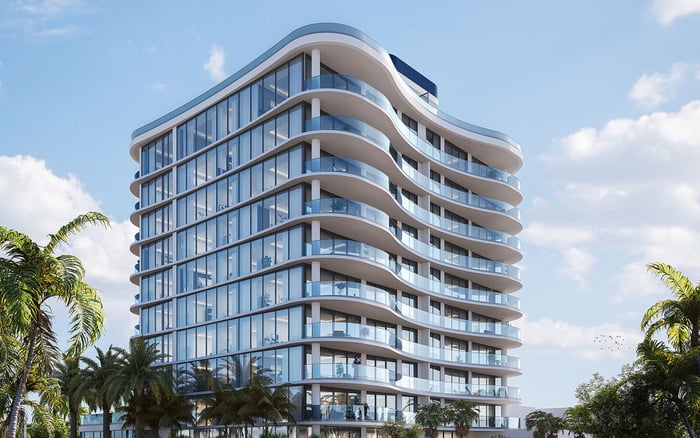
A discreet approach to e-bike ownership at Armani/Casa Residences Pompano Beach begins with written storage permission, battery-safety planning, and confirmed elevator access before delivery.

An e-bike can complement an oceanfront lifestyle, but bringing one into a high-value residence requires more than an elegant place to park it. At Armani Casa Residences Pompano Beach, preparation begins with logistics: establish where the bicycle may travel, where its battery may be kept, and where charging is permitted before arranging delivery or commissioning cabinetry.
The development is marketed as two 19-story towers with 28 oceanfront residences, generally one residence per floor, at 1550 N. Ocean Boulevard, Pompano Beach, Florida 33062. That intimate scale makes arrival logistics worth resolving early. Private access and concierge service are valuable advertised features, but neither establishes permission to transport or charge a lithium-ion-powered bicycle.
Final e-bike-storage, battery-charging, and service-elevator operating rules have not been clearly established publicly. Treat written approval as a design requirement, not a detail to settle after the bicycle arrives.
Start with three distinct questions: where may the complete bicycle be stored, where may a removable battery be kept, and where may that battery be charged? Permission for one does not establish permission for the others.
The advertised parking allocation is two dedicated spaces per residence and three per penthouse residence. Electric-vehicle charging stations are also advertised. Neither feature establishes permission to keep an e-bike beside a vehicle, connect its charger in a parking area, or use automobile-charging infrastructure for another purpose.
Likewise, do not plan around an assumed bicycle room, secured cage, battery locker, charging cabinet, or resident e-bike charging station. None has been established as an amenity. Ask management to identify any approved location and clarify whether it accommodates both the frame and the battery.
For an interior designer, the instruction is straightforward: defer a charging drawer, fitted closet, or concealed outlet arrangement until the proposed use has been reviewed. An attractive enclosure is not, by itself, a safe or authorized charging location. Obtain explicit answers for residences, balconies, closets, garages, and common areas rather than relying on a general assurance that bicycles are welcome.
The battery deserves its own specification alongside the bicycle. Retain the manufacturer’s instructions and identify the battery and approved charging equipment before submitting a storage proposal. A connector that fits does not establish that a charger is appropriate for the battery.
Follow manufacturer instructions, use approved charging equipment, and avoid extension cords or power strips for e-bike charging. Battery damage, improper chargers, overcharging, and unsuitable conditions are recognized lithium-ion fire risks. A convenient outlet should never be the sole basis for choosing a charging location.
Ask management which testing-laboratory listings it requires for devices, batteries, and chargers, and how compliance will be documented. Request the procedure for reporting a damaged battery and the restrictions that apply while the issue is addressed. Do not assume that removing a battery makes either component acceptable in a particular room.
Keep applicable fire requirements separate from house rules. Model-code provisions are not evidence of an adopted local requirement or an Armani/Casa policy. The relevant fire authority and management should clarify what governs the proposed arrangement. For local fire-prevention questions, contact Pompano Beach’s Fire Prevention Bureau.
Saltwater exposure can increase the fire risk of lithium-ion-powered devices. At a beach-oriented residence, a shoreline ride or storm-related exposure is therefore a battery-safety consideration, not simply a housekeeping issue.
Before delivery, establish whom to contact if the bicycle or battery is damaged or exposed to saltwater. Seek manufacturer guidance and management’s procedure rather than assuming the equipment remains suitable for routine storage or charging without further assessment.
Buyers also considering Ocean 580 Pompano Beach should carry the same questions into their due diligence. Compare written permissions and practical arrangements; do not assume nearby properties share storage facilities or charging policies.
The planned elevator arrangement includes two dedicated private elevators in each tower. Separate service elevators are also described as accessible to all residences, but their dimensions, operating hours, and reservation procedures are not established. Private-elevator access should not be read as authorization to bring a bicycle through the principal arrival sequence.
Request a route from the unloading point to the approved storage location. Confirm whether bicycles must use a service elevator, whether batteries must be removed, what restrictions apply to lobby access, and whether protective coverings are required. These are questions to resolve, not confirmed building conditions.
Measure the proposed bicycle in its actual transport configuration, then obtain cab dimensions, clear door openings, and weight limits. A seemingly generous elevator may still require careful planning at a doorway or turn. For a boxed delivery, submit both the package dimensions and those of the assembled bicycle.
The objective is an approved route that protects both the equipment and the residence’s finishes. Do not schedule delivery on the strength of elevator availability alone.
Security, full-service concierge service, and a smart package and mail room are advertised. Those amenities do not establish acceptance or temporary storage of e-bikes, loose batteries, or oversized shipments.
Ask about reservation lead times, permitted delivery hours, loading access, deposits, contractor insurance, attendants, and oversized-package acceptance. Clarify whether the owner or a representative must receive the shipment directly. Treat none of these possible requirements as confirmed until management supplies its procedures.
Keep the seller, delivery team, and residence representative working from the same written instructions. The delivery plan should identify the receiving contact, approved route, and authorized destination so the bicycle is not left awaiting an improvised solution.
For buyers evaluating branded residences, service expectations should be matched to documented permissions. Apply that discipline when comparing Armani/Casa with The Ritz-Carlton Residences® Pompano Beach, without inferring either property’s e-bike policies from its branding.
Before closing or moving in, request the condominium declaration, current rules, owner handbook, fire-safety policy, and elevator and delivery procedures. Where operating documents remain subject to finalization, ask when the applicable version will be available and who can confirm the proposed arrangement in writing.
A well-prepared residence accommodates daily life without requiring its owner to improvise around safety or access. Resolve the battery location, charging permission, and delivery route first; let the interior design follow those decisions.
For a considered approach to South Florida residential ownership, explore MILLION.
If branded residences are on your mind — as a home or as an allocation — we would be glad to share what we are seeing, privately.
Begin a quiet conversationFinal e-bike-storage, battery-charging, and service-elevator operating rules are not clearly established publicly. Obtain the applicable rules and written confirmation before arranging delivery.
A dedicated bicycle room, secured e-bike cage, battery locker, or charging cabinet is not established as an amenity. Ask management to identify any approved storage location.
Advertised electric-vehicle charging does not establish permission to charge e-bike batteries in parking spaces or elsewhere. Confirm the proposed equipment and location separately.
The planned arrangement identifies two dedicated private elevators in each tower. That provision does not establish permission to transport an e-bike in them.
Separate service elevators are described as accessible to all residences, but dimensions, hours, and reservation procedures are not established. Request the applicable access procedures before scheduling delivery.
Avoid using power strips or extension cords for e-bike charging. Follow manufacturer instructions and use charging equipment approved for the battery.
Saltwater exposure can increase the fire risk of lithium-ion-powered devices. Seek manufacturer guidance and management’s procedure before treating exposed equipment as suitable for routine storage or charging.
Acceptance or storage of e-bikes, batteries, and oversized shipments is not established. Confirm receiving arrangements and whether direct owner or representative acceptance is necessary.
Request the condominium declaration, current rules, owner handbook, fire-safety policy, and elevator and delivery procedures. Seek separate written confirmation for bicycle storage, battery storage, and charging.
Contact Pompano Beach’s Fire Prevention Bureau for local fire-prevention questions. Management should separately confirm the building’s applicable policies.