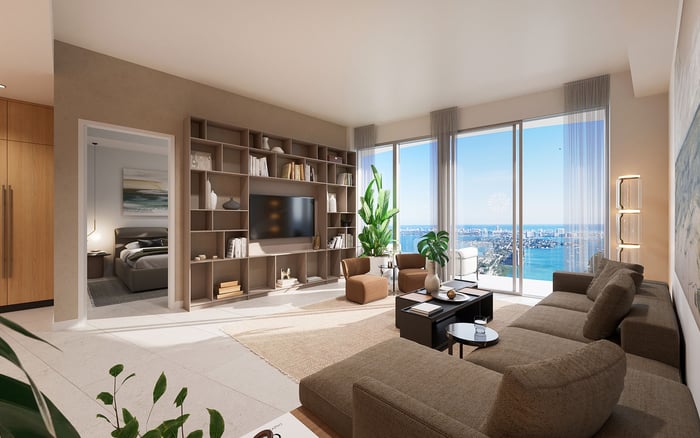
For siblings purchasing a seasonal Florida condominium, a considered closing begins with aligned ownership expectations, program-specific financing review, and a clear understanding of reserves, litigation, commercial interests, and investor concentration.

A seasonal residence shared by siblings promises something unusually valuable: a familiar South Florida address woven into the family calendar. Yet agreeing on the view is simpler than agreeing on an unexpected assessment, a refinancing decision, or an eventual exit. Before closing, the family should examine both the condominium’s obligations and its own proposed arrangement.
For siblings considering Una Residences Brickell, or another Brickell address, the first conversation should concern intended use rather than finishes. Who expects to occupy the residence, when, and with which guests? Might either sibling want rental income later? Give counsel and the lender the same written description of the plan.
Ask counsel which title structure suits the family’s circumstances and what a co-ownership agreement should address. Cover contributions, recurring expenses, assessment funding, decision authority, missed payments, transfers, and exit arrangements. These matters call for professional resolution, not an informal family understanding.
Treat jumbo condo review as part of the financing process, not a universal certification. Ask the selected lender to identify the proposed program and its requirements for this specific condominium and ownership arrangement. A general discussion of borrowing capacity does not answer every project-level question.
The useful questions are precise: How will seasonal use by siblings be classified? Does the proposed title arrangement fit the program? Which association documents are required? Who evaluates reserves, litigation, commercial space, payment delinquencies, and ownership concentration? What remains unresolved before the lender can confirm its position?
Request written clarification of outstanding conditions before making financing assumptions that shape the closing. A program’s willingness to consider a particular feature does not guarantee approval. Nor should a threshold encountered in one lending program be treated as a universal jumbo rule.
Florida condominium associations must make official records available for inspection and copying by unit owners. Prospective purchasers should arrange access through the seller rather than assume they hold identical statutory inspection rights.
Request governing documents and amendments, meeting minutes, contracts, insurance policies, financial statements, audits where available, accounting records, the current budget, and the applicable structural integrity reserve study, or SIRS. Request applicable milestone-inspection reports alongside the study. Together, these documents help establish the association’s financial position, maintenance responsibilities, and ongoing commitments.
Organize the review around a practical question: what could require money or a decision from the family after closing? Ask the seller and association to clarify assessments, planned work, and unresolved matters reflected in the records. Have counsel examine the contract’s treatment of assessments and outstanding obligations; do not assume the siblings and seller share the same interpretation.
Florida generally requires a SIRS at least every 10 years for covered residential condominium buildings of three or more habitable stories, subject to statutory exceptions. The study estimates covered components’ remaining useful lives and replacement or deferred-maintenance costs. Its existence alone does not establish funding adequacy.
Covered components include roofs, primary structural systems, fireproofing and fire protection, plumbing, electrical systems, waterproofing and exterior painting, windows, and exterior doors. Compare projected spending and funding recommendations with the association’s budget and financial statements. Ask what is funded today, what contributions are budgeted, and how any difference is expected to be addressed.
On a Miami Beach shortlist that includes The Perigon Miami Beach, apply the same document-led discipline without assuming any project’s reserve position. Ask advisers which requirements apply to the particular building and transaction.
A milestone inspection and a reserve study address related but different questions: condition and funding. Neither should substitute for the other. Waiving reserves or allowing alternative uses of reserve funds may expose owners to unanticipated special assessments. Ask counsel how applicable rules and any reserve decisions affect the purchase.
The meaningful litigation question is not simply whether a lawsuit exists. Ask counsel what the dispute concerns, which parties are involved, what remedies are sought, and whether ownership, repair responsibility, access, or shared services are contested. Ask the lender separately how the matter affects the selected financing program.
Condo-hotel disputes have involved ownership of roofs, balconies, lobbies, hallways, utility equipment, and air-conditioning systems. These are building-wide questions, not merely disagreements about an individual residence. Where relevant, ask who maintains the disputed area while proceedings continue and how related expenses are being handled.
Do not assume every pending lawsuit disqualifies a condominium. The aim is to understand the particular dispute and obtain counsel’s and the lender’s assessments-not to turn a litigation disclosure into an automatic verdict.
In mixed-use and condo-hotel structures, master declarations can place ownership of building areas outside the residential condominium. Reserve diligence therefore needs an ownership map as well as a financial review. Who owns the roof, lobby, mechanical equipment, and other shared elements? Who maintains each, and how are costs allocated?
Ask counsel to read the residential declaration together with applicable master documents and shared-facility arrangements. Identify which obligations belong to the residential association and which sit elsewhere. A residential reserve balance cannot answer every question about facilities controlled by another party.
Florida law prohibits condominium documents from giving a commercial-unit owner veto power over all amendments. That protection does not remove the need to examine specific governance provisions. Ask the lender how its program measures commercial space and evaluates the arrangement. Do not assume one percentage resolves questions of ownership, control, and financing alike.
Investor ownership, single-entity ownership, and owner occupancy are distinct measures. Ask the lender to define each requested metric, identify acceptable documentation, and explain the selected program’s requirements. Obtain payment-delinquency information separately rather than use it as a proxy for ownership concentration.
For a seasonal search in Sunny Isles Beach that includes Jade Signature Sunny Isles Beach, the same questions belong in the file. Including a residence on a shortlist establishes neither its investor profile nor its financing eligibility.
Before closing, bring the findings back to the sibling agreement. If an assessment arrives, how will contributions be determined? If one sibling wants to sell and the other does not, what process should counsel document? Ask the lender and counsel to address unresolved conditions within their respective roles. The goal is a residence whose obligations are as clearly understood as its pleasures.
For a considered approach to your South Florida seasonal residence search, explore MILLION.
If branded residences are on your mind — as a home or as an allocation — we would be glad to share what we are seeing, privately.
Begin a quiet conversationAsk counsel to address title, contributions, expenses, decision authority, missed payments, transfers, and exit arrangements. Give the lender the same description of intended ownership and seasonal use.
Do not assume a universal standard. Ask the selected lender for the specific program’s project-review requirements and outstanding approval conditions.
Florida provides statutory inspection and copying rights to unit owners. Prospective buyers should arrange document access through the seller rather than assume identical rights.
Request governing documents, minutes, contracts, insurance policies, budgets, financial statements, available audits, accounting records, and the applicable SIRS. Also request applicable milestone-inspection reports.
Florida generally requires a SIRS at least every 10 years for covered residential condominium buildings of three or more habitable stories, subject to statutory exceptions.
No. Compare its expenditure projections and funding recommendations with actual financial statements and the association’s budget.
No. Structural inspections and reserve studies address related but different questions about building condition and funding, so request both where applicable.
Do not assume automatic disqualification. Ask counsel to assess the dispute and the lender to determine its effect under the selected financing program.
Master declarations can allocate ownership of building areas outside the residential condominium. Review ownership, maintenance duties, cost allocation, and governance alongside the lender’s commercial-space requirements.
No. Investor ownership, single-entity ownership, and owner occupancy are distinct measures that should be defined and evaluated separately under the selected lending program.