Pompano Beach’s expanding luxury market rewards buyers who distinguish completed public improvements from future development, then scrutinize condominium finances, branded services, waterfront rights and contract protections.
Pompano Beach’s luxury transformation comprises several distinct propositions: an established beachfront destination, an expanding collection of premium residences, and a broader redevelopment agenda whose benefits will arrive on different schedules. For a discerning buyer, the opportunity is not simply to purchase into change. It is to distinguish what already supports daily life from what remains contingent.
That distinction matters when comparing a completed boutique condominium with a branded tower under construction or a residence within a hotel-oriented development. Each may promise an exceptional coastal lifestyle. Each calls for a different examination of delivery, operating costs, access and control. The strongest purchase is one whose documents support the experience being sold.
The six-acre Fishing Village provides a tangible starting point. Its walkable beachfront mix includes dining, shops, a hotel, a tiki bar and a parking garage. Buyers can assess the setting firsthand: visit at different hours, walk likely routes and decide whether the surrounding activity suits their preferred degree of privacy.
A $181 million general-obligation bond approved in 2018 funded public improvements including Fisher Family Pier, the Pier Garage and the Atlantic Boulevard bridge. These improvements belong in a different valuation category from future development programs.
The downtown redevelopment vision is a 70-acre walkable, smart-city hub, with more than 30 acres of assembled redevelopment land and completed infrastructure and streetscape work. That does not mean the entire envisioned district is finished.
Similarly, The Pomp is planned as a 223-acre mixed-use district. Its stated program includes approximately 1.3 million square feet of retail and entertainment, 4,000 luxury residences, two hotels and 1.4 million square feet of offices. Treat those quantities as plans, not available amenities. Ask whether the purchase remains compelling if future phases take longer than anticipated.
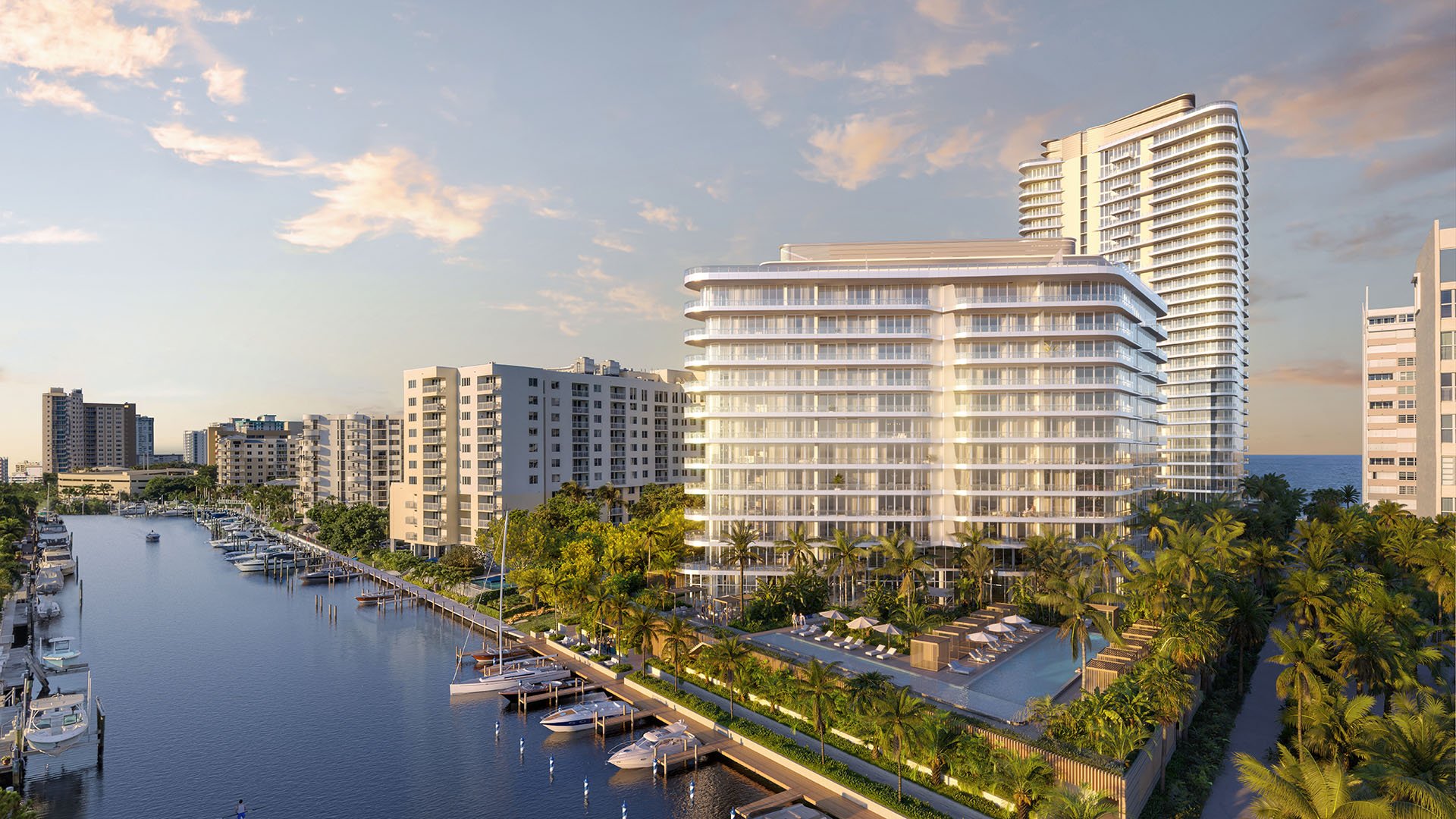
At Waldorf Astoria Residences Pompano Beach, the proposed offering is a 28-story beachfront tower with 92 residences at 1350 South Ocean Boulevard. Advertised amenities include a beachfront café with room service, a resident lounge, poolside dining, wellness facilities and nearly two dozen boat slips.
The due-diligence question is how those services translate into enforceable ownership terms. Request the governing agreements and proposed operating budget. Establish which services are included, which carry separate charges, who controls operating hours and what contractual provisions address management or branding changes.
Delivery deserves equal attention. Waldorf has been described as being in vertical construction with estimated completion in mid-2027, while a separate advertised schedule indicated 2026. Neither date should substitute for the latest written developer schedule and the contract’s completion provisions. Have counsel examine extensions, escrow terms, remedies and amenity exclusions.
The Ritz-Carlton Residences® Pompano Beach is planned with 205 residences divided between a 32-story, 117-residence Beach Tower and a 14-story, 88-residence Marina Tower. The two-tower structure warrants a tower-specific review, not an assumption that every residence carries identical access or expenses.
Request a clear allocation of shared and tower-specific costs. Confirm how pools, spas, lounges, landscaped areas and the pavilion are governed, and whether access differs by ownership category. The advertised presence of 14 private boat slips should prompt a separate inquiry into eligibility and rights-not an assumption that a residence includes dockage.
For a buyer considering either tower, the relevant comparison is the complete ownership package: residence, services, common-area obligations and waterfront access. A shared brand name does not replace a separate review of each component.
At W Pompano Beach Hotel & Residences, marketed at 20 North Ocean Boulevard on a 3.7-acre site, the ownership structure deserves particular scrutiny. The advertised total is 373 luxury units. Separate descriptions identify 77 traditional condominium residences of approximately 2,400 to 3,400 square feet, plus 303 hotel/condo units-a total of 380.
Resolve that discrepancy before committing by reviewing the final unit schedule, recorded declaration when available, offering documents and hotel-component structure. Do not assume that every unit shares the same use rights, financing profile or management obligations.
Ask specifically about rental restrictions, hotel-program participation, management fees, owner self-management rights and the allocation of shared amenity costs. These are questions to resolve in writing, not disadvantages to presume. The objective is to establish whether the particular residence supports the buyer’s intended use without relying on a general description of the development.
Salato, at 305 Briny Avenue, has been described as a completed nine-story condominium with 40 residences, a pool and bar, spa, fitness center and 24-hour concierge. A completed building offers a different due-diligence opportunity: inspect the actual common areas, assess service delivery and request available operating records rather than relying exclusively on projections.
Its approximately $2 million to $5.3 million sold-or-marketed range is not a verified set of closed-sale comparables. Pricing analysis should distinguish asking figures from documented transactions and account for the specific residence and ownership costs.
At Armani Casa Residences Pompano Beach, the described plan comprises twin 19-story buildings containing 28 residences, with starting prices around $5 million. That advertised starting point is neither evidence of achieved resale value nor a substitute for reviewing the operating budget. Compare the offering on documented terms rather than assuming that a smaller residence count settles questions of value or expense.
Waterfront ownership requires a separate physical and financial review. Examine flood exposure, elevation, drainage, hurricane protection and responsibility for seawalls and docks. Clarify whether any boat-slip rights are deeded, leased, licensed or restricted, along with the associated maintenance obligations.
For every condominium under consideration, request budgets, reserves, insurance policies and deductibles, assessment history, meeting minutes, inspection findings and litigation disclosures. For developments not yet operating, scrutinize projected staffing and amenity costs alongside the advertised service package.
Pompano Beach’s transformation can be appreciated without treating every future improvement as present value. The disciplined approach is to pay for the residence and rights being acquired today, understand the obligations attached to them and regard undelivered benefits with appropriate restraint.
For a discreet conversation about evaluating Pompano Beach’s luxury residences, connect with MILLION.
If branded residences are on your mind — as a home or as an allocation — we would be glad to share what we are seeing, privately.
Begin a quiet conversationSeparate existing beachfront improvements from buildings under construction and planned districts. Future development should not be valued as an amenity already available to residents.
Fishing Village is a six-acre, walkable beachfront redevelopment with dining, shops, a hotel, a tiki bar and a parking garage.
The stated quantities describe a planned program, not delivered amenities. The 223-acre district envisions entertainment, dining, retail, residences, hotels and offices.
Obtain the latest written developer schedule because advertised timelines have differed between 2026 and mid-2027. Counsel should also review contractual extensions and completion remedies.
The planned 205 residences comprise 117 in the 32-story Beach Tower and 88 in the 14-story Marina Tower. Buyers should examine tower-specific access and expense allocations.
The advertised total of 373 units differs from a separate breakdown of 77 traditional residences and 303 hotel/condo units. Resolve the discrepancy through the final unit schedule and governing documents.
Verify rental restrictions, hotel-program obligations, management fees, self-management rights and shared expenses. Confirm that the specific unit’s governing terms support the intended use.
The approximately $2 million to $5.3 million sold-or-marketed range is not a verified closed-sale comparable set. Distinguish asking figures from documented transactions.
Do not assume that a residence includes dockage. Verify eligibility, availability, maintenance obligations and whether slip rights are deeded, leased, licensed or restricted.
Request budgets, reserves, insurance policies and deductibles, assessment history, meeting minutes, inspection findings and litigation disclosures. For a development not yet operating, scrutinize projected staffing and amenity costs.