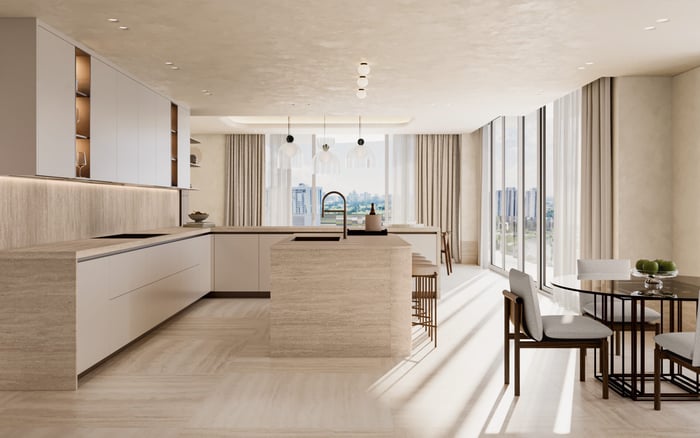
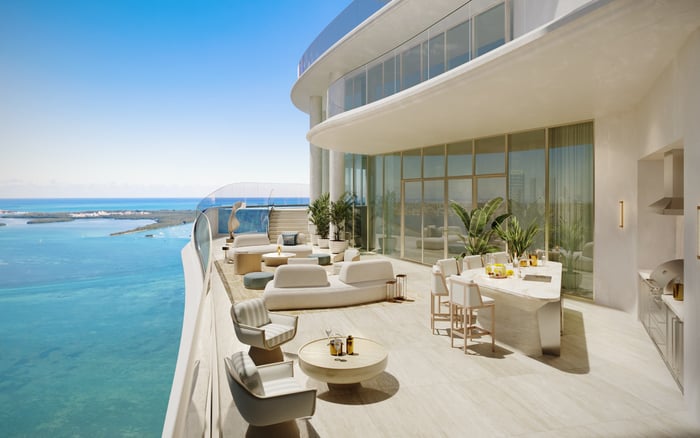
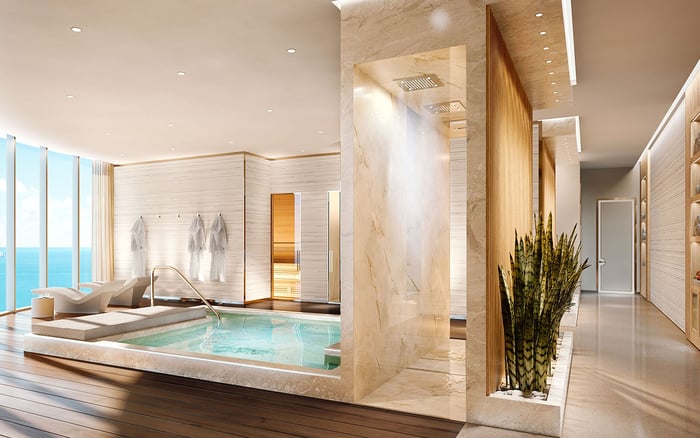
At One Park Tower, the most valuable view is not necessarily the broadest one. Orientation, reflected light, balcony usability, glass performance, storm protection, and possible future development should all be weighed before paying a premium for lagoon, park, skyline, bay, or ocean outlooks.
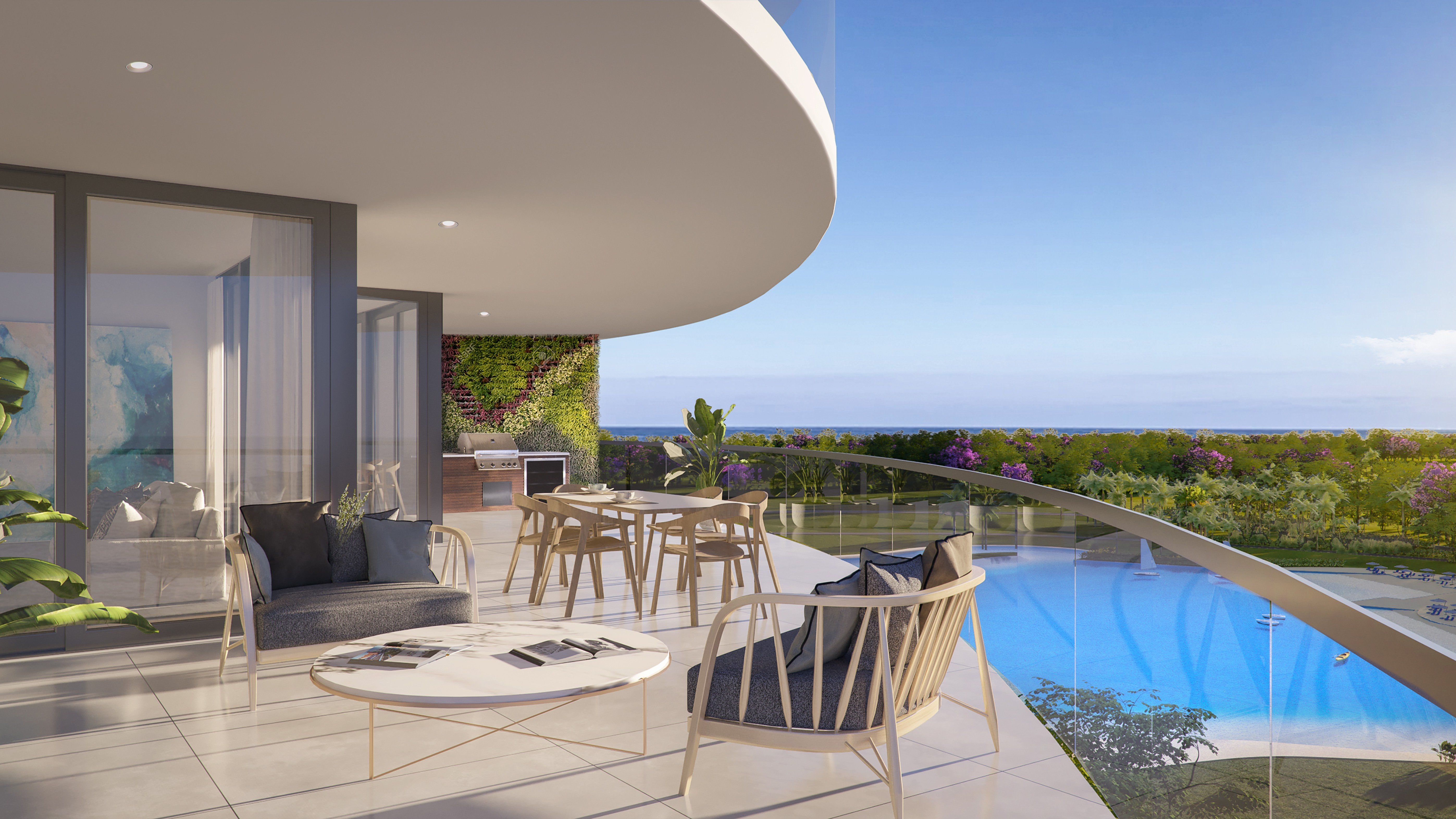
At One Park Tower by Turnberry North Miami, outlook is central to the proposition. The 33-story, 292-residence condominium sits at 2411 Laguna Circle within the 184-acre SoLé Mia community. Residences overlook the seven-acre Laguna SoLé Crystal Lagoon and offer private-beach access, while view corridors extend toward Oleta River State Park, the Atlantic Ocean, the Miami skyline, and the lagoon itself.
This open, master-planned setting provides water, park, and landscape separation distinct from that of a tightly packed urban tower district. Floor-to-ceiling windows and expansive private balconies bring those surroundings into daily life. Yet the breadth of a panorama does not, by itself, establish its practical value. A premium view should remain comfortable when the sun is low, the water is reflective, the balcony is in use, and the shades are open.
The best view premium is attached to the outlook a buyer can comfortably enjoy.
Terms such as lagoon, park, skyline, bay, and ocean view are useful introductions-not complete evaluations. Buyers should place the official floor plan beside the site plan, identify the precise direction of the principal glass, and determine whether the living room, primary bedroom, kitchen, and balcony share the same exposure.
East and southeast orientations can deliver compelling morning light and distant bay or ocean outlooks. They can also receive hard, low-angle sun for roughly three hours. In heavily glazed rooms, that may create glare at breakfast, brightness on screens, and the need for tighter solar shades. Shade fabrics with approximately 1% to 3% openness may suit demanding east-facing glass, though the trade-off is a more filtered view when the shades are lowered.
West and southwest residences warrant a separate late-day test. Afternoon heat can build across extensive glass, while Laguna SoLé may amplify reflected brightness as the sun descends. A dramatic sunset is valuable only if the living room and balcony remain comfortable during the hours when the owner plans to entertain.
North-facing glass generally receives less direct sun and may support a shade with approximately 5% openness, preserving a stronger visual connection to the landscape. That does not automatically make north the superior choice. Rather, the exposure may offer a different balance of brightness, heat, privacy, and view preservation.
A corner residence may command attention because it opens more than one view corridor. Dual exposures, however, can introduce multiple periods of direct sun throughout the day. Morning brightness may affect one room, while late-afternoon heat reaches another. Buyers should test each principal space independently rather than treat the residence as a single orientation.
High floors can broaden the horizon, but height should not distract from the sun’s angle or the way light interacts with interior finishes. Visit east-facing candidates in the morning and west-facing candidates in the late afternoon. If possible, remain long enough to observe how quickly conditions change and whether the automated or specified shading strategy preserves the reason for paying the premium.
This discipline applies across the broader North Miami and Aventura market. A purchaser comparing Solana Bay North Miami or Avenia Aventura should apply the same unit-specific test: direction, floor, obstructions, reflected water, glazing, and the hours when the view will actually be used.
Miami-Dade falls within the Florida Building Code’s High Velocity Hurricane Zone framework for windows and opening protection. In applicable high-wind areas, exterior windows must be impact-resistant or protected by an approved system such as shutters. Impact-resistant glazing commonly incorporates laminated glass designed to remain together after breakage and help preserve the building envelope.
High-impact windows and impact glass are identified for one residence at One Park Tower. That detail is a useful prompt, not a substitute for unit-level verification. Before contracting, request the selected residence’s glass type, impact certification, design-pressure ratings, solar heat gain coefficient, visible-light transmission, and UV performance.
These figures answer different questions. Impact documentation addresses storm performance. Solar heat gain and visible-light characteristics affect cooling, brightness, fading, and visual comfort. Compliant glass can still admit enough light or heat to require shades. Conversely, a well-managed solar exposure does not replace the need to confirm impact specifications.
Buyers considering an ocean-oriented alternative such as Turnberry Ocean Club Sunny Isles should preserve the same distinction. Storm protection, glare control, and thermal comfort belong in one diligence file, but they are not interchangeable attributes.
The financial test begins with the price-per-square-foot difference between comparable residences. Add the likely costs of motorized solar shades, blackout shades in sleeping areas, appropriate films where permitted, and incremental cooling. Then determine whether those measures allow the view to remain visible at the precise hours that made the residence desirable.
Waterview value weakens when harsh exposure keeps the shades closed throughout breakfast or sunset. This is especially relevant in a home intended for seasonal use, where preferred hours may center on morning coffee, evening entertaining, or weekend balcony time rather than a conventional workday schedule.
A practical showing should include several focused tests. Stand where seating and dining furniture will likely be placed. Check reflections on a phone or laptop. Look for glare across polished stone, cabinetry, and television walls. Step onto the balcony to assess both direct sun and light reflected from the lagoon. Note whether shade coverage appears continuous at corners and doors.
For new-construction purchases, examine the SoLé Mia site plan and prospective future phases. An open outlook today should not be assumed to be permanently protected without reviewing what may be built, where it may rise, and how it could affect sightlines. The tower’s spacious setting is an advantage, but the premium should reflect documented context rather than a generalized promise of openness.
Before assigning value, create a simple comparison for shortlisted residences. Record orientation, floor, principal view, secondary view, direct-sun periods, reflected-glare risk, balcony exposure, shade requirements, glass specifications, cooling implications, and future-development considerations. The result turns an emotional impression into a buyer’s decision tool.
At One Park Tower, the right residence may be an east-facing home with controlled morning light, a west-facing home chosen specifically for sunsets, a calmer north exposure, or a corner that earns its premium through variety. The decisive question is not which label sounds most prestigious, but which exposure best supports the owner’s actual schedule, tolerance for brightness, design intentions, and expectations during storm season.
For private guidance on evaluating South Florida residences with equal attention to outlook and livability, consult MILLION.
If branded residences are on your mind — as a home or as an allocation — we would be glad to share what we are seeing, privately.
Begin a quiet conversationOrientation, low-angle sun, water reflections, and balcony exposure can materially change comfort. A midday visit may not reveal the conditions that occur at breakfast or sunset.
Tour east-facing candidates during the morning, when low-angle sun can create the strongest glare and brightness across the glass.
Visit west-facing homes in the late afternoon to evaluate solar heat, sunset glare, and reflections from Laguna SoLé.
No. They generally receive less direct sun, but the best orientation depends on the buyer’s preferred light, view, privacy, and daily schedule.
A corner may provide broader or dual views, but multiple exposures can create separate periods of direct sun in different rooms.
No. Impact compliance addresses storm protection, while glare, brightness, and solar load depend on orientation and the glass’s separate performance characteristics.
Request the glass type, impact certification, design-pressure ratings, solar heat gain coefficient, visible-light transmission, and UV performance for the selected residence.
Consider motorized solar shades, bedroom blackout shades, permitted films, and additional cooling alongside the price-per-square-foot premium.
Test the balcony at the time it will be used most, noting direct sun, heat, reflected lagoon glare, and suitability for outdoor entertaining.
No. Buyers should review the SoLé Mia site plan and prospective future phases before treating an open outlook as permanent.