An owner-focused review of façade sealant planning, balcony waterproofing and wind-driven-rain documentation at St. Regis® Residences Sunny Isles, distinguishing general coastal maintenance guidance from property-specific findings.
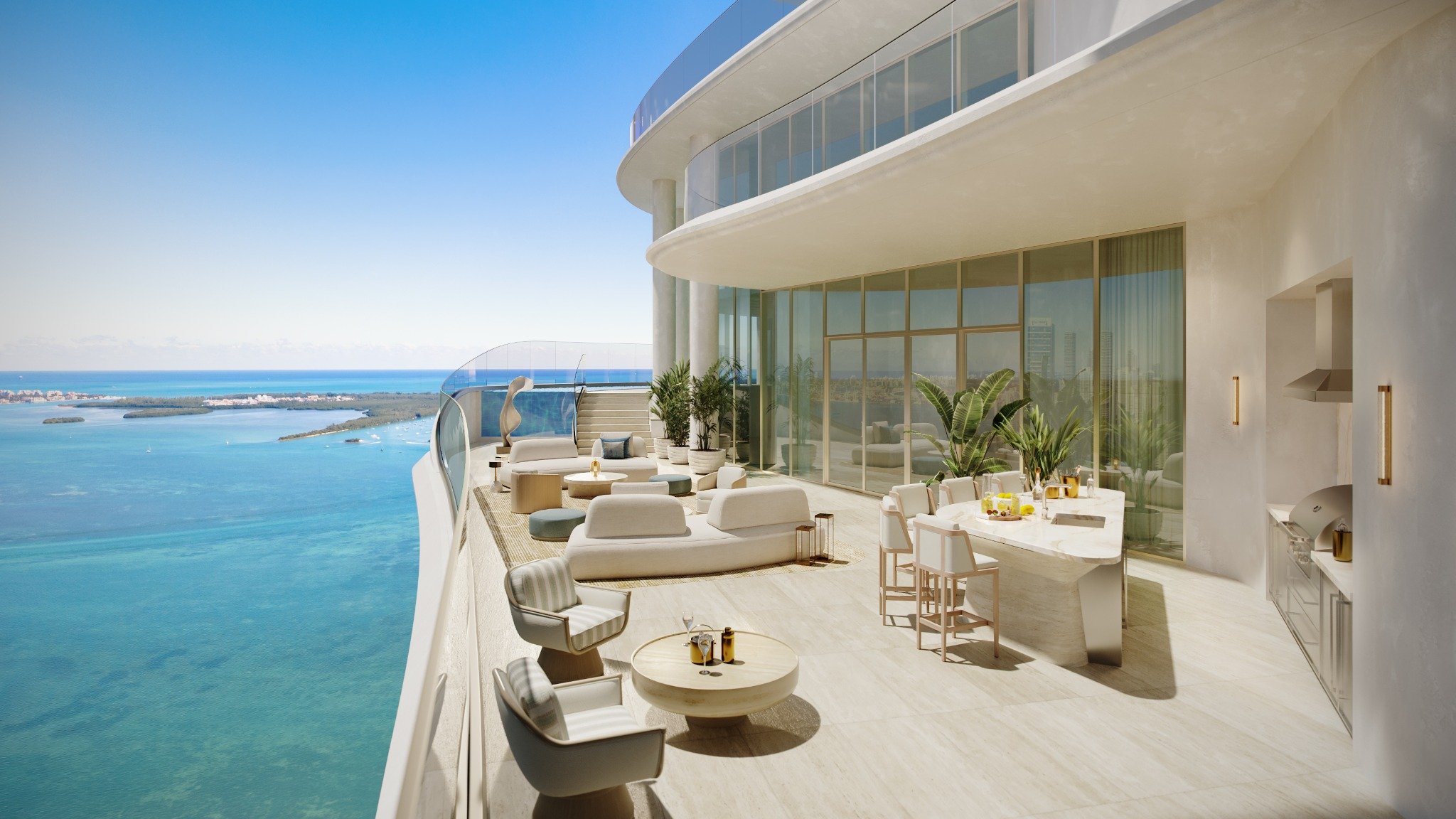
For an owner considering St. Regis® Residences Sunny Isles, the building envelope deserves the same attention as the residence itself. Salt air, ultraviolet exposure, moisture and building movement make façade joints and waterproofing recurring maintenance priorities. The objective is not simply to preserve appearances, but to understand how adjoining systems manage water over time.
This review provides a framework for ownership diligence, not a finding of failure. It establishes no confirmed façade-sealant defect, balcony-waterproofing defect, wind-driven-rain claim or related repair program at the property. Nor does it establish project-specific maintenance intervals, warranty status or reserve allocations. Those distinctions matter: general coastal exposure is not evidence that a particular residence or building has a problem.
The useful question is not whether oceanfront buildings need maintenance. It is whether the records explain what should be inspected, how conditions will be evaluated and what evidence supports any proposed intervention.
Sealant joints must accommodate movement and thermal expansion while helping resist moisture entry. On a coastal high-rise, a review should extend beyond broad wall surfaces to window and door perimeters, penetrations, expansion joints and transitions between dissimilar materials. Cracking or separation at these locations warrants professional evaluation.
Annual façade-sealant inspections offer a general planning reference. An indicative 10-15-year replacement window can inform long-range discussions, but neither figure is a verified St. Regis requirement, warranty provision or prediction of actual service life. Condition and exposure should guide the project-specific recommendation.
Owners should ask whether inspection records identify the location and extent of deterioration, distinguish localized repairs from broader replacement and explain product compatibility. More caulking is not automatically better: an unsuitable material or application can conflict with the substrate or window system and obstruct intended drainage.
For buyers also considering Bentley Residences Sunny Isles, these questions provide a consistent diligence framework-not a basis for assuming identical assemblies or maintenance needs.
A balcony should not be assessed solely by the appearance of its perimeter caulking. Membranes, drainage, thresholds and penetrations can fail independently of visible sealant. A tidy surface does not resolve every question about the assembly beneath it.
Priority review locations include tile-to-drain interfaces, expansion joints and the transition between the balcony slab and façade. Railing-post penetrations also deserve attention where inadequate flashing or sealing could create a water path. Ponding warrants particular scrutiny: persistent standing water can accelerate membrane deterioration and increase the likelihood of leakage into the slab or space below.
A general 15-25-year planning range for membranes beneath balcony tile or topping should be treated cautiously. It is not a property-specific service-life finding, replacement deadline or assurance that a membrane remains sound until a particular age.
The owner’s request should be straightforward: identify the installed assembly, its documented condition, the drainage configuration and the basis for any recommended work. Age alone cannot answer those questions.
The balcony-to-door threshold is a coordination point. Waterproofing, flashing, drainage and sealant must function together; caulking alone is not a substitute for that assembly. Where moisture appears near a door, the investigation should consider adjoining components rather than immediately assigning responsibility to one visible joint.
Restoration can involve more than a replacement coating. Depending on documented conditions, the scope may combine concrete and crack repairs, guardrail-anchorage work, drainage correction and a new traffic-bearing waterproofing system. System selection should account for structural movement, chloride exposure and necessary substrate repairs.
A vertical-wall coating should not automatically be carried onto a walking surface. Balconies require systems suited to foot traffic, movement, drainage and exposure. For an owner reviewing a proposal, the specification should explain those distinctions clearly enough to separate a cosmetic finish from a coordinated waterproofing intervention.
Wind-driven rain can force moisture through small façade openings, including failed joints around windows and doors. That mechanism explains why an investigation must examine opening perimeters as well as visible wall surfaces. It does not establish that a particular leak resulted from a storm, a construction defect or deferred maintenance.
A prudent owner review organizes the available evidence before drawing conclusions. Useful materials include dated photographs, the location of observed moisture, inspection and testing findings, prior repair records and any existing claim files. The aim is to connect the observed condition to an identified water-entry path, rather than treating every wet area as the same problem.
Causation, repair scope and insurance coverage should remain separate questions. General exposure guidance does not determine liability or coverage, and this review establishes neither. Where a claim is contemplated, request qualified technical and insurance advice based on the actual documents and conditions.
The same discipline applies when comparing The Ritz-Carlton Residences® Sunny Isles or Turnberry Ocean Club Sunny Isles. A consistent set of questions is more useful than assuming that a name, finish level or visual presentation establishes envelope performance.
For St. Regis, request the approved envelope and balcony drawings, applicable warranties, inspection and testing records, maintenance history, permits and relevant association records. If a repair or claim is discussed, ask for the documents defining its location, scope and status. These are diligence recommendations, not assertions that such work or claims exist.
Keep component boundaries clear. Information about below-grade waterproofing does not establish the performance of façade joints or balcony membranes. Likewise, a sealant repair does not confirm that a separate membrane or drainage issue has been resolved.
A well-organized review connects each component to its condition, inspection history and maintenance plan. It distinguishes a localized joint repair from a coordinated balcony restoration and treats indicative replacement ranges as planning tools, not automatic deadlines.
For buyers, the most useful outcome is not a generic promise of durability. It is a clear understanding of what is installed, what has been examined and which obligations are documented. For owners, that same clarity supports more deliberate maintenance decisions without turning ordinary coastal exposure into an allegation of defect.
Explore South Florida residences with an ownership-focused perspective at MILLION.
If branded residences are on your mind — as a home or as an allocation — we would be glad to share what we are seeing, privately.
Begin a quiet conversationNo confirmed façade-sealant defect, balcony-waterproofing defect, wind-driven-rain claim or related repair program is established here. Property-specific conclusions require supporting records and evaluation.
Annual inspection is a general planning reference for coastal façades. It is not a verified St. Regis maintenance requirement.
That range is indicative planning guidance, subject to condition and exposure, rather than a project-specific deadline or warranty term.
Membranes, drains, thresholds and penetrations can fail independently of visible façade caulking. The appearance of perimeter sealant does not establish the condition of the entire balcony assembly.
Review tile-to-drain interfaces, expansion joints, slab-to-façade transitions, door thresholds and railing-post penetrations. These locations involve interfaces where water-management details matter.
Persistent standing water can accelerate membrane deterioration and increase the likelihood of leakage into the slab or space below. It warrants evaluation of drainage and the waterproofing assembly.
A general planning estimate is 15–25 years, but it is not a St. Regis-specific service-life finding. Actual condition and the installed assembly require evaluation.
Thresholds depend on coordinated waterproofing, flashing, drainage and sealant. Additional caulking is not a universal solution, and unsuitable caulking can interfere with intended drainage.
The water-entry mechanism does not by itself establish causation, liability or coverage. Those questions require property-specific evidence and document review.
Request approved drawings, warranties, inspection and testing records, maintenance history, permits and relevant association records. Where a repair or claim is discussed, request the documents defining its scope and status.