A considered purchase at Delano Residences & Hotel Miami begins with the systems behind the experience. Mechanical elevations, flood-barrier responsibilities, and written reopening procedures deserve the same scrutiny as the residence itself.
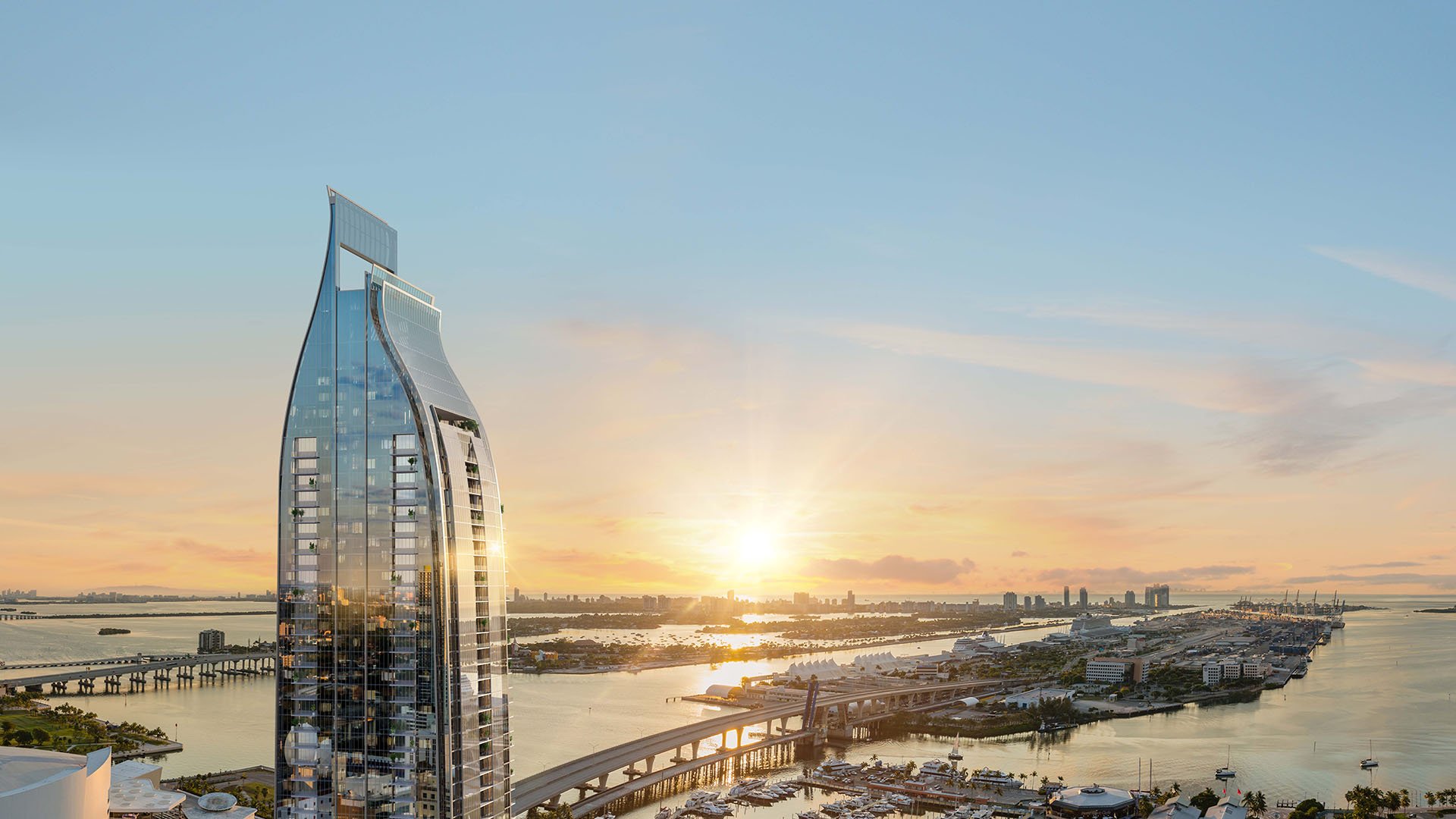
For a luxury buyer, storm resilience is a question of continuity: what protects the building's essential systems, and what must happen before a residence can be used again? At Delano Residences & Hotel Miami, those questions belong alongside floor plans, finishes, and service expectations in the purchase conversation.
The first distinction is geographic. This condominium-and-hotel development is in Downtown Miami, not Miami Beach. The applicable City of Miami and Miami-Dade requirements must be confirmed for the parcel. Miami Beach standards offer comparative context, but they are not the project's governing rules.
A tower's height is an architectural distinction-not evidence of where generators, electrical equipment, or elevator controls sit. A residence's height does not establish how well the systems supporting it are protected.
The relevant measurement is not overall tower height, but each critical system's elevation relative to the applicable flood-design elevation. Request approved architectural and mechanical, electrical, and plumbing drawings that show this relationship explicitly. A description such as “elevated mechanical equipment” is a starting point, not a complete answer.
The review should identify generators, switchgear, elevator controls, HVAC equipment, IT equipment, and garage pumps. For each, ask the design team to specify the location, elevation reference, and intended protection. Have a qualified adviser reconcile those details across the drawings rather than relying on a sales summary.
Flood terminology deserves equal care. Ask the design team to identify the parcel's applicable base flood elevation, or BFE, design flood elevation, and any required freeboard. Have the team explain how those criteria govern equipment protection under the correct jurisdiction rather than borrowing a standard from Miami Beach.
Separate equipment protection from service coverage. Request written backup-power specifications identifying which functions are supported. Generator provision should not be taken to mean full operation of private residences, air-conditioning, elevators, or every hotel service during an outage.
Mechanical elevation and flood barriers address different parts of the same review. An equipment schedule identifies where essential systems are located. A barrier schedule should explain how vulnerable openings are intended to be protected.
Request a plan covering garage ramps, lobby entrances, loading areas, and other openings identified by the design team. For each location, establish whether protection is permanent, deployable, or provided through another documented design approach. Do not assume the presence-or absence-of a particular barrier system without project documentation.
Where deployable protection is proposed, operating procedures deserve close scrutiny. Who decides when to install it? Who performs the work? Where are components stored, and what testing or maintenance is required? Ask how the plan addresses staffing and access before a storm; do not assume personnel will remain available indefinitely.
The garage warrants a separate discussion. Ask how ramp protection, pump operation, power supply, vehicle access, and reopening inspections relate to one another. A barrier specification alone does not establish when an owner can retrieve a car or resume normal arrivals.
For buyers also considering Waldorf Astoria Residences Downtown Miami, a consistent document request offers a sounder basis for comparison than an unsupported ranking of resilience. Ask each project for equipment elevations, opening protection, backup-power coverage, and the written recovery sequence. A familiar name is no substitute for those particulars.
At Delano, the condominium-and-hotel format also makes responsibility an important subject. Request a clear account of which entity manages storm preparation, system inspections, resident communications, and reopening decisions. Clarify any division between hotel operations and residential management in the offering documents and response plan.
Keep the status of every representation clear. A proposed measure, an approved drawing, and a written operating procedure answer different questions. Until the relevant documents establish the details, treat mechanical-room elevations, barrier arrangements, and resident re-entry procedures as unconfirmed-not absent.
Municipal permission to return and building-specific permission to occupy are separate due-diligence questions. An announcement reopening an area does not confirm that a particular tower's elevators, electrical systems, garage, and residential access are ready.
A buyer comparing Delano with Shore Club Private Collections Miami Beach should therefore maintain separate municipal and building-level checklists. Confirm the relevant local instructions for each address; a Miami Beach process should not be transferred to Downtown Miami.
For Delano, request the written sequence for inspections, power restoration, elevator restart, garage reopening, and resident access. Identify who authorizes reopening and how that decision is communicated to owners. Ask whether limited access to retrieve belongings is distinguished from permission to resume occupancy, and which conditions govern each step.
An owner away during a storm needs more than a general assurance that management will communicate. Request the designated communication channels, the procedure for updating owner contacts, and the documentation a representative may need for access. Confirm these arrangements before relying on a property manager or household employee to return on the owner's behalf.
For a residence intended to accommodate guests or generate rental income, obtain the offering documents and storm-response plan before making assumptions about post-storm availability. Neither the hotel component nor the presence of backup power establishes a recovery deadline or permission to resume rentals.
Personal planning should remain conditional on official instructions and building authorization. Organize travel, deliveries, and guest arrivals around confirmed access rather than an assumed reopening date.
Before purchase, assemble a focused review package: applicable flood-design criteria, approved architectural and MEP drawings, the flood-barrier schedule, backup-power specifications, offering documents, and the written storm-response and re-entry plan. Have qualified engineering and legal advisers evaluate the portions relevant to their expertise.
The objective is not a promise of uninterrupted operation. It is a clear account of what is protected, who acts, and which conditions must be satisfied before normal use resumes. That clarity belongs alongside the more visible qualities of a luxury residence.
For a discreet perspective on your South Florida purchase, connect with MILLION.
If branded residences are on your mind — as a home or as an allocation — we would be glad to share what we are seeing, privately.
Begin a quiet conversationNo. The condominium-and-hotel development is in Downtown Miami, so the parcel's applicable City of Miami and Miami-Dade requirements need to be confirmed.
No. A residence's height does not establish the elevation or protection of the critical building equipment that supports it.
Request approved drawings identifying generators, switchgear, elevator controls, HVAC, IT equipment, and garage pumps. Ask how each elevation relates to the applicable flood-design elevation.
Ask the design team to identify the parcel's base flood elevation, design flood elevation, and any required freeboard. Have a qualified adviser confirm how those criteria apply to equipment protection.
Treat the arrangements as unconfirmed until project documentation establishes them. Request a schedule addressing garage ramps, lobbies, loading areas, and other vulnerable openings.
Ask who authorizes deployment, who installs the barriers, where components are stored, and what testing or maintenance is required. Confirm how the operating plan addresses staffing before a storm.
Do not assume it does. Written specifications should identify supported functions before buyers rely on continued air-conditioning, elevator access, or hotel services.
Treat those as separate authorizations. Request the building's inspection and reopening sequence, including who approves resident access.
A Miami Beach process should not be assumed to govern Delano. Confirm the relevant local instructions for the Downtown Miami address and the building's own access requirements.
No post-storm rental availability or recovery deadline should be assumed. Review the offering documents and storm-response plan, and confirm building access before scheduling arrivals.