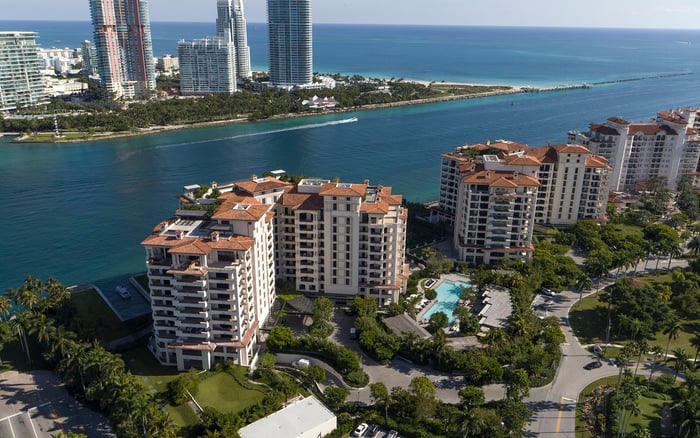
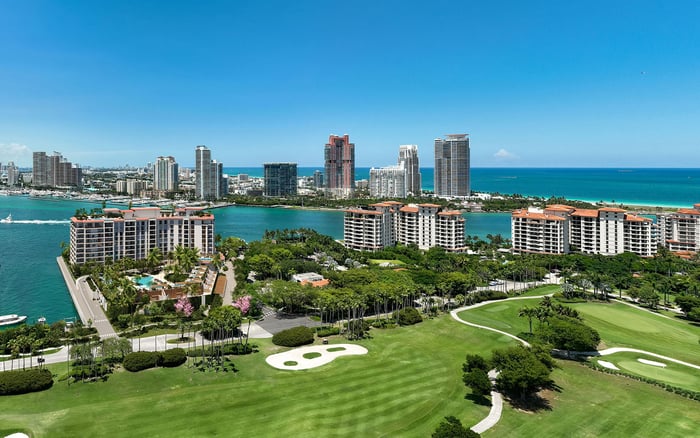
For Toronto buyers considering Fisher Island, the soundest property decision starts with a fresh tax estimate, a clear distinction between homestead and nonhomestead treatment, and enough carrying-cost flexibility to accommodate a delayed resale.
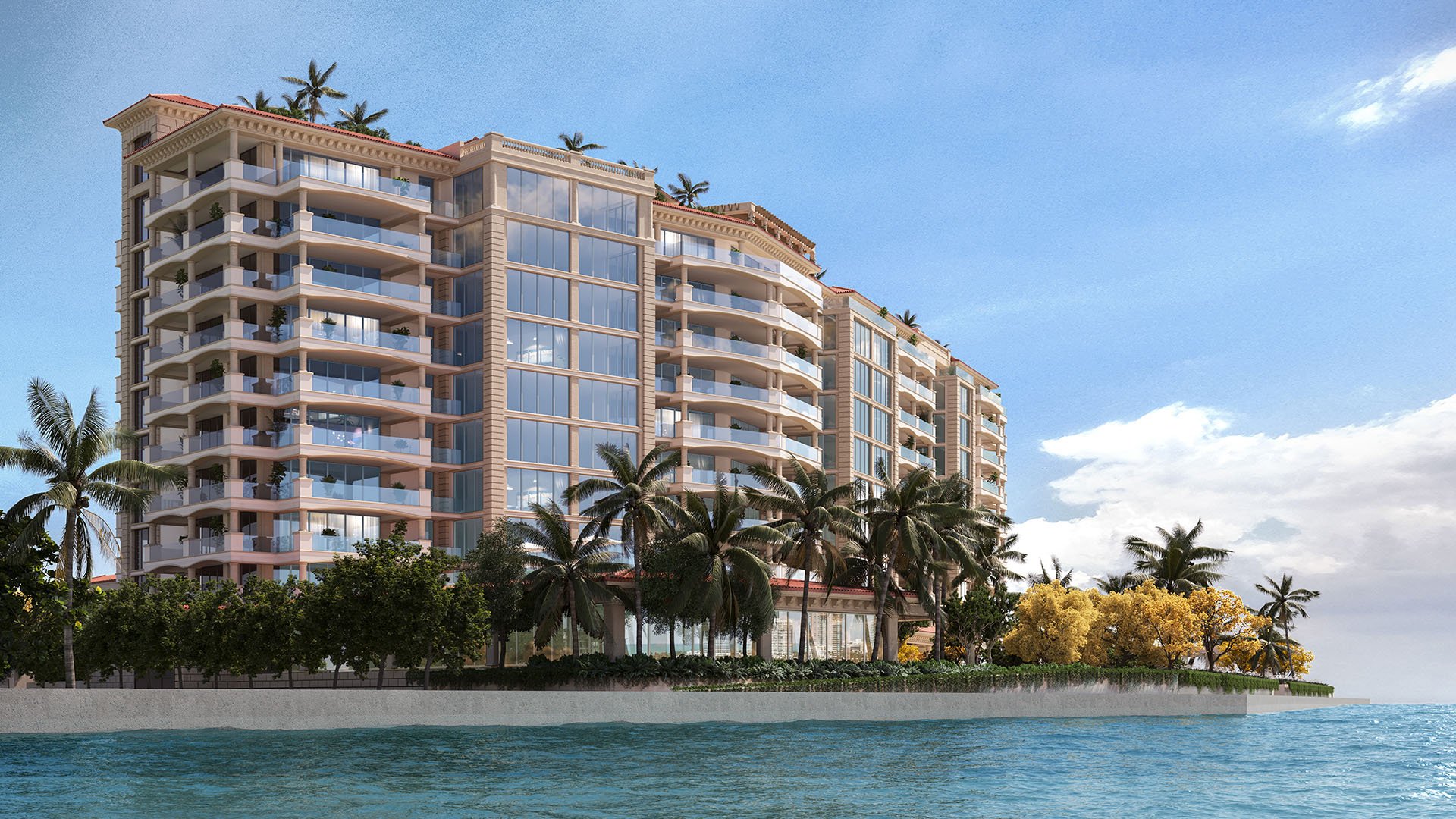
A move from Toronto to Fisher Island is a decision about how to live. The property choice should also establish how comfortably that life can be sustained. Beyond purchase price, three questions deserve attention: what the buyer’s property-tax assessment will become, which assessment-growth rules will apply, and how much flexibility remains if the eventual sale takes longer than intended.
The seller’s current tax bill is not a dependable forecast of the buyer’s expense. A purchase generally triggers reassessment at just value following the ownership change, and the seller’s accumulated nonhomestead assessment benefit does not transfer. An apparently attractive carrying cost may reflect an ownership history that ends at closing.
For a residence under consideration at Palazzo del Sol, start with a buyer-specific estimate rather than projecting costs from the listing’s tax figure. Use Miami-Dade’s property-tax estimator to evaluate prospective carry, then confirm the assumptions before committing. Treat the result as a planning estimate, not a guaranteed future bill.
Qualifying nonhomestead property, including second homes and investment properties, receives an automatic 10% annual assessment-growth cap in Miami-Dade. The distinction matters: the cap limits growth in assessed value, not growth in the total tax bill.
It also excludes school-board assessments. Increasing the entire prior-year bill by no more than 10% would therefore misapply the protection. Tax rates and components outside the cap still matter, and non-ad valorem charges require separate treatment.
Build the nonhomestead scenario from the buyer’s reassessed value. Keep the capped assessment component separate from school-related taxation and other charges. Do not assume assessed value must rise by 10% each year; a maximum permitted increase is not a forecast.
The practical question is not whether a residence has a cap, but whether the household can support the full cost under less favorable assumptions. For a Toronto family initially using the property as a second home, this should be the working scenario unless homestead eligibility is confirmed.
Purchasing a Florida residence with the intention of making it a primary home does not automatically establish homestead eligibility. Confirm the buyer’s eligibility and filing requirements rather than treating relocation plans as approval.
For qualifying homestead property, the first homestead year is assessed at just value before subsequent assessment limits apply. After that first year, Save Our Homes limits annual assessment increases to the lower of 3% or the applicable CPI change. This provides a different long-term assessment framework from the nonhomestead cap, but it does not preserve the seller’s assessment.
One homestead benefit is a $25,000 assessed-value reduction. That reduces the valuation; it is not a $25,000 credit against the tax bill. Keep exemptions and assessment caps as separate inputs so neither benefit is overstated.
Portability also requires care. It transfers an eligible owner’s Save Our Homes assessment benefit between Florida homesteads-not a Toronto property’s tax basis or tax history. A buyer without a prior qualifying Florida homestead has no Florida benefit to port.
Where portability is relevant, the new homestead generally must be established within three years of January 1 of the year the previous homestead was abandoned. The standard filing deadline for homestead exemption and the associated portability application is March 1 of the applicable tax year. Put the eligibility review and filing dates on the acquisition calendar.
Property taxes are only one part of the annual commitment. Building association fees and Fisher Island Community Association charges are distinct. Obtain both budgets rather than assuming a quoted maintenance figure captures the full obligation.
When evaluating Palazzo della Luna, request a unit-specific schedule showing what each charge covers, how often it is payable, and any separately assessed obligations. Apply the same discipline to every shortlisted residence; this is a comparison framework, not a statement about that building’s current fees.
The ownership schedule should distinguish:
Property taxes based on the buyer’s assessment assumptions.
Non-ad valorem special assessments and service charges, which are not based on property value or millage.
Building fees and community association charges, reconciled to avoid double counting.
Club initiation costs, recurring dues and any applicable special assessments, confirmed directly.
Do not set the club budget from a single unconfirmed figure. Obtain current written terms for the membership arrangement relevant to the purchase, separating upfront costs from recurring obligations.
Transportation-system access fees for contractors, suppliers and vendors are also authorized, potentially payable by the owner or other specified parties. If the move involves furnishing or renovation, ask who bears those charges and include them in the move-in budget.
A meaningful shortlist uses consistent assumptions, even when the residences differ. For The Residences at Six Fisher Island, request the applicable assessment assumptions and ownership-cost documentation rather than importing figures from another property.
Prepare eligible-homestead and nonhomestead scenarios where appropriate, using the same intended holding period and clearly separating one-time expenses. The comparison should show both expected annual carry and the cash required before ownership settles into a routine.
A parallel review of The Links Estates at Fisher Island should use its own applicable ownership documents. Do not assume one residence’s fee structure applies elsewhere on the island. The objective is to identify the property whose verified obligations fit the household’s plans-not simply the one with the lowest quoted monthly figure.
There is no defensible universal best selling season or guaranteed holding period to build into this decision. Evaluate building-specific comparable sales, competing listings, unit line, view and asking price when considering the eventual exit.
Before buying, model a delayed sale. Estimate the additional recurring carry over a chosen extension period, then add separately timed obligations and expected transaction costs. Label the extension as a stress-test assumption, not a predicted marketing period.
This exercise connects acquisition price to future negotiating flexibility. A residence that remains comfortable to carry gives the owner greater discretion over timing and offers. One that depends on an immediate exit leaves less room for changing family plans.
Assessment caps can moderate valuation growth, but they do not guarantee appreciation, liquidity or recovery of transaction costs. Choose a property that works for the intended lifestyle and remains manageable if the ownership period lengthens. That is the more durable foundation for a Toronto-to-Fisher Island move.
For a tailored Fisher Island property discussion centered on ownership costs and future flexibility, connect with MILLION.
If branded residences are on your mind — as a home or as an allocation — we would be glad to share what we are seeing, privately.
Begin a quiet conversationNot as a dependable forecast. A purchase generally triggers reassessment at just value following the ownership change, and the seller’s accumulated nonhomestead assessment benefit does not transfer.
No. It limits annual growth in assessed value for qualifying nonhomestead property, not the total tax bill, and excludes school-board assessments.
Yes. Miami-Dade automatically applies the 10% annual assessment-growth cap to qualifying nonhomestead property, including second homes and investment properties.
No. Confirm eligibility and filing requirements rather than assuming that purchasing an intended primary residence establishes qualification.
After the first year of homestead exemption, annual assessment increases are limited to the lower of 3% or the applicable CPI change. The first homestead year is assessed at just value before subsequent limits apply.
No. It is an assessed-value reduction identified as one homestead benefit, not a $25,000 reduction in the tax bill.
No. Florida portability transfers an eligible Save Our Homes assessment benefit between Florida homesteads; a buyer without a prior qualifying Florida homestead has no benefit to port.
The standard filing deadline is March 1 of the applicable tax year. Portability generally requires establishing the new homestead within three years of January 1 of the year the previous homestead was abandoned.
Review building fees, separate community association charges, applicable club costs, non-ad valorem charges and special assessments. Confirm any contractor or vendor transportation-access fees relevant to move-in work.
Review building-specific comparable sales, competing listings, unit line, view and asking price, and budget for a delayed sale. Assessment caps do not guarantee appreciation, liquidity or recovery of transaction costs.