For a Tokyo buyer, the decisive comparison is not the headline HOA fee. It is the residence’s complete annual carrying cost, with operations, reserves, insurance, optional services, gratuities, and taxes separated for review.
A move from Tokyo to Surfside changes more than currency, climate, and square footage. It changes the architecture of condominium expenses. Tokyo owners are accustomed to a management fee for recurring operations and a separate repair-reserve contribution for future major work. In Surfside, those functions are commonly consolidated into a single monthly association assessment, alongside shared services, common-area utilities, building insurance, amenity upkeep, and reserve funding.
That consolidation can make a Florida assessment appear deceptively simple. It is not. A buyer should translate each candidate into an annual ownership schedule, then identify which expenses are fixed by the association, which are billed by use, and which remain entirely personal. The objective is not to find the lowest monthly figure. It is to understand what the residence costs to hold, enjoy, and protect over a full year.
The right comparison is total annual carrying cost, not the headline monthly assessment.
This is particularly important for a second-home purchase, where optional services and third-party oversight may be used more frequently during absences. It also matters in branded residences, where a polished service environment can involve both association-funded staffing and separately charged hotel-style conveniences.
Begin with annual cost per square foot. Miami luxury high-rise assessments commonly range from about $0.80 to $2.50 per square foot each month, although highly amenitized buildings can exceed that range. Annualized, that is $9.60 to $30 per square foot before separately billed items. For a 2,500-square-foot residence, the mathematical range is $24,000 to $75,000 a year.
The range is only a starting point. Figures for The Surf Club Four Seasons illustrate why unit-specific verification is essential. One maintenance figure is about $1.33 per square foot monthly, equal to roughly $3,325 a month for 2,500 square feet. Another figure for The Surf Club South is $2.80 per square foot, or about $7,000 monthly for the same area. Residence N-721 carried a $20,157 monthly HOA fee covering security, insurance, amenities, parking, water, sewer, and reserve funding.
These figures should not be blended into a single expectation. Building, residence size, budget period, allocation method, and stated inclusions may differ. When considering The Surf Club Four Seasons Surfside, the controlling documents and current estoppel-related information should take precedence over a generalized building figure.
For each residence, create separate annual lines for the association assessment, property taxes, unit insurance, optional services, gratuities, and a contingency for assessment volatility. Japanese fixed-asset and city-planning taxes also sit outside monthly management and repair-reserve charges, so the discipline of separating taxes from building charges should already feel familiar.
In Surfside, staff-supported amenities may be funded through the association’s operating budget. Optional hotel services, including housekeeping or in-residence dining, may be charged separately. A concierge presence therefore does not establish that every request is included. The buyer needs a service matrix drawn from the condominium documents and any hotel-services price list.
For every recurring service, classify it as included, optional at a published price, usage-based, or unavailable. Apply the same review to parking, water, sewer, security, amenity access, housekeeping, dining, and other conveniences relevant to the household. Listing language can be incomplete, so written confirmation should be obtained before the contract becomes non-cancellable.
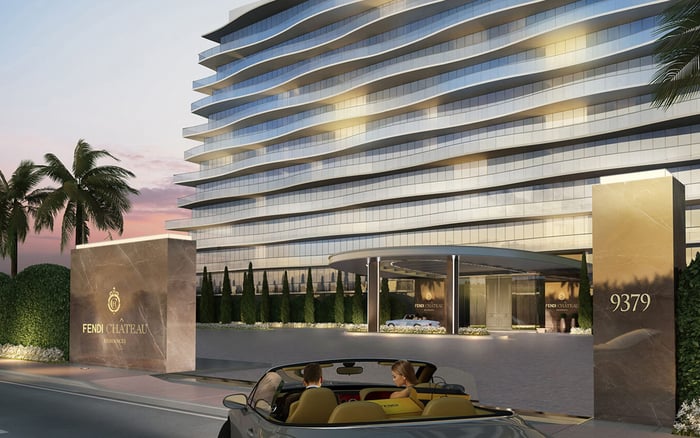
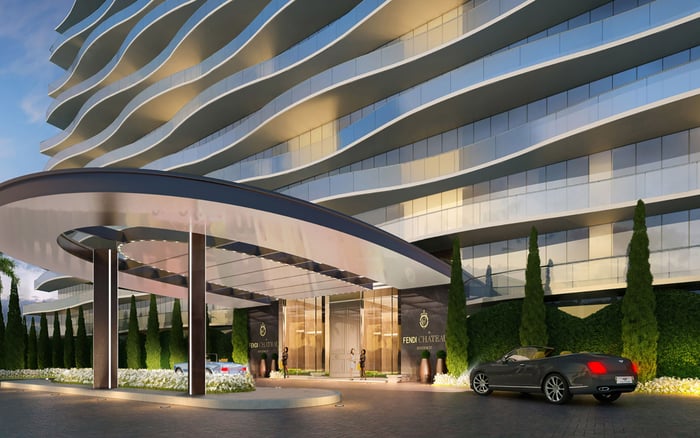
The exercise applies across ownership formats. A buyer comparing Arte Surfside, Fendi Château Residences Surfside, and Ocean House Surfside should not assume that similarly positioned buildings define service or allocate expenses in the same way. The most useful buyer’s-guide discipline is to compare actual inclusions rather than labels.
Gratuities require a separate line. Personal tips are generally discretionary spending, not reserve contributions, and not automatically part of the HOA. A household expecting frequent staff interaction can establish an annual gratuity allowance based on its own habits while keeping that amount outside the fixed-cost comparison. This preserves a clear distinction between the contractual cost of ownership and the chosen style of living.
Tokyo buyers may think of repair reserves as a separate monthly contribution that accumulates for major cyclical work. Surfside associations can embed reserve contributions within the broader HOA assessment. The owner generally does not choose an individual reserve-growth amount; the association budget determines the required contribution.
Florida’s Structural Integrity Reserve Study framework applies to certain condominium and cooperative buildings of at least three stories and requires study of critical structural components. Structural reserve funding is therefore a material ownership cost. A change in required funding can increase regular assessments, while a funding gap can contribute to a catch-up special assessment.
Before contracting, request the latest association budget, Structural Integrity Reserve Study, reserve schedule, recent meeting minutes, insurance information, and pending-assessment disclosures. Read the documents together. A reserve balance has limited meaning without the projected work, funding schedule, component assumptions, and related board discussion.
Reserve growth should not automatically be viewed as waste. It may reflect disciplined preparation for future building obligations. Conversely, a low current assessment is not necessarily economical if reserves are under pressure or major costs are approaching. This is where pricing-and-trends analysis must give way to building-specific governance and engineering information.
Coastal building insurance is commonly carried by the association and allocated through HOA fees. The owner still needs separate coverage for the residence’s contents and liability. These two layers should not be conflated, and the association’s insurance expense should not be treated as permanently fixed.
Request current insurance information and identify what the master policy covers, what the owner must insure independently, and how deductibles or uninsured exposures may affect the ownership plan. An oceanfront residence should be stress-tested for future increases in both association-level insurance costs and the owner’s separate policy, without assuming that the current premium environment will continue unchanged.
The stress test need not predict a specific percentage. It can model a base case using current documents, a higher recurring-assessment case, and a special-assessment case. The purpose is to determine whether the preferred property remains comfortable under more demanding conditions, not merely whether today’s invoice is affordable.
A representative 70-square-meter Japanese condominium may carry combined management and repair-reserve charges of about ¥26,433 monthly, although individual buildings vary widely. Typical Japanese management fees are about ¥10,000 to ¥30,000 monthly, with another ¥5,000 to ¥20,000 for repair reserves. Tokyo tower management fees commonly reach ¥20,000 to ¥40,000 because of more complex systems and amenities. Nonresident owners may also pay ¥10,000 to ¥30,000 monthly for separate property management.
Surfside luxury association costs operate on a materially different scale, often reaching several thousand dollars monthly and, for some residences, five figures. Currency conversion alone therefore yields an incomplete comparison. The decision sheet should show annual dollars, annual cost per square foot, included operations, embedded reserves, separate insurance, optional services, personal gratuities, and downside scenarios.
The best property is the one whose complete cost structure aligns with how the household intends to live. A lower assessment may suit an owner seeking fewer shared services. A higher assessment may be rational when its inclusions are valued, documented, and likely to be used. In either case, clarity is the luxury that protects the decision.
For a discreet review of Surfside opportunities and their ownership considerations, connect with MILLION.
If branded residences are on your mind — as a home or as an allocation — we would be glad to share what we are seeing, privately.
Begin a quiet conversationConvert each assessment into annual dollars and annual cost per square foot, then compare the included services, insurance, utilities, amenities, and reserve funding.
Assessments commonly combine operations, shared services, building insurance, common-area utilities, amenity upkeep, and reserve contributions.
A common range is about $0.80 to $2.50 per square foot each month, although highly amenitized properties can cost more.
No. Housekeeping, in-residence dining, and other optional services may be billed separately, even in a hotel-branded residence.
No. Personal tips are generally discretionary household spending and should be budgeted separately from association reserves.
Generally no. Reserve contributions are determined through the association budget and are commonly embedded in the monthly assessment.
It addresses critical structural components for qualifying buildings and can affect reserve requirements, regular assessments, or catch-up special assessments.
Request the current budget, SIRS report, reserve schedule, recent minutes, insurance information, pending-assessment disclosures, and applicable service price lists.
No. The association commonly insures the building, while the owner still needs separate coverage for contents and liability.
Model current costs, a higher recurring-assessment case, and a special-assessment case while keeping taxes, insurance, optional services, and gratuities separate.