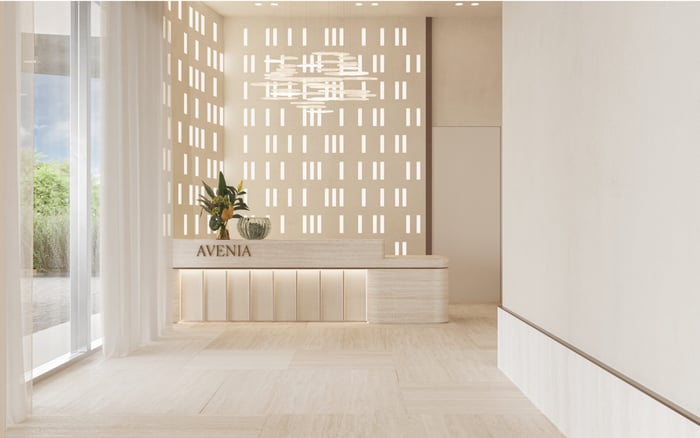
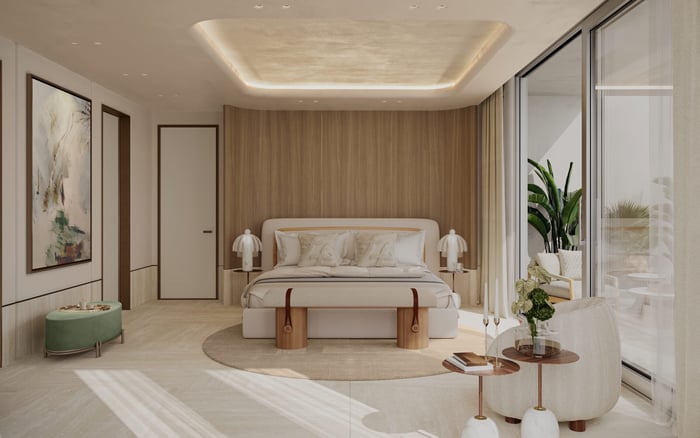
For a Hamptons-to-Aventura move, privacy should be evaluated as a complete arrival and household-service experience. Private foyers matter, but so do curbside exposure, staff permissions, delivery routes and the building’s procedures when normal circulation changes.
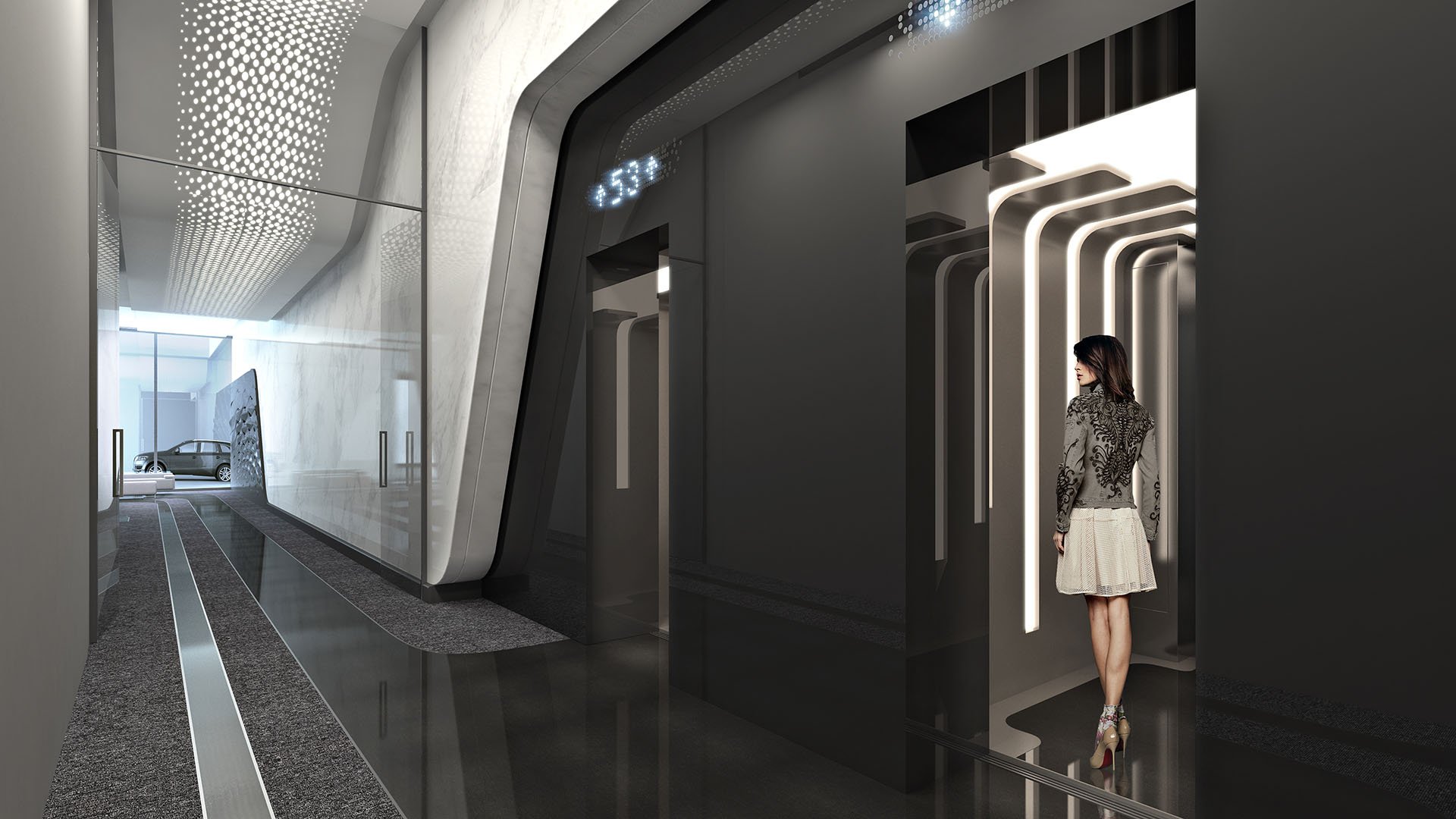
A move from the Hamptons to Aventura raises a precise question: what should remain private when the household exchanges its current arrival routine for condominium living? The answer begins before the elevator. It includes where the car stops, who can observe the entrance, how guests are admitted and whether household staff can work without repeatedly crossing the owner’s path.
Privacy is a sequence, not a single amenity. A private foyer may provide a composed threshold, but it does not explain the journey from vehicle to residence or the movement of groceries, luggage and maintenance personnel. The property decision should therefore test three connected routes: the owner’s arrival, the guest’s arrival and the household’s service access.
Translate the routines you value into relocation requirements. Decide whether your priority is minimal shared space, controlled access, discreet service or some combination. Those preferences should shape the shortlist before finishes and views do.
Begin the inspection where you would actually arrive, not where the presentation begins. Ask to follow both the vehicle drop-off and parking routes to the residence. Note waiting areas, sightlines, access checkpoints and any point where residents, visitors and deliveries converge. A beautiful lobby and a discreet arrival are different qualities.
Porto Vita North has a two-story grand lobby leading to controlled passenger-elevator access. Its passenger elevators are computer-programmed, with access restricted to resident key cards. These features frame useful questions for a tour: where is the credential checked, how are visitors authorized and what happens between lobby admission and the residential floor?
Ask management to demonstrate the ordinary arrival procedure, not merely describe it. Include luggage and an accompanying guest in the scenario.
If the search extends to One Park Tower by Turnberry North Miami, apply the same route-by-route inspection. A broader shortlist should not dilute the household’s privacy requirements.
Three phrases deserve separate treatment: private elevator access, private foyer and semi-private elevator. None substitutes for a floor plan and an explanation of access permissions. A private landing, in particular, does not establish that an elevator car is reserved exclusively for one household.
Avenia Aventura offers a private elevator lobby for each residence. Privé at Island Estates offers private elevator access. Echo Aventura has private high-speed elevators opening onto individual residence foyers. These are useful comparison points, but they do not establish identical arrangements.
North Tower at the Point illustrates why precision matters. It offers key-card-programmed elevator access into a private foyer, while its dual-column layout centers on two semi-private elevators with foyers on each floor. Ask how those features work together for the specific residence under consideration.
Bellini at Williams Island offers private elevator entry to each residence and an all-corner configuration, with each home having at least three bedrooms. Treat entry privacy and interior accommodation as separate decisions. Bedroom count does not answer who can reach the landing or what is visible when the elevator doors open.
A household that relies on a housekeeper, chef, assistant or caregiver needs access that is both workable and controlled. The aim is not simply separation. It is clarity about who may enter, by which route, at what times and with whose authorization.
Porto Vita North offers a specific architectural comparison: its service elevators are set apart from residential areas and open directly into discreet service corridors. It also offers elevators opening into private front-door foyers. Confirm how those routes connect to the particular residence and whether routine operations preserve the intended separation.
Echo Aventura’s “private services suites” do not, by that phrase alone, establish a separate staff entrance or service circulation. Request the relevant plan before assigning the space a role in your household.
For every candidate, ask whether staff receive individual credentials, whether permissions can be limited and how access is revoked. Establish how substitutes and outside contractors are admitted. These questions require current management confirmation; a private elevator does not answer them.
The quieter test of a residence is what happens when the owner is unavailable. Walk through a grocery delivery, a large furniture arrival and a maintenance appointment during an absence. Each scenario should have a defined receiving point, authorization step and final handoff.
Ask where packages wait, who can collect them and whether anyone may bring items to the private foyer without fresh approval. Clarify delivery windows, service-elevator reservations and the handling of perishables or oversized items. Do not assume any of these services are included or available.
Then test the exceptions: if a service elevator is unavailable, where do deliveries and contractors go? If a passenger elevator is out of service, how does the owner reach the residence? Request the building’s procedures rather than assuming normal separation continues during maintenance or emergencies.
Should Turnberry Ocean Club Sunny Isles enter a wider search, use the same absence and delivery scenarios. Compare confirmed arrangements; project identity is no substitute for operational detail.
Before committing, assemble a residence-specific privacy brief. Pair the relevant floor plan with management’s written answers on owner access, guest admission, staff credentials, deliveries and elevator interruptions. Where a feature is planned rather than available to inspect, distinguish the proposed arrangement from an operating procedure you can observe.
Give each requirement a simple status: demonstrated, confirmed in writing or unresolved. An attractive foyer should not compensate for an unresolved access rule that affects daily life. Equally, shared circulation need not disqualify a property if the arrangement meets your expectations and its permissions are clear.
The strongest choice is not necessarily the building with the most exclusive vocabulary. It is the residence whose architecture and operating rules support the household you intend to bring to Aventura. The desired result is quiet continuity: a composed arrival, predictable staff access and deliveries that do not compromise the private threshold.
For a tailored conversation about an Aventura relocation and a privacy-focused property shortlist, connect with MILLION.
If branded residences are on your mind — as a home or as an allocation — we would be glad to share what we are seeing, privately.
Begin a quiet conversationBegin at the actual vehicle drop-off or parking arrival point. Follow the complete route to the residence, noting shared spaces and access checkpoints.
Not necessarily. A private foyer describes the arrival space, while elevator sharing and access permissions require separate confirmation.
Avenia Aventura advertises a private elevator lobby for each residence. Confirm how that lobby connects to the full arrival route.
Its passenger elevators are described as computer-programmed, with access restricted to resident key cards. Guest admission procedures should be confirmed with management.
Its service elevators are described as set apart from residential areas and opening into discreet service corridors. Confirm the connection to the specific residence.
Clarify how the advertised private foyer and key-card access relate to the layout’s two semi-private elevators. Review the arrangement for the residence being considered.
The advertised phrase does not establish the suites’ layout or access routes. Request a floor plan before assuming separate staff circulation.
Ask about individual credentials, permission limits, substitute staff and access revocation. Obtain current management confirmation rather than inferring policies from elevator features.
Confirm receiving locations, authorization, storage and final handoff procedures. Ask separately about perishables, oversized items and access to the private foyer.
An outage may change the routes used by owners, staff or deliveries. Request the building’s fallback procedures rather than assuming normal separation will continue.