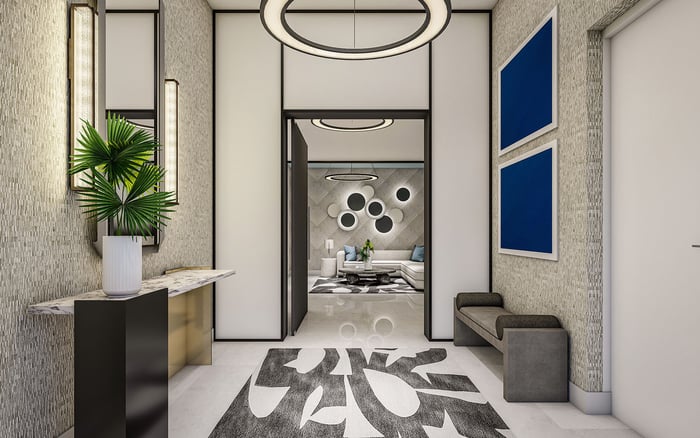
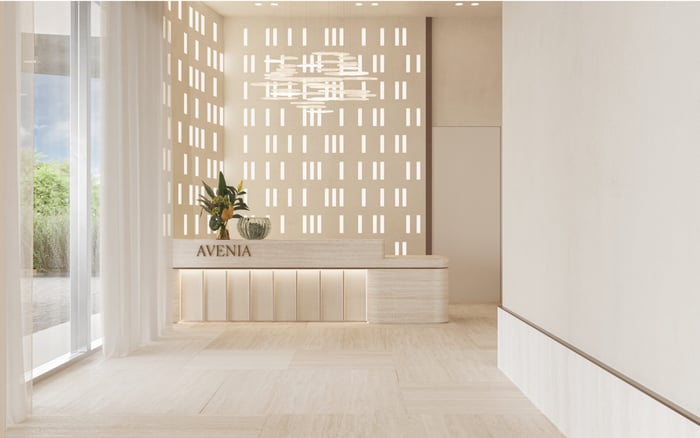
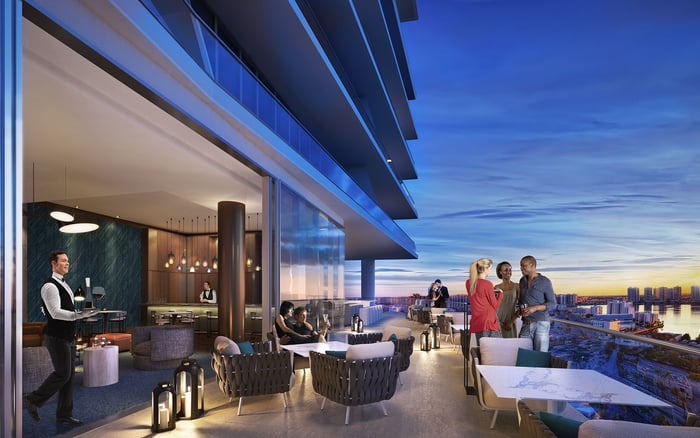
An art-led residence requires more than a beautiful wall. For Aventura buyers, a considered strategy connects measured lighting, daylight control, installation review, and policy-specific insurance questions before the collection arrives.
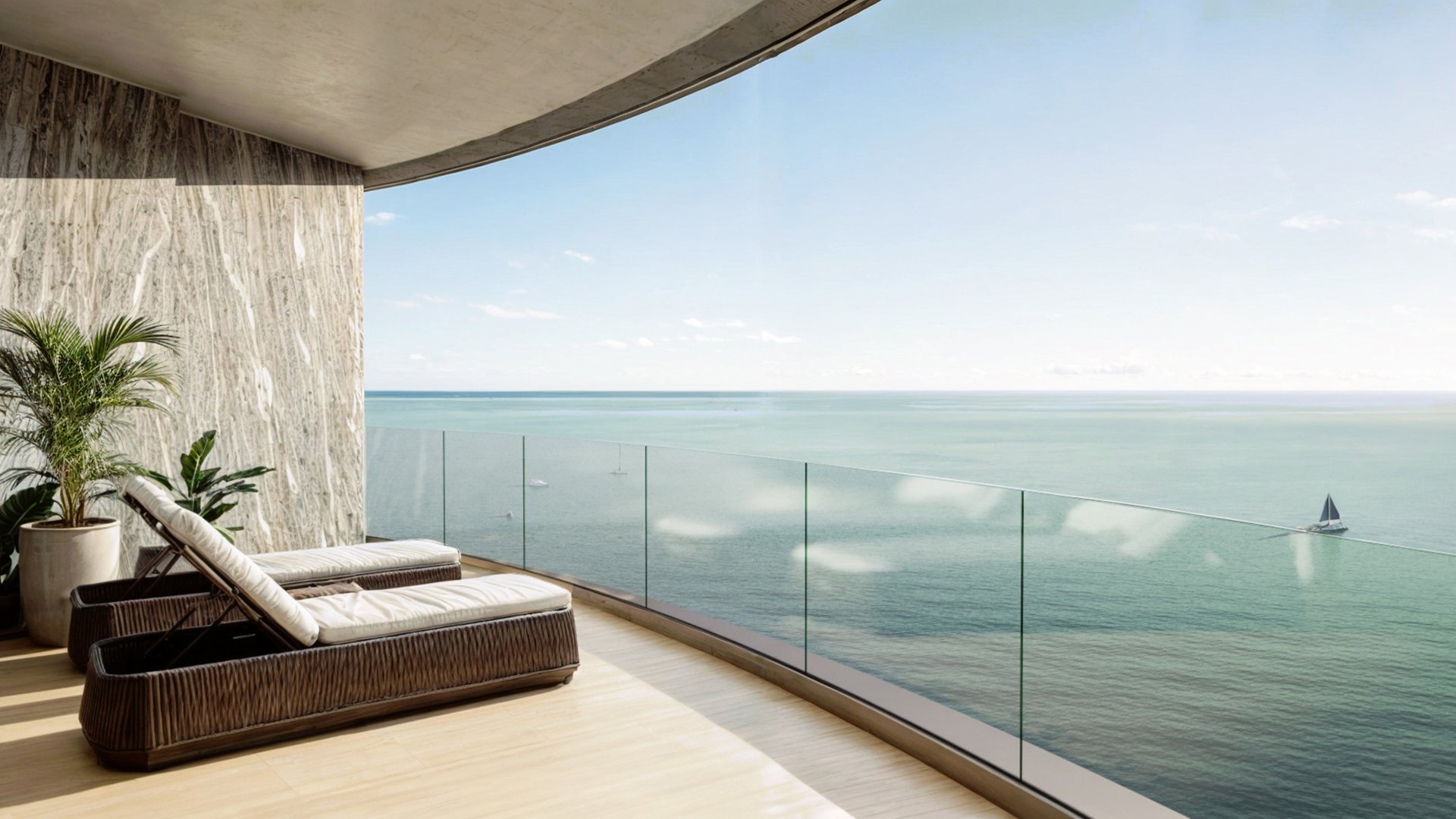
For an Aventura buyer, the most compelling art wall is not necessarily the longest or most prominent. It is the wall where a particular work can be displayed thoughtfully, with manageable light exposure and an installation plan reviewed before the interior is complete. Museum-grade care is an operating discipline, not simply a fixture specification.
When considering Avenia Aventura, bring the collection into the residence brief early. Ask which works deserve daily visibility, which could rotate, and which need a more protected setting. These are questions for the individual residence, not grounds for assuming a development’s conservation capabilities.
The objective is a home that remains visually generous without asking every artwork to tolerate the same conditions. Lighting, UV control, wall support, and insurance need coordinated attention, but each requires its own review.
Begin with a proposed collection register that records medium, condition, intended location, and anticipated display duration. Paper, photographs, textiles, and watercolors are generally highly light-sensitive. Unpainted stone, metal, ceramics, and glass are comparatively resistant. Let these distinctions guide placement before selecting decorative lighting.
Material categories are a starting point, not a verdict. A work’s condition may justify lower illumination or shorter display periods than its category suggests. Ask a conservator to assess individual works rather than treating a mixed collection as one lighting zone.
For the residence manager, translate that advice into practical instructions: which works may remain on view, which require rotation, and which lighting settings to use. A room can accommodate different conservation needs without making every object equally bright.
Use conservation benchmarks to frame the lighting conversation, not to promise safety. Common maximum recommendations are 50 lux for sensitive collections such as watercolors, photographs, textiles, and paper-based objects, and 150 lux for less-sensitive collections such as oil paintings, wood, and leather. Approximately 300 lux is a conventional display benchmark for comparatively resistant materials, including metal, ceramics, stone, and glass.
These are conservation reference points, not Aventura regulations or automatic targets. For light-sensitive materials, there is no completely safe light level below which damage cannot occur. Lower illumination reduces risk; it does not eliminate it.
Measure visible illumination with a light meter, in lux or foot-candles, rather than judging brightness by eye. Request readings at the artwork’s intended position, assessing both daylight and electric lighting under the planned display conditions.
LED fixtures can provide low-UV illumination, but the label alone does not establish suitability. Spectrum and color rendering still matter. Ask the lighting designer and conservator to consider those characteristics together, keeping illumination as low as practicable while supporting the intended viewing experience.
UV filtration is only one part of the brief. Visible light can discolor vulnerable surfaces, while ultraviolet radiation can contribute to their gradual disintegration. A sensitive work does not become suitable for continuous display in a bright room simply because its glazing filters UV.
A conventional maximum UV benchmark is 75 µW/lm, while 0-10 µW/lm is achievable with current technology. Neither figure replaces control of visible illumination or exposure time. Ideally, display lighting should deliver visible light with ultraviolet and infrared radiation eliminated.
For buyers also considering Sunny Isles Beach, apply the same review to an individual residence at Jade Signature Sunny Isles Beach: where would direct sunlight reach the proposed artwork, and how would daylight be controlled? The question concerns the chosen location, not an assumed building-wide specification.
Avoid direct sunlight on artworks. Use shades, blinds, or other daylight controls rather than relying on filtration alone. For sensitive objects, consider excluding daylight and choosing positions farther from light sources. Establish the collection’s needs before making an exposed wall the centerpiece of the design.
Cumulative exposure matters. A low lighting setting is not a reason to leave sensitive works illuminated indefinitely. Build a display schedule around both brightness and duration, with stricter treatment where condition warrants it.
Ask the residence team to define viewing settings and a separate routine for periods when the collection is not being enjoyed. Consider rotation for sensitive works rather than assuming permanent display. The schedule should be artwork-specific, not borrowed wholesale from a museum’s institutional practice.
Keep the instructions clear enough for daily use. A useful management brief might identify approved lighting settings, daylight-control positions, and review dates. Revisit it when a work moves, the collection changes, or the lighting design is altered.
Treat wall loading as a technical review, not an aesthetic judgment. Before approving a location, ask the installation team to confirm the work’s weight, the proposed mounting arrangement, the wall construction, and whether specialist structural input is needed. Do not choose a support solution from the wall’s appearance alone.
Ask the appropriate professionals to document the proposed attachment details and identify any recommended reinforcement or further investigation. Separately, request written confirmation of any applicable building review or installation permissions. These are due-diligence questions, not statements of a uniform condominium rule.
If the search extends to Bal Harbour and Rivage Bal Harbour, carry the same collection brief into the residence assessment. Evaluate the specific wall and proposed mounting approach; do not infer load capacity or installation permissions from the project’s positioning.
Conservation planning does not establish insurance coverage. Before moving or installing the collection, ask your insurance adviser to explain the proposed policy in writing, grounding the discussion in the actual collection and intended arrangements.
Organize that conversation around questions: How would each work be identified and valued? What documentation should be retained? How would the policy respond while works are being transported, installed, displayed, or stored? Which exclusions, deductibles, limits, or conditions should the owner understand?
Do not assume that a lighting specification, professional installation, or residential policy settles those questions. Seek policy-specific answers rather than treating careful stewardship as a substitute for contract review. Keep the resulting insurance instructions alongside, but distinct from, the conservation and installation brief.
Before the collection arrives, assemble the display plan, measured lighting settings, daylight instructions, installation review, and insurance responses in one management file. Assign responsibility for following the instructions and requesting specialist advice when circumstances change.
The result should feel effortless to the owner, even when the planning is exacting. A successful residence allows art to be enjoyed while keeping its vulnerabilities clear to the people entrusted with its care.
Explore a collection-led approach to South Florida residences with MILLION.
If branded residences are on your mind — as a home or as an allocation — we would be glad to share what we are seeing, privately.
Begin a quiet conversationPaper, photographs, textiles, and watercolors are generally highly sensitive. An individual work’s condition may call for even stricter display controls.
A common maximum recommendation is 50 lux for sensitive collections. It is a conservation reference point, not a guarantee against damage or an Aventura regulation.
Common guidance recommends a maximum of 150 lux for less-sensitive collections such as oil paintings. Approximately 300 lux is a conventional benchmark for comparatively resistant materials such as metal, not a target for all artworks.
No. Visible light can still discolor vulnerable materials, so brightness and exposure duration remain important.
A conventional maximum benchmark is 75 µW/lm, while 0–10 µW/lm is achievable with current technology. UV control does not replace visible-light management.
No. LEDs can provide low-UV illumination, but spectrum and color-rendering performance also need consideration.
Use a light meter and record illumination in lux or foot-candles. Assess the proposed artwork position rather than relying on how bright the room appears.
Cumulative light exposure contributes to fading and other photochemical damage. Lower brightness should therefore be paired with thoughtful display schedules.
Ask the installation team to review the work’s weight, mounting arrangement, wall construction, and need for specialist structural input. Request confirmation of any applicable building review or permissions.
Ask for policy-specific explanations of identification, valuation, documentation, and treatment during transport, installation, display, and storage. Have the adviser clarify relevant exclusions, deductibles, limits, and conditions in writing.