For Munich buyers, the decisive South Florida comparison is not purchase price alone. Property taxes, association charges, insurance, household services, gratuities, and reserves should be modeled together across multiple years.
A move from Munich to South Florida invites comparisons of architecture, waterfront access, privacy, and daily rhythm. Yet the most useful financial comparison begins beyond the purchase price. The better question is what each residence may require once property-specific taxes, association charges or private-home maintenance, insurance, household services, gratuities, and capital reserves are considered together.
This framework matters whether the objective is a second home or a primary residence. Two homes with similar prices can carry different ongoing obligations. A full-service condominium may consolidate many expenses into an association charge, while a single-family home gives the owner greater control and more direct responsibility.
The most revealing comparison is the cost of owning well, not simply the cost of buying.
Start with a multi-year ledger rather than a single snapshot. Separate recurring obligations from variable lifestyle spending and irregular capital events. This creates a clearer basis for comparing residences with different service models, amenity programs, maintenance demands, and ownership structures.
A broad estimate for Miami-Dade, Broward, or Palm Beach County is not a substitute for reviewing the specific property. The municipality, taxing districts, taxable value, exemptions, and ownership circumstances can affect the result. The seller’s current tax bill is useful evidence, but it should not be treated as a promise of the buyer’s future obligation.
Request the property’s current tax records and have the expected ownership profile evaluated before relying on a projected annual amount. Keep acquisition-related costs outside the recurring tax line so that one-time expenses do not distort the ongoing comparison.
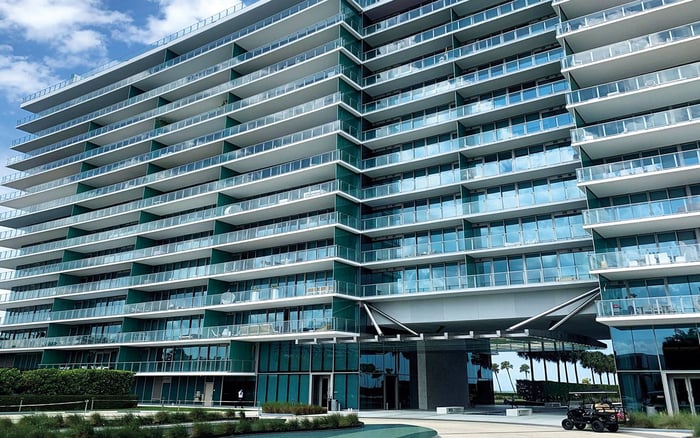
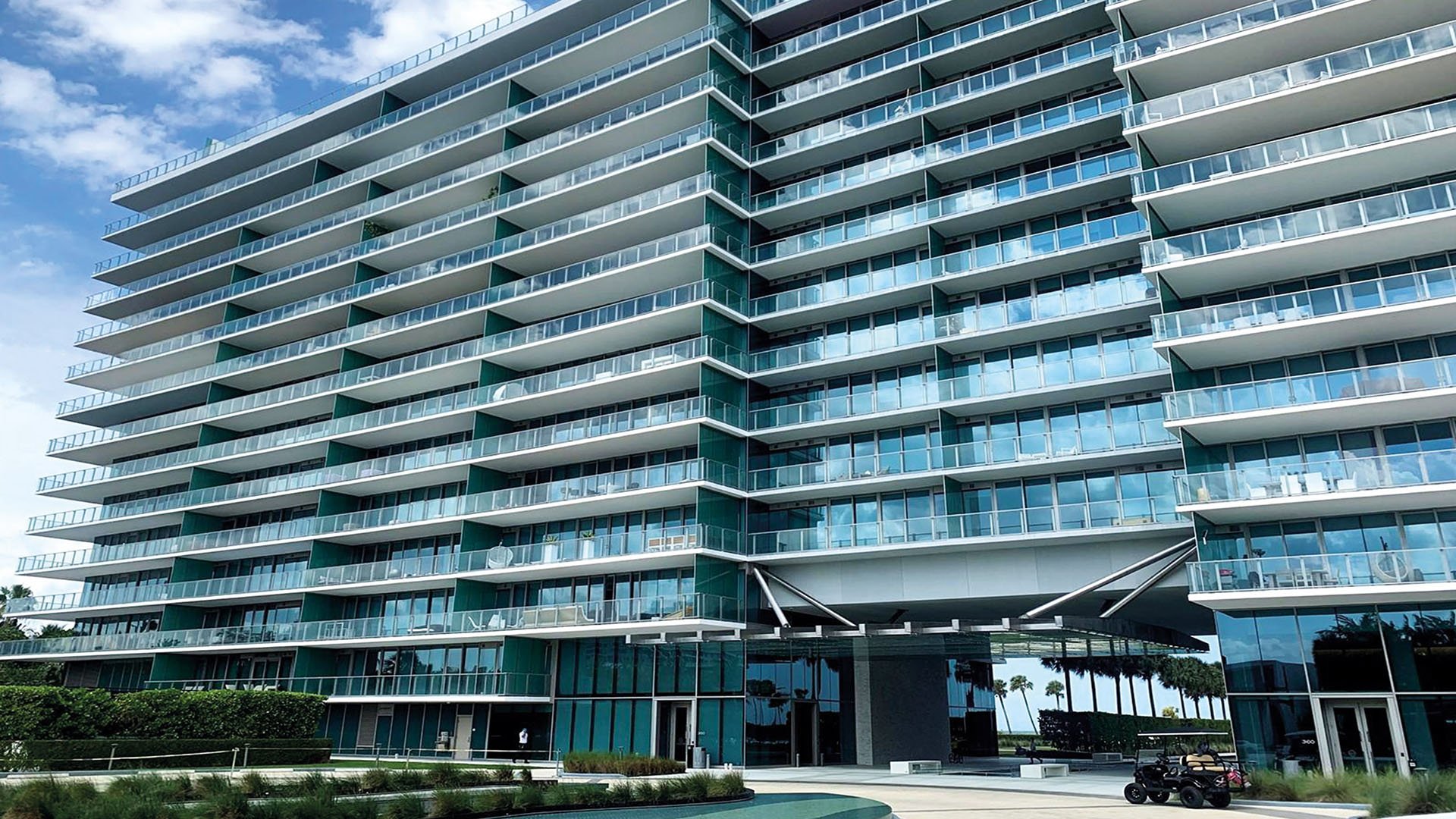
Location therefore belongs inside the carrying-cost decision. A buyer considering Oceana Key Biscayne should evaluate the relevant property records rather than apply a generic Miami assumption. The same discipline applies to Rivage Bal Harbour and The Residences at 1428 Brickell: each finalist needs its own property-level analysis.
The opening-year budget is only the beginning. Build scenarios that allow taxes, insurance, services, and association charges to change over time. The objective is not to predict every adjustment precisely, but to understand whether the residence remains comfortable under more demanding assumptions.
Newly delivered and existing residences also require different lines of inquiry. For an existing property, historical records can help identify patterns and prior capital decisions. For a new residence, buyers should scrutinize the proposed operating structure, included services, and assumptions behind the initial budget. In either case, the analysis should reflect the buyer’s intended use rather than the seller’s circumstances.
The monthly association figure alone reveals little. Request the current budget and identify what the charge includes, what is billed separately, and which services depend on usage. Staffing, common-area insurance, amenities, utilities, management, security, landscaping, and routine maintenance may be treated differently from one property to another.
A residence at The Village at Coral Gables should be evaluated from its own documents, not from an area average or another building’s cost profile. Convert monthly charges into annual figures, then consider how potential increases would affect the household budget over time.
Keep special assessments separate from routine operating expenses. Combining the two can conceal the distinction between the normal cost of running a property and an irregular capital requirement. A clear ledger should show base association charges, optional services, separately metered expenses, and possible capital exposure on different lines.
Reserve planning is not merely an expense; it also indicates how future work is anticipated. For a condominium, request the available budget, reserve information, inspection materials, insurance details, assessment history, board records, and information about pending projects. Read these materials together rather than relying on a single balance or summary.
A reserve position that appears comfortable may still require context if significant work is contemplated. Conversely, a higher current contribution may reflect preparation for future needs. Legal, financial, insurance, and technical advisers can help interpret the records and identify questions that require clarification before a purchase decision.
For a single-family residence, create an owner-controlled capital plan. Consider the major building systems, exterior areas, landscaping, storm protection, insurance deductibles, and other property-specific work. Assigning an annual reserve contribution to foreseeable future needs makes comparison with condominium ownership more disciplined.
Gratuities deserve a separate annual allowance in a staffed residence or service-intensive lifestyle. Avoid applying a universal percentage. Instead, identify recurring service touchpoints, confirm relevant building practices, and tailor the allowance to expected occupancy and use.
This method distinguishes mandatory association charges from discretionary but foreseeable spending. It can also reveal costs distributed across frequent interactions rather than presented in one formal invoice. A year-round household and an occasional owner may experience the same building very differently, so the service budget should reflect how the property will actually be used.
Household support should receive similar treatment. Cleaning, property management, landscaping, pool care, vehicle services, and other recurring needs belong in the ledger only when relevant to the selected residence and lifestyle. Obtain property-specific proposals instead of transferring assumptions from Munich or another South Florida home.
A condominium can place staffing, amenities, security, landscaping, and common-area maintenance within a shared operating structure. A single-family residence may offer more direct control but requires the owner to arrange and supervise more services. Neither model is inherently less costly without examining the specific property and desired standard of care.
To compare them fairly, group expenses by purpose. Match condominium association services with the equivalent private-home costs, then isolate items unique to each ownership type. This prevents a low association charge or a modest maintenance estimate from appearing attractive simply because important services were omitted.
Insurance also needs property-specific review. Coverage, deductibles, exclusions, building responsibilities, and owner responsibilities can differ. Obtain appropriate professional guidance and quotations for each finalist rather than inserting one assumption across the shortlist.
For every finalist, assemble projected property taxes, association charges or home maintenance, owner insurance, utilities, household and exterior services, gratuities, and reserve contributions. Add separate scenarios for higher recurring costs and a significant capital event. Keep one-time acquisition expenses visible in the complete cash plan but outside the recurring subtotal.
The preferred residence is not necessarily the one with the lowest annual figure. It is the property whose service level, resilience, location, and financial demands remain aligned with the buyer’s priorities across multiple scenarios. Precision before the move can preserve flexibility afterward.
For a confidential review of South Florida residences through this ownership-cost lens, connect with MILLION.
If branded residences are on your mind — as a home or as an allocation — we would be glad to share what we are seeing, privately.
Begin a quiet conversationThe purchase price does not capture taxes, insurance, services, association charges, or reserve needs. An annual ledger makes different ownership models easier to compare.
It can be a useful reference, but it may not reflect the buyer’s ownership circumstances. The specific property and anticipated ownership profile should be reviewed.
Review the property’s budget and identify what is included, billed separately, or tied to usage. Convert recurring charges into annual figures for comparison.
Separating them prevents irregular capital needs from being confused with normal operating expenses. It also makes scenario testing clearer.
Review available budgets, reserve information, inspection materials, insurance details, assessment history, board records, and pending-project information.
Create a property-specific capital plan for major systems, exterior work, storm protection, deductibles, and other foreseeable needs. Translate that plan into a recurring reserve contribution.
Use a separate allowance based on expected service interactions, occupancy, and relevant building practices. Avoid assuming a universal percentage.
Yes, if expenses are grouped by purpose and equivalent services are included on both sides. Property-specific responsibilities should remain separate.
It shows how the household budget may respond to changing recurring costs and capital events. This provides more context than an opening-year estimate.
Legal, tax, insurance, financial, and technical advisers can help evaluate property-specific records and assumptions. The appropriate mix depends on the residence and ownership plan.