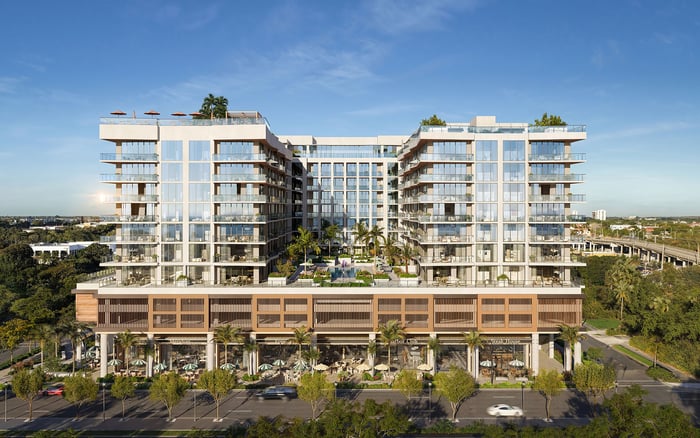
For Manhattan buyers, the decisive luxury may be operational control. This guide outlines how to evaluate condominium documents, catering permissions, guest protocols, amenity exclusivity, and applicable requirements when planning art-week entertaining in West Palm Beach.

A move from Manhattan to West Palm Beach can invite a different relationship with space, light, and outdoor living. For a collector, patron, or executive who expects to entertain during peak cultural weeks, however, the property decision should also account for how a planned dinner, preview, or cocktail gathering would operate in practice.
That inquiry reaches beyond the dimensions of a dining room. It should address caterer access, loading procedures, visitor parking, guest registration, service circulation, amenity reservations, cleanup obligations, sound expectations, and event approvals. Privacy should likewise be evaluated as an operational quality: the ability to receive guests and vendors discreetly while protecting the residence and respecting shared spaces.
For an active host, operational permission can matter as much as architectural beauty.
Buyers relocating from Manhattan may already have a preferred entertaining rhythm. A chef might arrive before guests, service staff may need a staging area, floral deliveries could require separate access, and drivers may need clear arrival instructions. Instead of assuming that a West Palm Beach residence will accommodate that sequence, turn it into a written brief before touring.
The brief can identify the anticipated guest range, arrival window, vendor count, food-preparation method, alcohol service, music, deliveries, waste removal, and desired conclusion time. It should also distinguish recurring intimate dinners from an occasional larger gathering. Those formats can place very different demands on elevators, parking, kitchens, terraces, staff, and common areas.
During a tour, ask management or the appropriate representative to walk through the proposed sequence from vendor arrival to final cleanup. The objective is not simply to confirm that entertaining is possible. It is to understand which parts may take place inside the residence, which depend on reservable amenities, and which require advance coordination.
Amenity descriptions are a useful starting point, but buyers should request the current materials that address actual use. Depending on the property, the review may include governing documents, house rules, reservation forms, fee schedules, vendor requirements, insurance requirements, and sample event applications.
Ask a qualified attorney to identify which documents control and how policies may be amended. If a particular hosting capability is important to the purchase, seek a written response from an authorized party rather than relying on an informal conversation. The review should clarify whether approvals are objective or discretionary, how far in advance a reservation may be made, and what happens if building operations affect a planned function.
A room described as a catering kitchen should be evaluated through specific questions. Can an independent chef enter? Is active preparation permitted, or is the room intended mainly for plating and service? Are any appliances, heat sources, deliveries, or food-handling activities restricted? Must vendors provide insurance or appear on an approved list? The answers-not the amenity label-determine whether the space fits the buyer's plans.
A hospitality-oriented residence may appeal to an owner who values coordinated staffing, setup, service, and cleanup. Another buyer may place greater value on choosing an independent chef, sommelier, florist, musician, or security team. Neither preference should be assumed from branding alone.
Mr. C Residences West Palm Beach can be included in a West Palm Beach comparison, with its current documents and reservation procedures reviewed directly. The same questions should be applied consistently: who may cater, where preparation may occur, how vendors enter, what staffing is required, and which charges or deadlines apply.
Buyers should also separate food service from alcohol service. Ask what the property itself requires and have the proposed caterer or event professional identify any additional approvals that may apply to the planned format. Because requirements can depend on the circumstances, the intended event should be reviewed rather than reduced to a general assumption.
Privacy during a peak event week involves more than views or elevator access. It includes the guest-registration process, the visibility of vendor movement, the location of driver queues, the route between parking and the residence, and the degree of separation between a reserved room and neighboring common areas.
For each reservable amenity, confirm whether the booking grants exclusive use. Ask whether doors can be closed, whether adjacent spaces remain available to other residents, and whether unrelated traffic may pass through the room. Clarify how guest lists are submitted, how substitutions or late arrivals are handled, and whether photographers, musicians, art handlers, or personal security personnel face separate procedures.
Service circulation deserves its own review. Determine whether vendors share resident elevators, whether a loading area must be scheduled, and whether deliveries have defined windows. For terrace or pool-adjacent plans, request the specific rules addressing food, beverages, music, furniture, lighting, and closing times. Avoid assuming that permission in one common area extends to another.
A useful due-diligence exercise is to map a sample evening in half-hour increments. Begin with the first delivery and continue through setup, guest arrivals, meal or reception service, departures, breakdown, waste removal, and final inspection. This can reveal dependencies that remain invisible during a conventional property tour.
Ask who receives vendors, who controls access, and who is available if an elevator, loading, valet, or reservation issue arises. Identify any deposits, staffing charges, cleaning responsibilities, cancellation provisions, or damage procedures shown in the current materials. If the buyer expects several gatherings each season, ask whether reservation frequency or booking priority is addressed.
The same exercise can protect an owner who wants quiet occupancy rather than an active hosting calendar. Ask how the building manages guest traffic and shared amenities during busy periods, and whether the residence's route from arrival to front door feels sufficiently discreet when common areas are active.
A residence does not need to perform every hospitality function. Smaller dinners may suit the home, while a larger reception may be easier to manage at a professionally operated venue. This split can reduce demands on shared residential spaces while preserving the apartment as a private setting.
Compare the two approaches on the same basis: available hours, privacy, staffing, food and beverage control, security, accessibility, transportation, setup time, cleanup, cancellation terms, and total cost. Obtain current proposals rather than relying on generalized estimates. If an event professional is involved, ask that person to flag any governmental, licensing, insurance, or operational requirements associated with the specific plan.
This comparison can also sharpen the residential decision. If major functions will occur elsewhere, the home may be selected for intimate dining, art display, terrace use, and discreet arrivals rather than for maximum common-area capacity. If the building is expected to host the principal event, reservation rights and service logistics deserve greater weight.
Branded and service-oriented properties can be evaluated without assuming that they share the same policies. Mandarin Oriental Residences, West Palm Beach and The Ritz-Carlton Residences® West Palm Beach may be considered through the same document-led process used for any other residence.
A buyer can also assess Forté on Flagler West Palm Beach using an identical checklist. A consistent comparison should cover exclusive-use rights, guest procedures, caterer choice, loading access, parking, elevator scheduling, music expectations, end times, cleaning, security staffing, approval timing, and remedies if plans change.
Using the same questions at every property makes trade-offs easier to see. One residence may prioritize coordinated service, another may offer a circulation pattern the buyer prefers, and another may feel most suitable for quiet private occupancy. The decision should follow verified fit rather than a label.
If entertaining capacity is material, complete the relevant review before the contractual decision becomes difficult to reverse. Request current forms and sample cost schedules where available, and have appropriate advisers examine provisions that affect the intended use. Keep written responses with the transaction file.
The final decision should balance expressive and procedural qualities. Gracious rooms, compelling views, and a polished arrival shape the experience, but predictable permissions and discreet circulation determine how confidently the home can be used during West Palm Beach's busiest cultural periods.
For discreet guidance in evaluating West Palm Beach residences through this operational lens, connect with MILLION.
If branded residences are on your mind — as a home or as an allocation — we would be glad to share what we are seeing, privately.
Begin a quiet conversationThey help a buyer evaluate whether the residence, circulation, amenities, and operating procedures fit the intended style of hosting.
No. Buyers should verify permitted users, preparation methods, equipment rules, and vendor requirements in the current property materials.
Request current governing documents, house rules, reservation forms, fee schedules, vendor requirements, and any available event applications.
Not necessarily. Confirm in writing whether other residents may access the room or adjacent areas during the reservation.
Review registration, arrival handling, parking, elevator access, capacity, security coordination, and end-time procedures.
Request the specific rules for food, beverages, music, furniture, lighting, access, and closing times in those areas.
Ask about vendor approval, insurance, loading, equipment, food preparation, staffing, cleanup, and access windows.
Map a sample event from the first delivery through final cleanup, then verify how the property would handle each step.
Yes. Ask the property and appropriate event professionals which approvals, insurance, or operating requirements apply to the specific plan.
Yes. Compare privacy, staffing, access, operating hours, service control, cancellation terms, and total cost before deciding.