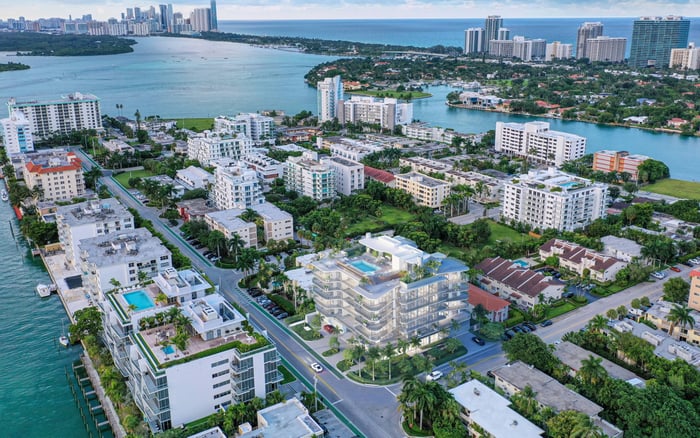
For Barcelona buyers, the strongest Bay Harbor Islands acquisition plan begins with the eventual sale. FIRPTA cash flow, ownership structure, tax identification, financing, records, and the likely resale audience should be coordinated before title is taken.
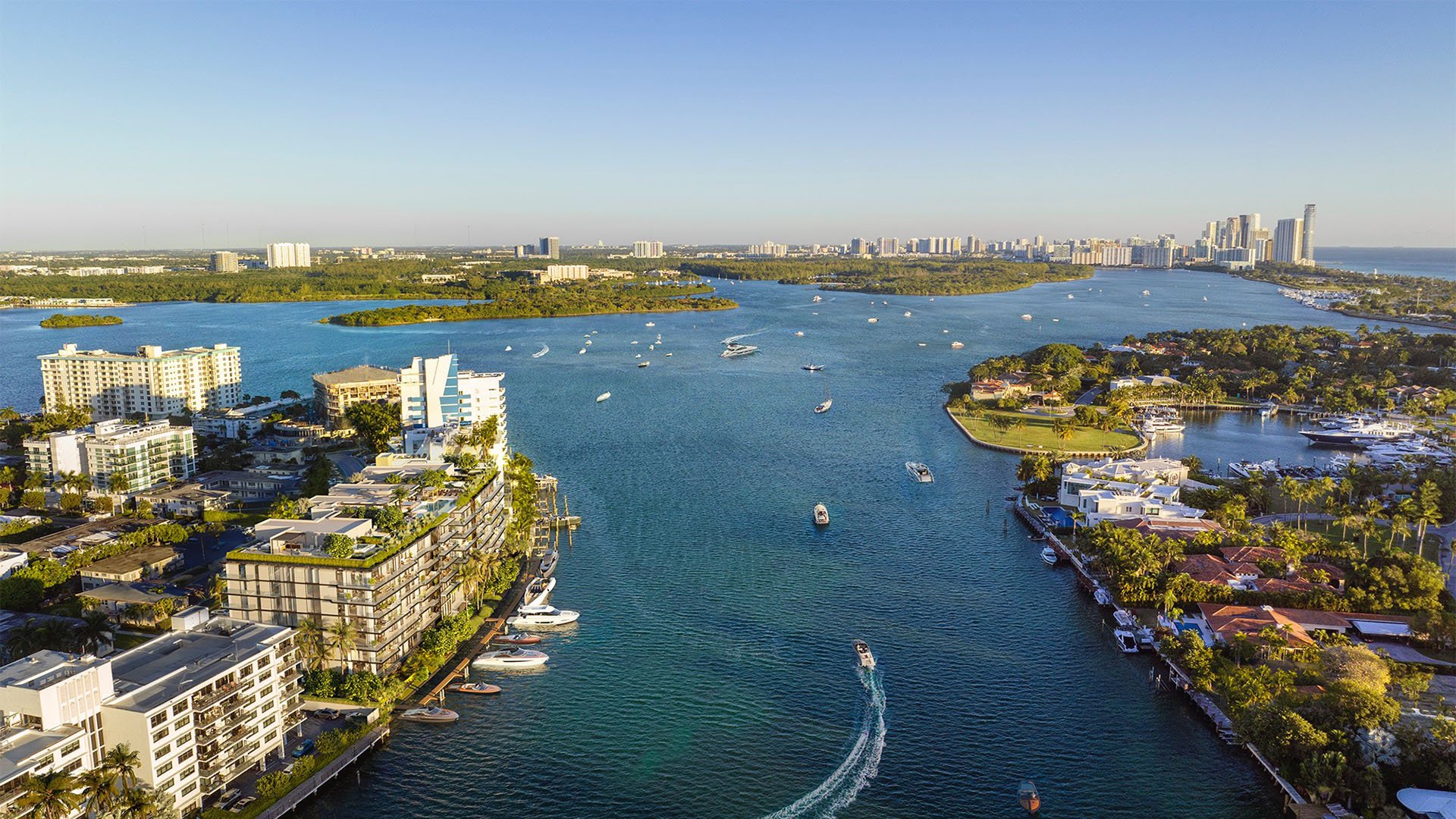
For a buyer moving from Barcelona, a Bay Harbor Islands residence can serve as both a personal base and a significant cross-border asset. The property decision, therefore, extends beyond which view, floor plan, or building feels right. It must also consider whether the acquisition can be owned, financed, documented, and eventually sold without avoidable friction.
Foreign nationals may buy property in Bay Harbor Islands. FIRPTA generally enters the picture later, when a foreign owner disposes of a U.S. real-property interest. That distinction matters: a structure that appears convenient at acquisition may become cumbersome when the owner refinances, changes residency, transfers authority, or prepares for resale.
The best time to design the exit is before title is taken.
A disciplined plan should connect the intended use, expected holding period, probable resale value, likely buyer profile, ownership form, and closing timetable. This is especially important in a luxury market where three-bedroom bayfront residences can range from roughly $2 million to $6 million.
When the seller is a foreign person, FIRPTA generally requires the buyer to withhold 15% of the gross sale price. The calculation is based on price, not profit. On a $4 million sale, standard withholding would be $600,000, even if the seller's economic gain were far smaller.
This withholding is not a separate, additional tax. It is a prepayment credited against the foreign seller's eventual U.S. tax liability. If the final liability is lower, the difference may be recovered by filing the applicable U.S. tax return. The practical concern is interim liquidity: a meaningful portion of the sale proceeds can remain unavailable while the tax position is resolved.
Reduced residential-use rules are narrow. Withholding is generally 0% at $300,000 or less when the buyer certifies qualifying residential use, and generally 10% from $300,001 through $1 million under qualifying circumstances. Above $1 million, the general 15% rate typically applies, even when the purchaser intends to use the property as a residence. Many Bay Harbor Islands luxury exits will therefore fall beyond those price-based exceptions.
Individual, LLC, corporate, and trust ownership can carry different consequences for tax identity, governing documents, signing authority, financing, privacy, liability, and succession. An LLC may support planning or privacy, but entity ownership does not automatically eliminate FIRPTA exposure when the property is sold.
The first question is functional: Will the residence be a primary home, a seasonal home, a rental, or an investment asset? The answer should shape the ownership review. A structure suited to a personally used residence may not be the preferred structure for a rental program or succession plan.
Financing must be integrated into the analysis. International purchasers may buy with cash or foreign-national financing, while lenders and banks commonly request identification, proof of funds, and other compliance documentation. Before signing, the buyer's advisers and prospective lender should confirm that the intended title holder is compatible with underwriting, banking, insurance, and closing requirements.
That review can proceed while comparing options such as Alana Bay Harbor Islands and La Baia North Bay Harbor Islands. The purpose is not to let the entity dictate the residence, but to ensure that the preferred residence can be acquired through a structure aligned with its actual use.
Bay Harbor selection should include an exit scenario for every serious candidate. Begin with a conservative resale-price band, then model standard FIRPTA withholding against gross proceeds. Add the expected holding period, projected gain, debt payoff, closing timetable, and documentation required to establish tax basis.
The likely future purchaser also matters. FIRPTA's reduced residential rates depend partly on the purchaser's intended use, but the general 15% rate typically governs above $1 million. In the local luxury segment, it is prudent to underwrite the exit at that general rate rather than rely on an exception that may not match the final price or buyer.
Residences at Onda Bay Harbor and The Well Bay Harbor Islands can be evaluated through this lens: not merely as design choices, but as assets whose anticipated resale audience, price position, and ownership documentation belong in the original decision. No future buyer profile is guaranteed, so the model should test multiple outcomes.
A foreign owner should arrange the appropriate U.S. taxpayer identification number well before an anticipated exit-typically an ITIN for an individual or an EIN for an entity. Waiting until a sale is underway can add pressure to an already time-sensitive closing.
The permanent property file should retain purchase closing statements, entity records, capital-contribution evidence, financing documents, and receipts for qualifying improvements. These materials can support basis calculations and a future withholding-certificate application. They also clarify who has signing authority and how acquisition and improvement funds entered the ownership structure.
At resale, the buyer is generally responsible for withholding and remitting the FIRPTA amount. Forms 8288 and 8288-A are generally used, with remittance due by the 20th day after transfer. The foreign seller may seek reduced or zero withholding by submitting Form 8288-B before closing when standard withholding would exceed the expected liability. Preparing the application soon after contract execution can better align the process with the planned closing.
Spanish tax residence, Spain-U.S. treaty questions, and any change in U.S. immigration or tax residency require separate cross-border advice. They may affect the owner's ultimate position, but they do not justify assumptions about FIRPTA mechanics or the ideal title structure.
Before acquisition, the coordinated team should include qualified U.S. tax and legal advisers, appropriate Spanish advisers, closing and title professionals, and the lender when financing is involved. Rates and procedures should be reconfirmed before both purchase and sale. The objective is a clear chain from ownership and funding through recordkeeping, signing authority, withholding, tax filing, and succession.
The refined decision is the one that works twice: first as a Bay Harbor Islands home, and later as an orderly, well-documented sale. For discreet guidance on selecting a residence with the full ownership and exit picture in view, connect with MILLION.
If branded residences are on your mind — as a home or as an allocation — we would be glad to share what we are seeing, privately.
Begin a quiet conversationYes. Foreign nationals may acquire Bay Harbor Islands property, although FIRPTA can become relevant when a foreign owner later sells the U.S. real-property interest.
The general rate is typically 15% of the gross sale price when the seller is foreign. It applies above $1 million even when the buyer intends residential use.
No. Standard withholding is generally calculated on the gross sale price rather than the seller's gain.
Yes. At the general 15% rate, a $4 million gross sale price produces $600,000 of withholding regardless of actual profit.
No. It is a prepayment credited against the seller's eventual U.S. tax liability, with a potential recovery through the applicable return if too much was withheld.
No. An LLC may support privacy and planning, but entity ownership does not automatically remove FIRPTA exposure at sale.
Review tax identity, use, financing, privacy, liability, succession, governing documents, and signing authority before selecting individual, LLC, corporate, or trust ownership.
Keep closing statements, entity records, capital-contribution evidence, financing documents, and improvement receipts to support basis and future filings.
A foreign seller may submit Form 8288-B before closing when standard withholding is expected to exceed the final liability. Preparation should begin soon after contract execution.
The buyer is generally responsible for withholding and remitting the amount. Forms 8288 and 8288-A are generally used, with remittance due by the 20th day after transfer.