Palm Beach often offers greater closed-clearance headroom, while Boca Raton can reward owners who carefully align yacht dimensions, bridge schedules, dock conditions, and preferred inlet routes.
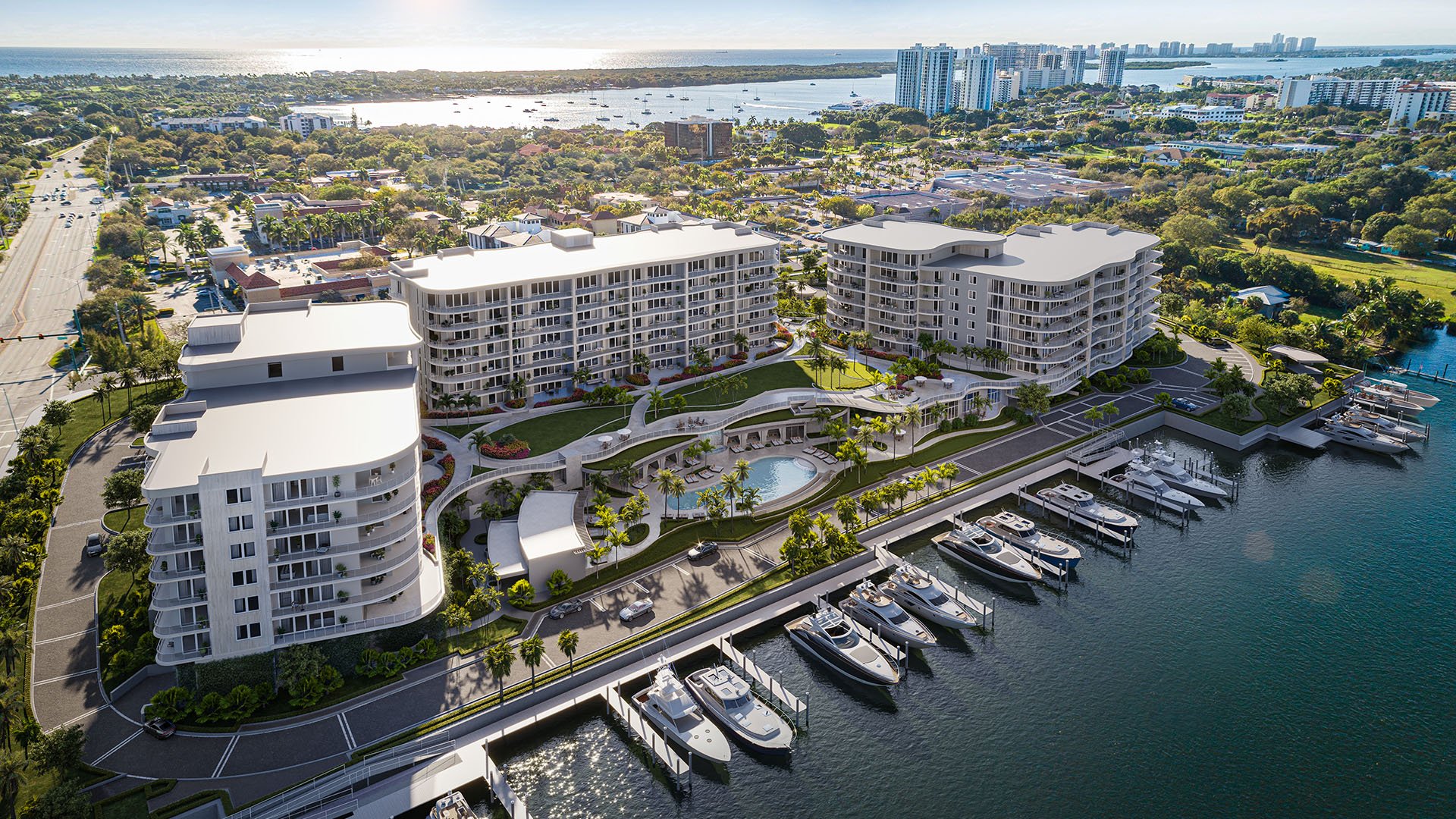
For a yacht-owning buyer, the distinction between Palm Beach and Boca Raton is not simply architectural, social, or geographic. It is operational. A residence can present beautifully from the water yet impose recurring delays if the route from its dock to the ocean includes low bridges, narrow center spans, tidal constraints, or opening schedules that do not suit the vessel.
The comparison should therefore begin with a route survey. Buyers should identify the intended berth, preferred inlet, every intervening bridge, controlling depth, channel width, turning room, and the yacht's true air draft under normal load. Clearance changes with the tide, while antennas, radar arrays, hardtops, and other equipment can make the yacht's practical profile different from its headline specifications.
The most valuable dock is the one that works with the yacht, the tide, and the owner's schedule.
This route-first discipline applies equally to an estate, condominium residence, private marina arrangement, or separately acquired boat slip. It is also the essential premise for yacht-focused buyer's guides: proximity to the waterfront is not the same as uncomplicated ocean access.
Across key Palm Beach and North Palm Beach Intracoastal routes, closed bridge clearances often fall within a more accommodating range of approximately 24 to 35 feet. In North Palm Beach, the Indiantown Road and Donald Ross Road bridges each offer about 35 feet when closed. That can reduce dependence on openings for many moderate-air-draft yachts, although the vessel's precise dimensions and tidal conditions still govern safe passage.
The PGA Boulevard Bridge provides roughly 24 to 25 feet of closed clearance and typically opens on the hour and half-hour. Farther south, the Flagler Memorial Bridge in West Palm Beach offers approximately 24 feet, with operating patterns that can change during weekday rush hours. Southern Boulevard and Lantana add further movable-bridge segments that captains may need to incorporate into a longer route.
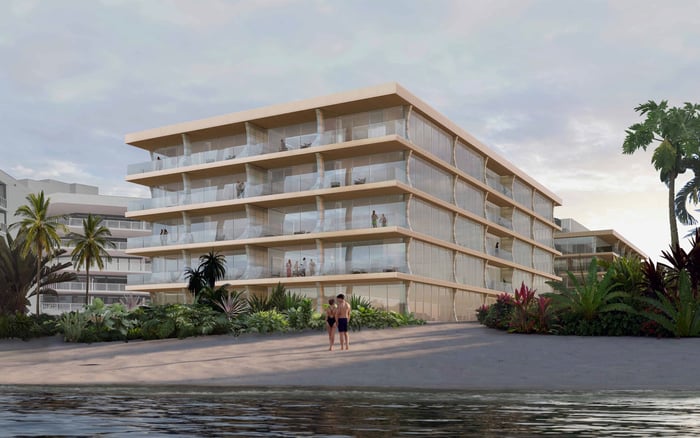
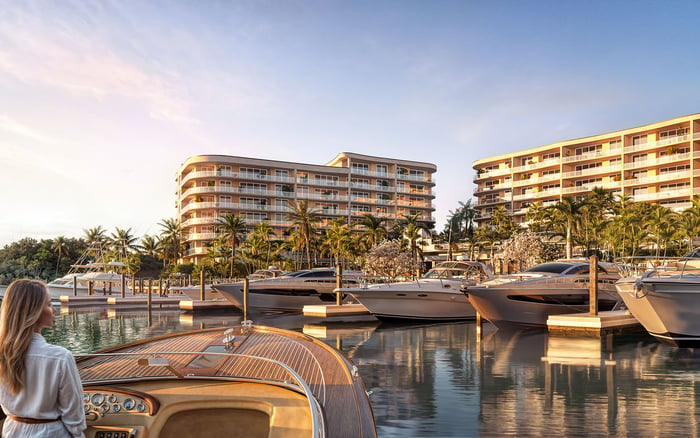
For buyers considering The Ritz-Carlton Residences® Palm Beach Gardens or Palm Beach Residences, the useful question is not whether the address is near navigable water. It is which berth will serve the yacht-and exactly how that berth connects to the preferred inlet.
Palm Beach is not uniformly free of obstructions. A Lake Worth Inlet A1A bridge segment has only 8 feet of fixed clearance. The lesson is precise: never extrapolate from proximity to a major inlet. The exact channel branch and dock-to-ocean route must be verified.
Boca Raton can work exceptionally well when the property, berth, yacht, and departure routine are selected as one system. The Boca Inlet A1A bridge is a bascule bridge, not a fixed 23-foot barrier. It provides approximately 23 feet of closed vertical clearance and 45 feet of horizontal clearance at the center span. Taller yachts may transit when the bridge opens, but its schedule then becomes part of normal operations.
The bridge opens every quarter-hour from 7 a.m. to 6 p.m. and on demand outside those hours. That frequency can be workable, yet it still introduces timing considerations into departures, returns, guest transfers, fueling, and weather decisions.
Other Boca bridges can be more restrictive. Camino Real has only 9 feet of closed clearance, meaning most flybridge and larger motor yachts will require an opening. Palmetto Park Road provides approximately 19 to 20 feet of closed center-span clearance and 91 feet of horizontal clearance. That variation reinforces the need to use current charts, bridge gauges, tidal conditions, and the captain's own measurements rather than rely on a single figure.
North of Boca, Linton Boulevard offers 30 feet of closed vertical clearance and 90 feet of horizontal clearance at the center span. Southward, Hillsboro Inlet is an alternative, but its bridge has 13 feet of closed clearance, while overhead power cables limit open vertical clearance to about 64 feet.
A buyer evaluating Glass House Boca Raton or Alina Residences Boca Raton should treat the residential decision and berth strategy as related but separate exercises. The residence may satisfy the lifestyle brief, while the yacht's dimensions determine where and how it can be kept.
Crew efficiency is less about abstract service density than reducing friction within a known operating plan. Greater closed clearance can allow a captain to pass without requesting an opening, potentially making departure times more predictable. Scheduled bridges, on-demand windows, and rush-hour restrictions still need to be built into fueling, provisioning, maintenance movements, guest boarding, and weather routing.
A route with several bridges can compound modest waits and narrow the margin for a last-minute ocean departure. Conversely, one low bridge close to the berth may be entirely manageable if its schedule is frequent and the yacht's program is planned around it. Crew logistics should therefore be modeled against realistic itineraries, not merely the shortest line on a map.
Before closing, the captain or a qualified marine professional should run the intended route at relevant tidal states and confirm how the yacht behaves under ordinary load. The assessment should include fenders, tenders, stabilizer considerations, antenna configurations, and any equipment that changes height, beam, or draft.
Bridge clearance is only one component of waterfront value. Dock depth, controlling channel depth, beam restrictions, turning basin, seawall condition, piling placement, shore-power capacity, and service access can be equally decisive. A generous dock face is of little use if the approach is too shallow, the turning geometry is inadequate, or the electrical service cannot support the vessel.
Buyers should also distinguish legal use from physical possibility. The practical review should confirm the berth configuration and applicable permissions, then test those findings against the yacht's length, beam, draft, and air draft. Future vessel plans matter as well. A route that suits today's express cruiser may not accommodate a later flybridge yacht.
Clearance figures can differ because measurements may use different tidal datums. Current bridge gauges, notices to mariners, local conditions, and prudent safety margins should guide the final decision. No luxury finish can compensate for an operationally mismatched berth.
Palm Beach and North Palm Beach generally hold the advantage for buyers seeking greater closed-clearance headroom on key routes, particularly where approximately 24 to 35 feet allows passage without an opening. This can be meaningful for moderate-air-draft yachts and owners who value spontaneous departures.
Boca Raton may appeal to buyers comfortable with a more schedule-aware program. Its inlet bridge can open for vessels taller than the 23-foot closed clearance, but interior bottlenecks such as Camino Real at 9 feet and Palmetto Park at 19 to 20 feet demand careful route selection. The right Boca property can still be highly functional when it sits on the favorable side of the relevant bridge and aligns with the chosen inlet.
The final decision should be expressed as a vessel-specific operating brief: acceptable bridge waits, minimum under-keel margin, preferred inlet, maximum route time, fueling pattern, crew movement, storm planning, and likely next yacht. That brief turns an attractive waterfront purchase into an asset capable of supporting the life intended for it.
For discreet guidance on aligning a South Florida residence with your yachting priorities, connect with MILLION.
If branded residences are on your mind — as a home or as an allocation — we would be glad to share what we are seeing, privately.
Begin a quiet conversationPalm Beach and North Palm Beach key routes often offer about 24 to 35 feet, generally more than Boca bottlenecks such as Camino Real and Palmetto Park.
No. It is a bascule bridge with approximately 23 feet of closed clearance, so taller yachts may pass when it opens.
It opens every quarter-hour from 7 a.m. to 6 p.m. and on demand outside those hours.
Its closed vertical clearance is only 9 feet, so most flybridge and larger motor yachts require an opening.
Its closed center-span clearance is approximately 19 to 20 feet.
No. One A1A bridge segment has only 8 feet of fixed clearance, so the exact route must be checked.
Beam, draft, true air draft under load, and equipment that changes the vessel's operating profile all matter.
Actual clearance changes with water level relative to the charted reference, so the available space can vary.
Review depth, turning room, seawall condition, piling placement, shore power, service access, and any beam restrictions.
Palm Beach may offer an advantage on routes with higher closed clearances, but the best choice depends on the vessel, berth, tide, and inlet path.