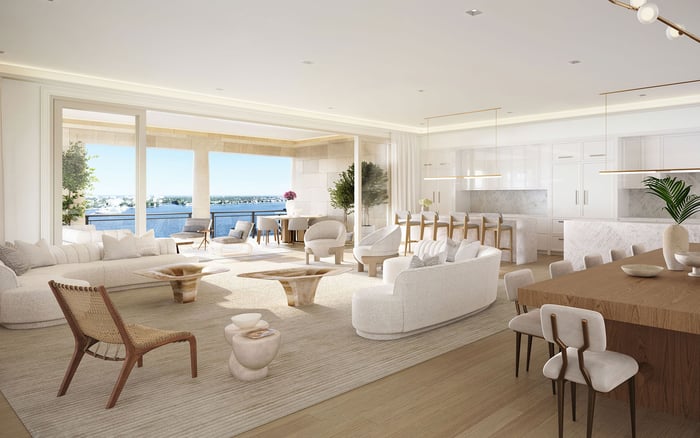
A discreet framework for assessing access, operations, privacy, resilience, and daily convenience before selecting a Palm Beach residence.
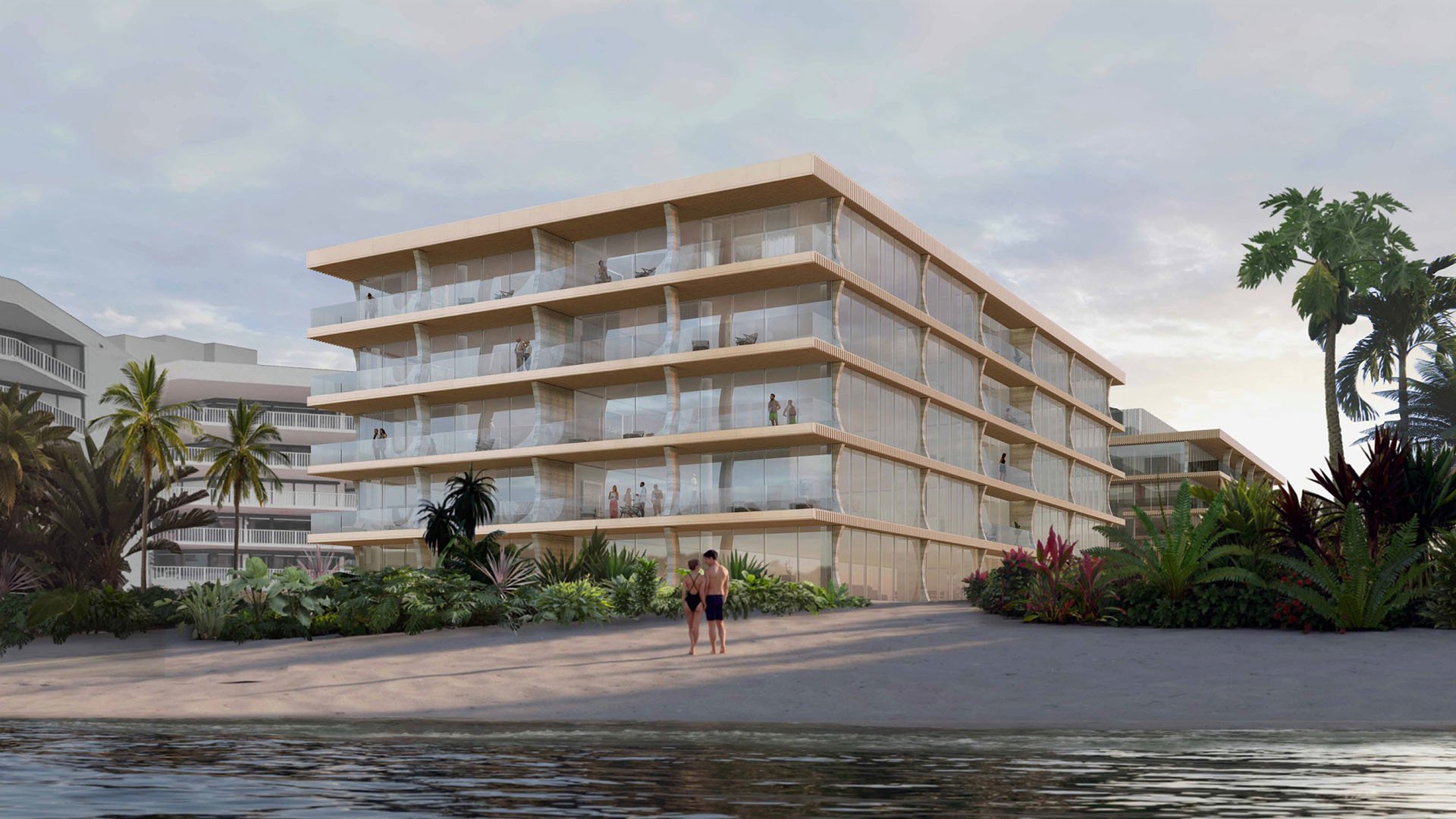
For a Palm Beach buyer, security planning is less about assembling visible devices than understanding how a residence operates from the curb to its private interior. The strongest choice is one in which architecture, access control, staffing, service circulation, privacy and emergency procedures work together without making daily life feel institutional.
Begin by defining the household rather than evaluating the building. A primary residence occupied year-round has different needs from a second home used seasonally. Consider children, guests, household staff, drivers, deliveries, pets, medical support and periods when the property will be vacant. A realistic use profile gives counsel and specialist advisers a sound basis for reviewing vulnerabilities, responsibilities and operating costs.
Security should also preserve ease. Residents should be able to arrive, host and travel without repeatedly improvising permissions. The objective is a residence whose protocols feel calm and predictable, yet remain flexible enough for changing schedules and family needs.
A buyer should walk every likely route into the property, not merely the formal entrance. Review how residents, guests, employees, contractors and deliveries are received, identified and directed. Ask where vehicles pause, where packages change hands, how visitors reach the residence and whether service activity intersects with private circulation.
This exercise applies across distinct residential formats. Palm Beach Residences can serve as one local point of comparison, while Forté on Flagler West Palm Beach offers another project to assess through the same arrival and access framework. These links are starting points, not substitutes for current building documents and an on-site review.
For a waterfront residence, include access from terraces, docks, promenades, garages and adjoining grounds in the review. The right questions depend on the specific property; buyers should not assume that a prestigious address or controlled lobby resolves every point of entry.
Privacy and security overlap, but they are not identical. Privacy concerns exposure: sightlines, neighboring windows, public approaches, elevator encounters, staff movement and the visibility of occupancy patterns. Security concerns controlled access, monitoring, response and accountability. A residence can perform well in one dimension while requiring further planning in the other.
During a tour, observe what is visible from the street, common areas and neighboring properties. Consider whether guests pass private rooms, whether service personnel follow a separate route and whether the home provides a discreet place for valuables, documents and communications. Buyers comparing South Flagler House West Palm Beach should apply these questions to the precise residence under consideration, as orientation and circulation can vary within a single project.
Digital privacy belongs in the same review. Request clear explanations of resident applications, electronic credentials, intercoms, cameras and connected-home controls. Determine who administers access, how permissions are changed and what happens when an employee, vendor or guest no longer requires entry.
Hardware is only one layer. Buyers should understand who makes decisions, who responds after hours and how incidents are documented and escalated. Ask management to explain current procedures for visitor authorization, lost credentials, lockouts, package handling, contractor access, vacant residences and emergency communication.
The review should define the boundaries among the association, building staff, owner and outside vendors. Clarify which equipment belongs to the residence, which systems are common elements and who maintains each component. For new-construction purchases, determine what is included at delivery, what remains an owner upgrade and which modifications require approval.
Branded or service-oriented properties may present a different operating model, but the same diligence applies. When considering The Ritz-Carlton Residences® West Palm Beach or Mandarin Oriental Residences, West Palm Beach, request current written information rather than relying on general expectations associated with a name.
A sound security plan should withstand ordinary complexity. Ask how the residence accommodates an early housekeeper, a late guest, a replacement driver, a large delivery or a family member arriving without a phone. Then consider longer absences: mail and package procedures, authorized inspections, storm preparation, leak response and the restoration of access after a power or network interruption.
Operational resilience deserves equal attention. A qualified adviser can review backup power relationships, communications, life-safety interfaces and the placement of owner-installed equipment. Legal counsel and insurance professionals can help interpret obligations, coverage conditions and liability. Any proposed alteration should be coordinated with management and checked against governing documents before purchase or installation.
The best option is not necessarily the residence with the longest amenity description. It is the one whose physical design and operating rules align with the buyer's risk profile, service expectations and tolerance for friction.
Security review should proceed alongside legal, financial and physical due diligence. Request current governing documents, relevant rules, alteration procedures, available system descriptions and insurance information. Have the appropriate professionals assess the residence and any proposed technology without compromising confidential details.
For readers using MILLION Buyer's Guides, the central principle is consistency: compare every candidate against the same household brief and question set. In Palm Beach and nearby West Palm Beach, differences in property type, staffing and access can shape the ownership experience. A disciplined comparison keeps the focus on suitability rather than assumptions.
Before closing, create a concise responsibility map covering management, the owner, household staff and specialist vendors. After closing, update credentials, permissions, emergency contacts and household protocols. Security planning is not a one-time purchase. It is a private operating discipline that should evolve with occupancy, staffing and technology.
Should security planning begin before making an offer? Yes. An early review can identify questions that require documents, specialist input or approval before contractual deadlines.
Is a staffed entrance enough for a security-focused buyer? Not by itself. Buyers should examine the full chain of access, authorization, circulation and response.
How should a second-home buyer approach long absences? Establish written protocols for inspections, deliveries, emergencies, authorized entry and credential management.
What should be checked during an in-person tour? Walk resident, guest, service, garage and exterior routes, noting sightlines and points of transition.
Does a higher floor automatically provide better security? No. Floor level is only one consideration within a broader review of access, privacy and response.
What matters most in new-construction due diligence? Confirm what will be delivered, which upgrades are permitted and who maintains each system component.
How should household staff access be managed? Use role-based permissions, defined schedules and a clear process for changing or revoking access.
Should smart-home technology be reviewed separately? It should be assessed within the overall plan, including administration, connectivity and privacy.
Who should advise on security before closing? Depending on the property, buyers may consult legal, insurance, technology and qualified security professionals.
Can privacy priorities conflict with convenience? They can, which is why protocols should be tested against actual family, guest and service routines.
For a discreet conversation and a curated building-by-building shortlist, connect with MILLION.
If branded residences are on your mind — as a home or as an allocation — we would be glad to share what we are seeing, privately.
Begin a quiet conversation