Palazzo della Luna on Fisher Island brings a practical ownership question into focus: how a glass-forward, view-driven residence manages sun, heat, glare, and interior preservation when its owner is away for extended periods.

Palazzo della Luna Fisher Island occupies one of Miami Beach’s most private residential settings, where ultra-luxury ownership is often shaped by global travel, seasonal occupancy, and extended periods away from home. For this buyer, the defining question is not simply whether the residence impresses on arrival. It is whether it remains protected, comfortable, and operationally composed when no one is there.
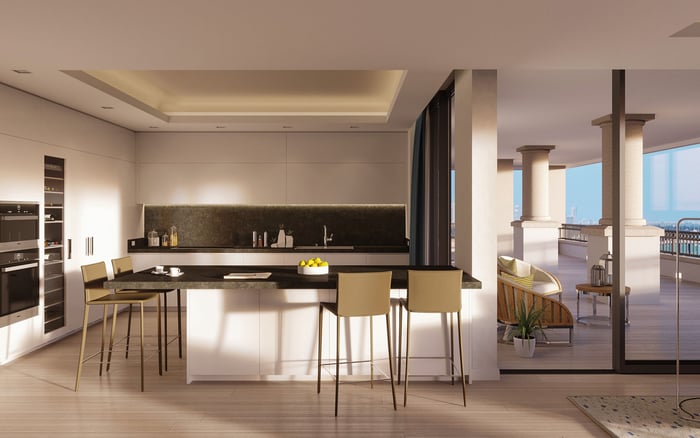
That is where sun-glare control becomes more than a decorative consideration. In a glass-forward coastal residence, light is both the prize and the challenge. Views, daylight, privacy, and high-end materials must coexist. The same exposure that gives a room its cinematic water outlook can also create heat gain, glare, and long-term stress on finishes if it is not managed with discipline.
For a Fisher Island, Miami Beach, second-home buyer weighing resale, water views, and balcony priorities, the conversation is ultimately about stewardship. Palazzo della Luna is not only a place to occupy. It is an asset that may need to perform quietly through the hottest, brightest months of the year.
In South Florida luxury real estate, glare is often reduced to a seating-position problem: close a shade, move a chair, change a fabric. At the level of Palazzo della Luna, that reading is too narrow. Sun-glare control shapes the daily experience of living, but it also affects finish protection, art preservation, operating risk, and future market perception.
A seasonal owner may leave the residence for weeks or months. During that vacancy, the interior still meets Miami’s coastal solar exposure every day. Bright light can influence how rooms feel when the owner returns, how materials age, and how delicate collections are cared for in the background. Even without discussing specific technical systems, buyer due diligence should focus on a practical question: what happens inside the residence when the doors are closed and the season moves on?
The best lock-and-leave residences are judged as much by their calm absence as by their dramatic presence. They should feel prepared, not improvised. Sun management is part of that expectation.
Fisher Island’s appeal begins with separation. It is set apart from mainland Miami Beach while remaining close to South Beach and Downtown Miami, a rare combination for owners who want privacy without surrendering access to the city. That controlled setting reinforces the lock-and-leave proposition.
Exclusivity and controlled access can reduce the friction of seasonal ownership. Yet location alone does not solve the solar question. A private island address may protect the owner’s sense of retreat, but the residence still needs an intelligent approach to light, heat, and interior preservation. Palazzo della Luna’s appeal depends on delivering the visual generosity of Miami’s waterfront environment while respecting the realities of the climate.
That balance is especially important for owners who do not live on a fixed local rhythm. A residence may be occupied during peak social periods and left quiet during hot, high-sun months. In that pattern, the most important performance period may be the one the owner never personally sees.
Views are emotional. Operational performance is quieter. A disciplined buyer at Palazzo della Luna should evaluate both.
The first question is exposure. Which rooms receive the strongest light, and when does glare become noticeable? How do the principal living spaces, bedroom suites, terraces, and art walls respond to sun? The answer may vary dramatically by orientation and floor position.
The second question is background management. A credible lock-and-leave plan should account for how heat, glare, and interior protection are handled when the owner is away. This does not require assuming any particular technology. It does require clarity from the ownership team, building staff, design advisors, and property managers about how the residence is meant to behave during vacancy.
The third question is material vulnerability. Luxury interiors often involve natural stone, wood, textiles, rugs, wallcoverings, and art. These elements help justify the residence’s stature, but they also require care. Sun management becomes part of protecting the very details that make the home exceptional.
In the ultra-premium tier, buyers are rarely evaluating only the purchase moment. They are also considering how a residence will present years later. Sun-glare control therefore has a resale dimension. A well-preserved interior tells a story of disciplined ownership. A room that shows uneven fading, harsh light patterns, or heat-related wear tells a different story.
Resale psychology is subtle. Prospective buyers may not immediately ask about solar management, but they will feel the condition of a residence. They will notice whether interiors appear composed, whether materials still have depth, and whether the waterfront drama feels luxurious rather than punishing. At Palazzo della Luna, where the expectation is rarefied, these details matter.
The strongest ownership strategy treats shading and glare control as part of asset management rather than a last-stage design preference. That does not mean dimming the residence into caution. It means preserving the ability to enjoy daylight and views without allowing exposure to dictate the home’s long-term condition.
Before committing to a lock-and-leave routine, owners should define responsibilities. Who reviews the residence while it is vacant? How are interior conditions monitored or managed? What protocol applies before departure, during absence, and before return? These questions are not glamorous, but they are central to owning well in Miami’s coastal luxury market.
The checklist should include glare-prone rooms, protection of art and furnishings, terrace-adjacent spaces, and any areas where daylight is especially intense. It should also consider privacy. Sun control and privacy often overlap, particularly in residences designed around sweeping glass and open water views.
For globally mobile owners, convenience is the promise. But true convenience is not the absence of planning. It is the presence of planning that operates quietly. Palazzo della Luna’s lock-and-leave appeal is strongest when the owner can arrive to a residence that feels exactly as intended: not merely secured, but cared for.
Palazzo della Luna is best understood through the tension that defines the finest Miami residences: open the home to extraordinary light, then manage that light with sophistication. Fisher Island adds privacy and controlled access. Miami Beach adds intensity, beauty, and solar exposure. The owner’s task is to make those forces work together.
For the seasonal buyer, the question behind sun-glare control is not whether the view is worth having. It is how the residence protects itself while preserving the pleasure of that view. In a market where discretion, condition, and ease of ownership shape value, that is a serious question.
Why is sun-glare control important at Palazzo della Luna? It affects comfort, heat, privacy, finish preservation, art care, and long-term asset presentation.
Is Palazzo della Luna suited to seasonal ownership? Yes, it is framed as a lock-and-leave residence for globally mobile and seasonal owners.
Does Fisher Island help with lock-and-leave living? Its exclusivity and controlled access support the practical needs of owners who are often away.
What should buyers ask before purchasing? They should ask how the residence manages light, glare, heat, and interiors during vacancy.
Is glare only a design issue? No. At this level, glare control is also about preservation, operations, and resale confidence.
Why are vacant months so important? Hot, high-sun months may coincide with a seasonal owner’s absence, making background performance critical.
Should buyers assume all glass residences perform the same? No. Orientation, room layout, exposure, and management protocols can create very different outcomes.
How does this affect art and furnishings? Strong light can influence how delicate interiors age, so protection planning should be addressed early.
Can sun control coexist with waterfront views? Yes, the goal is to preserve views and daylight while reducing unnecessary glare and exposure risk.
What is the main takeaway for buyers? Evaluate how the home behaves when closed up for months, not only how it looks during a showing.
For a discreet conversation and a curated building-by-building shortlist, connect with MILLION.
If branded residences are on your mind — as a home or as an allocation — we would be glad to share what we are seeing, privately.
Begin a quiet conversation