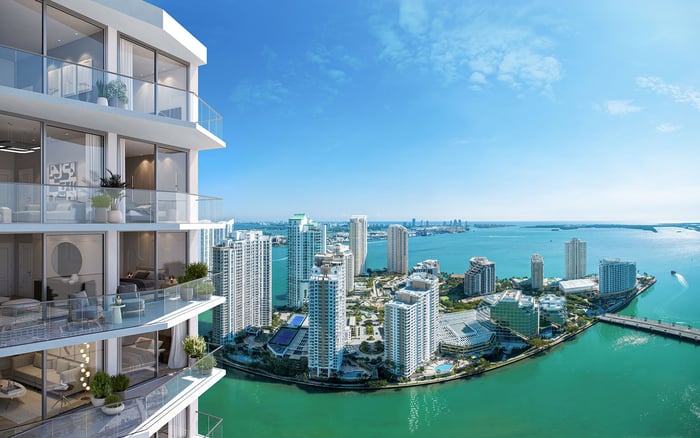
For a South Florida buyer taking an assignment before completion, ownership structure and insurance deserve a coordinated review. Separate replacement estimates from purchase price, confirm lender requirements, and examine how the proposed owner, collector assets, and liability coverage fit together.

For a South Florida buyer taking an assignment before completion, the residence is only part of the decision. The proposed titleholder, financing arrangements, replacement estimate and personal insurance deserve a coordinated review before commitment. A carefully considered purchase calls for an equally considered ownership structure.
Do not treat the assignment itself as evidence that insurance transfers or that a lender accepts the intended LLC or trust. Ask counsel, the lender and the insurance adviser to confirm their respective requirements against the same proposed ownership arrangement and transaction timeline.
For someone considering The Residences at 1428 Brickell, this is a diligence framework, not a statement about that project's assignment availability or insurance terms. The essential discipline is to resolve who will own the residence, who will borrow and whose interests the policies will protect.
Begin with intended use: a primary residence, a second home or an investment. Discuss investment objectives alongside occupancy plans, financing and estate planning, rather than using them as a shortcut to selecting an entity.
For a Florida primary residence, direct LLC ownership generally does not qualify for the homestead property-tax exemption. A properly structured trust may preserve eligibility in appropriate circumstances, depending on the trust arrangement and applicable ownership and residency requirements. Neither proposition determines the best structure for every household.
Keep the property-tax exemption separate from homestead creditor protection and inheritance restrictions. These are distinct legal questions, not a single package of benefits. Ask Florida counsel to address each relevant issue explicitly.
Then present the proposed structure to the lender and insurer. Request confirmation of the acceptable borrower, titleholder and insured interests before relying on a quote or financing indication. Do not assume that a trust or LLC selected for one purpose is acceptable for every other purpose.
Replacement cost is the cost to repair or replace damaged property with materials of similar kind and quality, without deducting depreciation. It is not market value. The negotiated purchase price should therefore not substitute for a replacement estimate.
That distinction matters whether the search centers on Brickell or The Perigon Miami Beach. Ask the insurance adviser to identify exactly which property the estimate values and which interests the proposed policy would insure. For a condominium buyer, that means examining the boundary between association property and applicable unit-owner property, rather than assuming the entire transaction price is the amount to insure.
Replacement-cost policies may require coverage equal to 80%, 90% or 100% of replacement value, depending on the insurer. These percentages are not interchangeable recommendations or universal lender minimums. Have the adviser explain the applicable requirement and how the proposed limit satisfies it.
Distinguish the coverage limit from claim-payment timing. For covered dwelling replacement-cost losses, Florida's statutory framework generally provides for an initial payment of at least actual cash value less the deductible, with remaining amounts paid as repairs occur and expenses are incurred, subject to exceptions. Replacement-cost coverage does not necessarily mean immediate payment of the full replacement amount.
Most mortgage lenders require homeowners insurance to protect the property securing the loan. A lender may also require flood insurance when a mortgaged property lies in a special flood zone. Neither requirement establishes a universal dollar minimum for a luxury purchase.
Ask for transaction-specific requirements covering limits, deductibles, evidence of coverage and the proposed ownership arrangement. Have the adviser compare those requirements with the actual policy proposal, rather than relying on a general assurance that the buyer is insured.
For a buyer evaluating Bentley Residences Sunny Isles, the same discipline applies: confirm the particular lender's position, not an assumed standard for Sunny Isles Beach. This is a buyer-side review, not a description of that development's financing conditions.
Treat lender compliance and household protection as separate review objectives. Meeting a financing condition does not resolve every question about possessions, insured parties or personal liability.
Florida condominium associations must maintain adequate property insurance based on replacement cost. That cost must be determined through an independent appraisal or an update of a prior appraisal at least every three years.
The association's master policy and the unit owner's policy protect different interests. Master coverage does not replace protection for the owner's contents, applicable interior property and personal liability. Ask for a written explanation of that division, supported by the relevant policy and condominium documents.
When assessing a residence such as Rivage Bal Harbour, request the insurance materials relevant to the anticipated closing and ask which documents will need updating before completion. The question is not whether Bal Harbour residences share a standard insurance arrangement, but how this particular purchase will be covered.
For a dwelling policy, also ask whether law-and-ordinance coverage offers apply. Florida's applicable homeowners framework includes offers at 25% and 50% of the dwelling limit, with different treatment for condominium-unit, tenant and mobile-home policies. Do not carry those percentages into a condominium analysis without confirming applicability.
Art, jewelry and other collector assets deserve a separate review; do not assume the residence's contents limit resolves every coverage question. Prepare an inventory and ask the adviser what valuation evidence, descriptions and coverage arrangements are appropriate for the proposed policy.
If possessions will move through storage or installation before occupancy, ask how each stage would be treated. These are questions for policy-specific confirmation, not promises that any particular collector policy covers transit, installation or every form of ownership.
Apply the same precision to excess liability. Ask which people and entities are insured, which underlying policies must be maintained, what limits are required beneath the excess coverage and where exclusions could affect the intended arrangement.
There is no single excess-liability limit to prescribe for this buyer scenario. Nor should an LLC or trust be assumed automatically covered. Request a recommendation tied to the household's circumstances and written confirmation of how the proposed titleholder is treated.
Create one review file containing the proposed assignment and ownership structure, lender requirements, replacement estimate, association insurance materials, unit-policy proposal and collector-asset inventory. Ask each adviser to identify unresolved items, including effective dates and documents that must be refreshed closer to completion.
The objective is consistency, not more paperwork. The buyer should understand what each document confirms and what remains conditional. Revisit the review if the intended owner, occupancy, financing or interior scope changes.
For a considered approach to South Florida residences and buyer priorities, explore MILLION.
If branded residences are on your mind — as a home or as an allocation — we would be glad to share what we are seeing, privately.
Begin a quiet conversationDo not assume insurance transfers with the assignment. Ask counsel and the insurance adviser to confirm the applicable coverage, insured interests and effective dates.
No. Replacement cost measures repair or replacement with materials of similar kind and quality, without deducting depreciation; it is not market value.
Insurer requirements may be 80%, 90% or 100% of replacement value. Confirm the requirement for the proposed policy rather than treating one percentage as universal.
There is no universal amount to apply to this scenario. Obtain the particular lender's requirements and compare them with the proposed coverage.
A lender may require flood insurance when the mortgaged property lies in a special flood zone. Confirm the requirement for the particular residence and loan.
No. Association and unit-owner policies protect different interests, and the master policy does not replace coverage for the owner's contents, applicable interior property and personal liability.
Florida condominium replacement cost must be determined through an independent appraisal or an update of a prior appraisal at least every three years.
A residence titled directly in an LLC generally does not qualify. A properly structured trust may preserve eligibility, depending on its terms and applicable ownership and residency requirements.
Prepare an inventory and ask what valuation evidence and coverage arrangements are appropriate. Confirm how the proposed policy would treat any storage, transit or installation rather than assuming coverage.
Do not assume automatic coverage. Ask the adviser to confirm insured people and entities, underlying coverage requirements, limits and relevant exclusions.