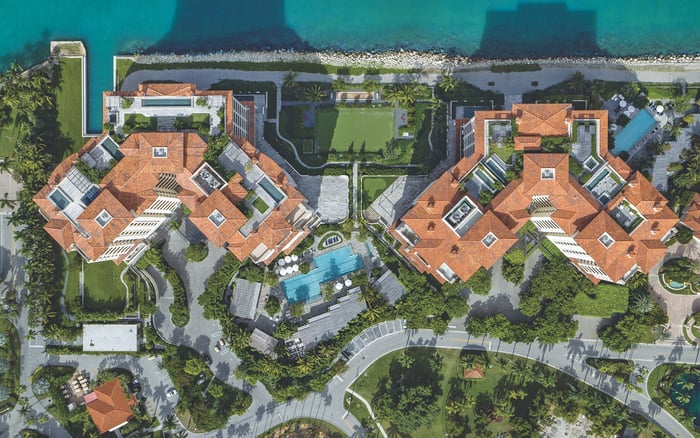
At Six Fisher Island, the distinction between a beautifully presented design concept and a contractually binding specification is central to buyer diligence. Prospective owners should examine approval authority, substitution rights, contractor access, change-order procedures, and the effect of customization on delivery before committing substantial capital.

The Residences at Six Fisher Island occupies an unusually sensitive position in Miami’s luxury landscape. Planned for 6 Fisher Island Drive, the ultra-luxury condominium is expected to comprise 50 residences averaging approximately 4,817 square feet. It also occupies Fisher Island’s last available major development site, making architectural consistency and long-term operational standards especially consequential.
The project pairs architecture by Kobi Karp with interiors and finishes by Tara Bernerd & Partners. Fewer than 50 homes have also been described as custom-designed inside, suggesting a highly coordinated interior program rather than unrestricted owner-led construction. For buyers considering The Residences at Six Fisher Island, the critical question is not simply what can be imagined, but what can be approved, documented, built, and delivered within the project’s established sequence.
In preconstruction, a design preference becomes meaningful only when the contract makes it enforceable.
That distinction deserves particular attention at a development where typical residences have been marketed from approximately $19 million, or about $5,000 per square foot, and penthouses have been projected above $60 million. A combined upper-penthouse transaction exceeded $150 million. At this level, a finish substitution or delayed custom element can carry both aesthetic and practical significance.
Finishes, materials, furnishings, plans, specifications, designs, and art are described as proposed, with the developer retaining the right to modify, revise, or withdraw them. Exterior and site-plan imagery is similarly conceptual and may alter the presentation of surrounding water, buildings, or landmarks.
A buyer should therefore avoid treating a rendering as proof that a particular stone, timber, appliance, fixture, hardware series, or millwork detail will be installed. If a selection is essential, it should be identified in the executed purchase agreement or in a specification schedule expressly incorporated into it. The document should be precise enough to distinguish a named product from a broadly comparable substitute.
This is where Design & Architecture diligence becomes contractual rather than stylistic. Counsel should identify which floor plan, finish schedule, reflected ceiling plan, appliance package, and customization exhibit is binding. The review should also establish whether later-issued documents supersede earlier versions and which instrument prevails if two exhibits conflict.
Two forms of design control can operate at different stages. During Pre-Construction, the developer may retain substitution rights over the specified design program. At the same time, an owner seeking to depart from that program may need separate approval from the developer, design team, general contractor, or another designated authority.
Those rights should not be conflated. A substitution clause may permit the development team to change a proposed material, while a customization clause may sharply limit the buyer’s ability to do the same. The agreement should define the applicable approval authority, submission format, selection deadlines, pricing method, nonrefundable costs, and consequences of rejected or late requests.
The project broke ground in 2024, with Coastal Construction serving as general contractor. Any permitted buyer work during construction must fit the development team’s sequencing and schedule. Buyers should determine whether custom work will be performed by the project contractor, a nominated subcontractor, or an owner-selected firm. They should also establish who is responsible for coordination, insurance, warranties, damage, and correction of nonconforming work.
The curated environments at Palazzo del Sol and Palazzo della Luna provide useful Fisher Island context for why buyers value coherent residential standards. They do not, however, establish the contractual rules at Six Fisher Island. Each development’s governing documents and construction procedures stand on their own.
A specific approved-contractor list, renovation deposit, work-hour schedule, or architectural-review deadline has not been established. Those details should be obtained through the applicable contractual and condominium documents rather than inferred from marketing language or practices elsewhere on the island.
Before closing, the relevant issue is whether the developer will permit buyer-requested work during active construction. After closing, control may shift to the condominium association under the declaration, bylaws, architectural guidelines, and owner-construction rules. A buyer contemplating immediate work should have Florida condominium counsel distinguish between these two approval regimes.
The post-closing package should be tested for contractor eligibility, licensing and insurance thresholds, elevator and loading access, protection requirements, permitted work hours, deposits, review fees, noise restrictions, and approval timing. Buyers should also ask whether specialty fabricators or international installers can access the property under the same rules as local contractors.
For purchasers comparing a condominium with a custom residential alternative such as The Links Estates at Fisher Island, the allocation of design authority may be as important as square footage. A Waterfront setting does not itself imply broad renovation freedom.
The project’s estimated completion is 2026, but the purchase contract controls delivery and closing timing. A buyer’s customization schedule should be read alongside provisions covering completion, extensions, force majeure, notices, inspections, defaults, and the obligation to close.
The central question is whether an approved buyer change can postpone completion or closing. The agreement should explain whether late selections automatically extend deadlines, whether incomplete custom items may be finished after closing, and whether the buyer must close despite pending corrective work. It should also identify who bears storage, remobilization, redesign, and escalation costs if a selected item becomes unavailable.
Early sales involved 50% nonrefundable deposits. Where a substantial deposit structure applies, leverage may narrow after execution. Material selections, review periods, pricing formulas, and timing protections are therefore best negotiated before funds become nonrefundable-not after a desired finish encounters a procurement or approval issue.
Highly customized acquisitions favor a document-first review. At Six Fisher Island, that means matching every essential expectation to an enforceable provision. Buyers should confirm the binding floor plan and finish schedule, the scope of substitution rights, the identity of each approval authority, and the deadlines for submitting selections.
The customization agreement should address design fees, contractor markups, change-order pricing, cancellation costs, warranties, and ownership of specially ordered materials. It should also state whether approval is discretionary, whether silence constitutes rejection, and whether any process exists for revising or escalating a decision.
Finally, counsel should compare the purchase agreement with the condominium declaration, bylaws, architectural standards, and owner-construction rules. The objective is not to eliminate all design control. In a rarefied building, control can preserve quality and consistency. The objective is to know exactly where discretion sits, what the buyer can insist upon, and how a design decision may alter cost or possession timing.
For discreet guidance on South Florida’s most considered residences, connect with MILLION.
If branded residences are on your mind — as a home or as an allocation — we would be glad to share what we are seeing, privately.
Begin a quiet conversationNo. Public-facing depictions identify finishes, materials, plans, and related design elements as proposed and subject to change.
The selection should be stated precisely in the executed agreement or an incorporated specification schedule, together with any applicable substitution standard.
Public information does not establish unrestricted contractor choice. Any permitted buyer work must fit the development team’s construction process and schedule.
The controlling documents should identify whether approval belongs to the developer, design team, general contractor, or another designated authority.
Post-closing work may be governed by the condominium association through its declaration, bylaws, architectural guidelines, and owner-construction rules.
Public project materials do not establish a specific approved-contractor list. Buyers should obtain the applicable construction and association rules directly.
It may, depending on the contract. Buyers should require clear terms covering late selections, extensions, unfinished custom work, and the obligation to close.
A public completion estimate is not controlling. Delivery and closing rights depend on the executed purchase agreement.
They may allow proposed materials or design elements to be modified, revised, or withdrawn. The contract should define acceptable alternatives for essential selections.
Counsel should review the purchase agreement, incorporated plans and specifications, customization exhibits, condominium declaration, bylaws, and architectural rules.