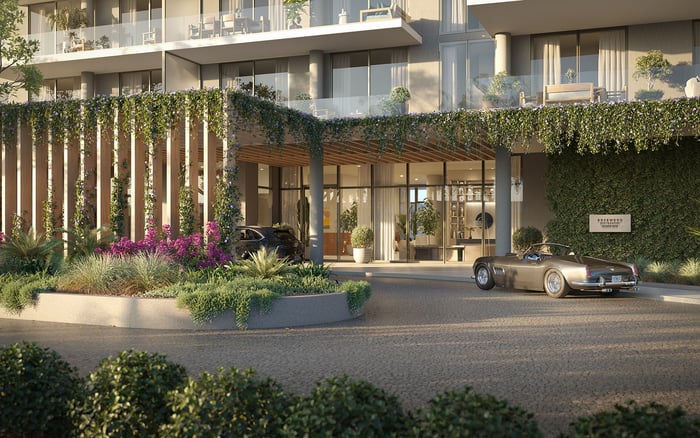
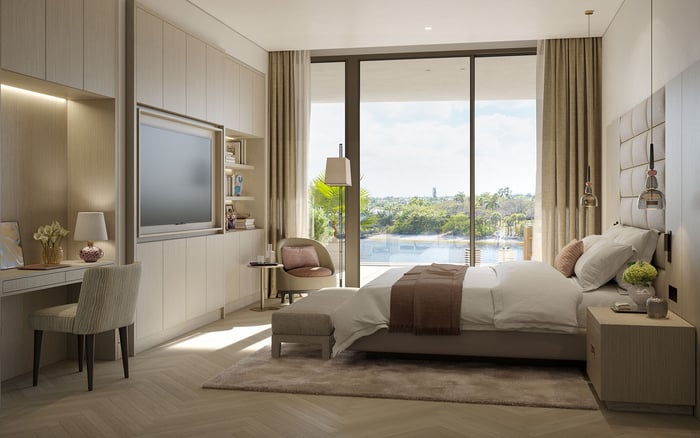
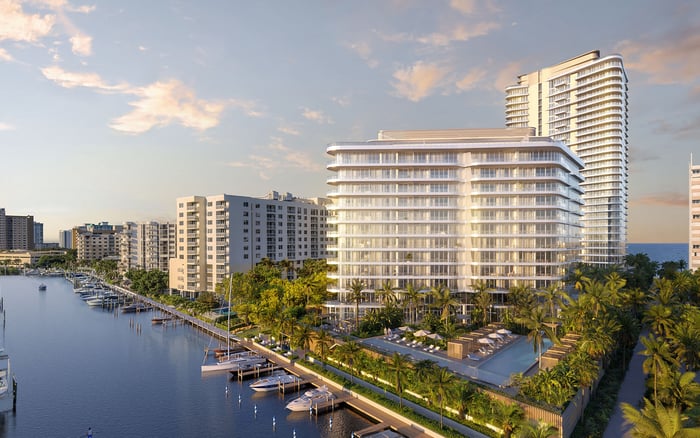
Ocean 580’s marketed sunrise and sunset views deserve residence-specific scrutiny. Buyers should distinguish present outlooks from documented protection, test neighboring development scenarios and evaluate pricing without assuming a measurable view premium.
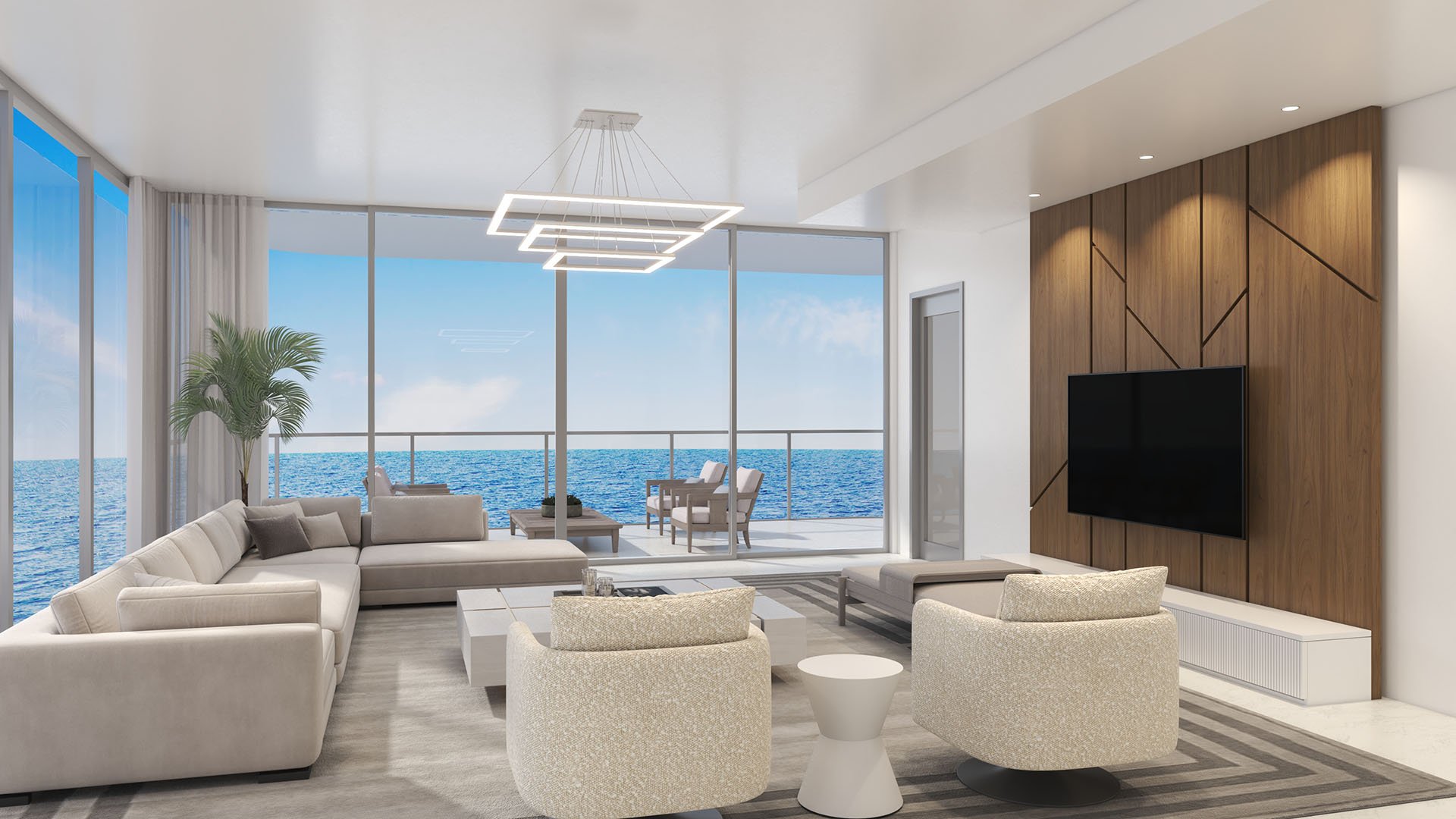
At Ocean 580 Pompano Beach, the appeal begins with an intimate scale: a planned 10-story, 17-residence condominium at 580 Briny Avenue, conceived by Claridge Homes, led by Bill Malhotra, on a 0.9-acre beachfront site. Marketed features include private elevator entry foyers, wraparound corner terraces, and sunrise and sunset views from every residence.
For a buyer, those views deserve the same scrutiny as the floor plan and ownership documents. The central question is not simply whether water is visible, but which outlook matters most, how much of the purchase decision depends on it, and what supports its durability. A present view and a legally protected view are different propositions.
No specific future obstruction to an Ocean 580 residence is established here. Nor is a recorded view easement or guaranteed protected corridor established. Neither point supports a conclusion that an obstruction is inevitable or that protection does not exist.
Sunrise and sunset describe different viewing directions, not interchangeable parts of an uninterrupted panorama. A buyer who values the morning ocean horizon may have different priorities from one who expects an expansive evening outlook from a dining terrace.
Begin with the exact unit, floor elevation, terrace geometry and principal rooms. Ask an architect or other qualified design professional to identify sightlines from the places you will actually occupy: seated in the living room, at the dining table, and along each terrace edge. A corner panorama is not necessarily uniform across those positions.
Request a residence-specific view study that distinguishes existing surroundings from modeled future conditions. For a planned building, ask how the study establishes the observer’s elevation and position. Renderings can convey atmosphere, but the purchase decision should also rest on dimensions and explicit assumptions.
Apply the same discipline when comparing The Ritz-Carlton Residences® Pompano Beach: evaluate the particular residence rather than assuming a project name establishes the quality or permanence of its outlook.
An August 2024 proposal contemplated a separate 15-story, 220-room Courtyard by Marriott approximately two blocks from Ocean 580. That warrants investigation of the relevant parcel; it does not establish that the hotel would block a particular residence. The proposal is a historical snapshot, not a confirmed current construction commitment.
Distance and story count alone do not resolve a sightline question. Assess the neighboring parcel, proposed building footprint and height in relation to the buyer’s viewing position. Orientation, setbacks and building massing must be considered together before drawing a conclusion.
Ask for three clearly distinguished scenarios: the existing surroundings, a documented proposal, and a potential building envelope supported by the applicable zoning. A zoning-based scenario is a stress test, not a prediction of what will be built. Likewise, a development application is neither a completed building nor an irrevocable approval.
For each scenario, identify whether the effect would concern the principal water view, a lateral outlook or the sunset-facing terrace. Treat privacy and construction disturbance as separate questions. This keeps a broad concern about neighborhood growth from becoming an unsupported claim about a specific home.
View durability requires both spatial and legal review. Have real-estate counsel examine the survey, title materials and condominium documents for provisions relevant to the outlook. Ask whether an identified easement or restriction actually benefits the residence, what land it burdens, and how to interpret its scope and enforceability.
Do not substitute the word “oceanfront” for that analysis. Equally, do not assume that an unverified protection is absent. The objective is a written understanding of what is documented, what remains uncertain and what the buyer is accepting.
The neighboring-parcel review should cover zoning, development applications and permit history. Available avenues include a public building-permits dataset, electronic plan review and coordinated permitting access between Pompano Beach and Broward County. These can help identify activity, but they do not replace interpretation of the underlying plans.
The city’s “one permit” concept combines trade applications under a single permit. Request the associated plans and review history rather than relying on a brief permit description. Have the advisory team distinguish an application from an approval and verify the status relevant to the purchase decision.
Ocean 580’s pricing snapshots illustrate why buyers need a current, unit-specific offering. February 2025 launch pricing started at $4.67 million, with anticipated delivery in winter 2027. A June 2026 pricing snapshot placed the starting point at approximately $4.4 million. Those figures alone do not establish a like-for-like price reduction.
Unit 401 has been advertised at $4,414,800 for 3,238 square feet, with three bedrooms and 3.5 bathrooms-approximately $1,363 per square foot. Its advertised projected year built is 2028, differing from the earlier winter 2027 delivery projection. Neither date should be treated as a current guarantee; reconcile timing with the operative contract and current written disclosures.
These are asking-price observations, not closed-sale evidence isolating a water-view premium. They establish neither the amount paid specifically for the outlook nor an obstruction-related resale discount.
When considering Armani Casa Residences Pompano Beach alongside Ocean 580, apply the same comparison framework: unit size, floor, orientation, terrace utility, documented view protection and contract terms. Do not convert different residences’ headline prices into a supposed market price for permanent views.
Pompano Beach’s waterfront is not static. The Fishing Village redevelopment initiative has been active since 2017, and upcoming Segment II beach construction covers Pompano Beach, Lauderdale-by-the-Sea and Fort Lauderdale.
Beach work warrants questions about timing, access and construction activity, but it is not evidence of a permanent building obstruction. Verify the location and schedule relevant to the residence rather than assuming a county-level project description establishes a specific disruption.
Maintain two separate assessments: one for potential permanent changes to the outlook, the other for temporary effects on use and enjoyment. They may influence different parts of the purchase decision.
Before committing, assemble a concise decision file: the exact residence’s sightlines, neighboring-parcel scenarios, counsel’s view-protection findings, and reconciled pricing and delivery terms. Identify which uncertainties would change your willingness to proceed.
If a particular panorama is essential, make that preference explicit before negotiations. Ask counsel what contractual treatment, if any, is available rather than assuming marketing language supplies protection. The goal is not to eliminate every uncertainty, but to avoid valuing an untested outlook as though its permanence were established.
For a discreet discussion of Ocean 580 and your South Florida purchase priorities, connect with MILLION.
If branded residences are on your mind — as a home or as an allocation — we would be glad to share what we are seeing, privately.
Begin a quiet conversationOcean 580 is a planned 10-story, 17-residence oceanfront condominium at 580 Briny Avenue. Claridge Homes planned it on a 0.9-acre beachfront site.
Marketing emphasizes sunrise and sunset views from every residence, along with wraparound corner terraces. Buyers should test the outlook from their specific unit and occupied viewing positions.
No specific future obstruction to an Ocean 580 residence is established here. Nearby development should be assessed against the exact unit’s sightlines rather than presumed to interfere.
A recorded view easement or guaranteed protected corridor is not established here. That does not prove protection is absent; counsel should review the relevant ownership and title documents.
The August 2024 proposal described a 15-story, 220-room hotel approximately two blocks away. Its proximity alone does not establish an intersection with any residence’s sightline, and its current status requires verification.
It should examine the unit’s elevation, terrace orientation and viewing directions against existing surroundings and clearly identified development scenarios. Any modeled future building envelope should be distinguished from an actual proposal.
Its advertised $4,414,800 price for 3,238 square feet equates to approximately $1,363 per square foot. This asking price does not isolate a water-view premium or establish an obstruction-related resale discount.
The historical projections differ: February 2025 launch timing anticipated winter 2027, while Unit 401’s advertised projected year built is 2028. Buyers should reconcile timing with current written disclosures and the operative contract.
Pompano Beach offers a public building-permits dataset, electronic ePlan review and access to ePermitsOneStop with Broward County. Buyers should have their advisory team review the underlying applications, plans and approval status.
No; Segment II beach work warrants a separate review of location, timing and access effects. It should not be treated as evidence of permanent building obstruction.