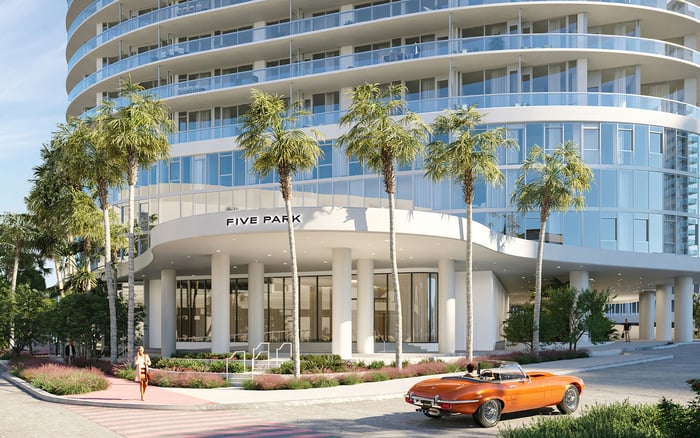
At Five Park Miami Beach, architectural distinction and premium finishes deserve a separate evaluation from acoustic privacy. A disciplined buyer should review residence-specific construction documentation, assess amenity and equipment proximity, and arrange independent testing before closing.
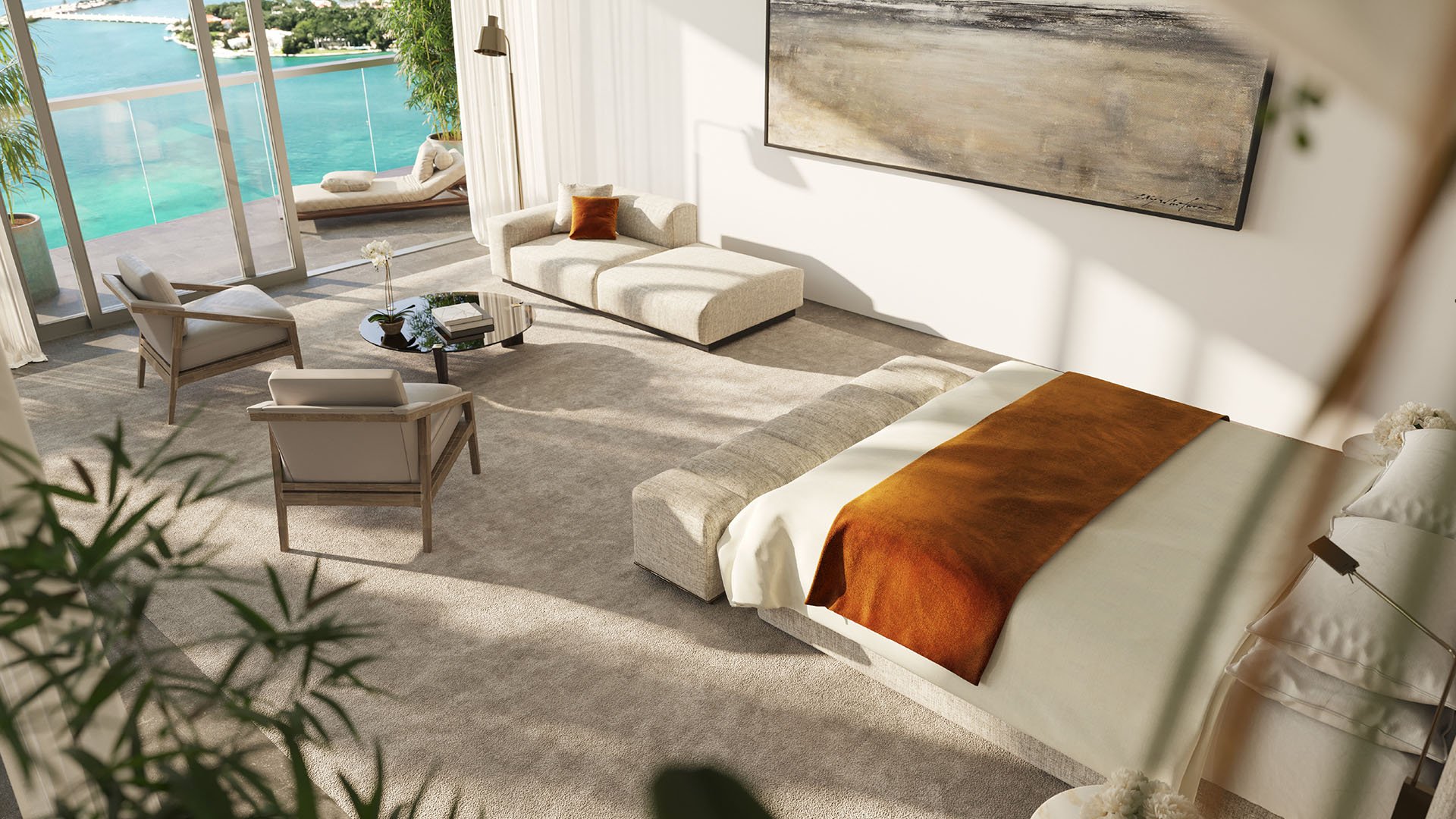
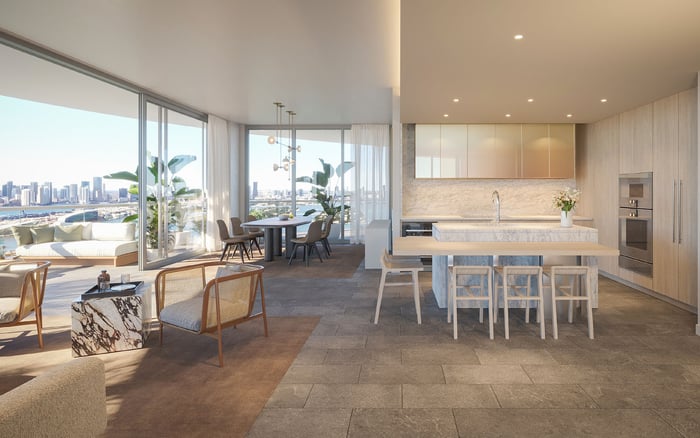
At Five Park Miami Beach, the visual proposition is clear: an elliptical tower shaped around panoramic views, expansive balconies and indoor-outdoor living. Kitchens and bathrooms by Gabellini Sheppard, Italian cabinetry, stone counters and high-end appliances give buyers tangible details to inspect. Acoustic privacy poses a different question: how does the residence perform when the surrounding building is in use?
A beautiful finish is not an acoustic specification. Cabinetry, counters and flooring can be inspected visually; sound transmission through walls, floors, glazing and mechanical connections requires separate evidence. For an owner who values uninterrupted sleep, private conversations or a quiet working day, that distinction belongs in the purchase decision.
This is a recommendation for due diligence, not an allegation of a defect at Five Park. Neither exceptional quiet nor deficient sound isolation should be presumed from its positioning. The appropriate standard is residence-specific documentation supported, where feasible, by independent testing.
Five Park’s 10-foot ceilings and large sliding-door openings describe spatial quality. Its interior materials describe finish selections. Neither establishes how much sound will pass between residences or through the exterior enclosure.
The Park Residences specifications include premium porcelain flooring. That makes the construction beneath the surface a question to investigate, not a reason to assume a problem. Slab thickness, acoustic underlayment, resilient connections and the complete floor assembly all warrant review. First, confirm that the specification applies to the exact residence and its current flooring.
Keep the two evaluations separate. The finish inspection considers visible condition and workmanship. The acoustic assessment considers airborne sound, impact transmission, exterior noise and equipment-related vibration. Completing one does not complete the other. A useful assessment identifies what was actually examined rather than offering a general assurance that the building is quiet.
Begin with a written request for documented airborne-sound ratings for separating walls and floor/ceiling assemblies, impact-sound ratings for floors, and acoustic specifications for exterior glazing. Ask for supporting ASTM test documentation or engineering information rather than relying on verbal descriptions.
The essential distinction is between a design target and a field-tested result. Have an independent acoustical consultant review what each document represents and whether the assembly described corresponds to the residence being purchased. A number without that context is not a complete answer.
Ask the developer or association to identify the relevant wall and floor assemblies, the flooring and underlayment specification, and any available field-testing documentation. The absence of acoustic ratings from marketing materials does not establish that private technical documentation is unavailable or that performance is inadequate.
Also request written information about known acoustic complaints and mitigation work relevant to the residence. The response should guide further questions, not replace an assessment of the unit itself.
Impact noise deserves its own examination. Footsteps and moved furniture raise different questions about the floor assembly than airborne sound does. Hard-floor performance depends partly on underlayments and floating or resilient construction, not simply on the quality of the visible tile.
Where access and permissions allow, ask an independent consultant whether impact testing is feasible. The goal is to evaluate the relevant assembly under defined conditions, not infer its performance from a quiet showing.
For buyers also considering Apogee South Beach, apply the same discipline across the shortlist: request comparable categories of evidence for each residence. That is a purchasing standard, not an acoustic comparison between buildings. Finishes and reputation should not substitute for unit-specific information at either address.
Five Park’s expansive balconies and large sliding openings are central to its indoor-outdoor appeal. Set aside part of the visit to evaluate the interior with exterior doors and windows closed. The relevant question is the acoustic performance of the complete enclosure, not simply the presence of substantial glass.
Hurricane-resistant impact glazing should not be treated as proof of acoustic privacy. Glass composition, thickness, framing and seals affect exterior-noise transmission. Request the glazing’s acoustic specifications and have the consultant consider the installed assembly when planning measurements.
This separates two legitimate expectations: enjoying an open balcony and finding a comfortable interior retreat. Assess each on its own terms rather than allowing the appeal of the view to resolve a technical question.
Five Park’s approximately 50,000 square feet of amenities include pools, outdoor dining and covered cabanas. Its program also includes the 26th-floor Canopy Club, fitness facilities, a spa and a screening room. These are reasons to map the target residence carefully, not evidence of unwanted noise.
Confirm which amenity-access rights apply to the residence, then establish its relationship to active spaces. A home beside or beneath a pool, gym, club or screening room merits assessment while those spaces are in use, not exclusively during a quiet daytime appointment.
Separately, locate HVAC equipment, pumps, exhaust fans and elevator machinery relative to the unit. Mechanical equipment can transmit low-frequency noise and vibration, making its location a distinct line of inquiry. Ask for written clarification rather than judging proximity solely from the residential floor plan.
Arrange evening and weekend visits, then discuss closed-window, in-unit measurements with an independent acoustical consultant. Coordinate access so the assessment can consider relevant amenity activity and mechanical operation where feasible. Treat a quiet appointment as an observation under those conditions, not a universal finding.
Ask the consultant to distinguish what was measured, what was inferred from construction documentation and what remains unresolved. Use those distinctions to inform the purchase decision before closing. Acoustic shortcomings involving separating walls, floor assemblies or mechanical layouts can be substantially harder to remedy afterward than cosmetic defects.
The same approach applies if Setai Residences Miami Beach enters the search. Compare the strength and relevance of the evidence rather than assuming any luxury address guarantees a particular acoustic experience.
At Five Park, the objective is straightforward: appreciate the architecture while evaluating quiet independently. The strongest ownership decision brings finish quality, applicable specifications and observed performance into alignment without asking any one to stand in for the others.
For a considered approach to South Florida luxury ownership, explore MILLION.
If branded residences are on your mind — as a home or as an allocation — we would be glad to share what we are seeing, privately.
Begin a quiet conversationNo. It recommends residence-specific due diligence without asserting a substantiated noise complaint or confirmed sound-isolation failure.
No. Finish quality and sound isolation answer different questions, and visible materials do not establish the performance of complete walls, floors or glazing assemblies.
Request airborne-sound ratings for separating walls and floor/ceiling assemblies, impact-sound ratings for floors, and exterior-glazing acoustic specifications. Seek supporting ASTM test documentation or engineering information.
A design target is not the same as measured performance in a completed building. Ask whether the documentation applies to the exact assemblies serving the residence.
No. It makes the underlying floor assembly worth reviewing because impact-sound performance depends partly on underlayment and resilient or floating construction.
No. Exterior-noise transmission also depends on glass composition, thickness, framing and seals, so acoustic specifications deserve separate review.
Include evening and weekend visits, and assess relevant amenities during active use where feasible. Discuss closed-window in-unit measurements with an independent acoustical consultant.
Ask about HVAC equipment, pumps, exhaust fans and elevator machinery. Their locations matter because mechanical equipment can transmit low-frequency noise and vibration.
Request written information from the developer or association about known acoustic complaints and mitigation work relevant to the residence. Use the response to guide further assessment rather than replace testing.
Problems involving floor assemblies, separating walls or mechanical layouts can be substantially harder to remedy after closing than cosmetic defects. Resolving the available evidence beforehand supports a more informed ownership decision.