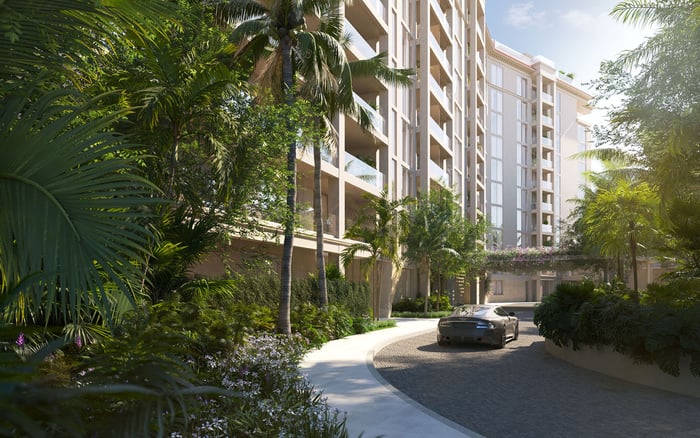
A disciplined framework for evaluating Avenia Aventura association fees, reserve strength, insurance exposure, operating costs, debt, and potential assessments.

For a luxury buyer considering Avenia Aventura, the association fee is more than another carrying cost. It is a compact expression of insurance exposure, staffing choices, utility consumption, reserve discipline, debt obligations, and the service standard residents expect. A low figure may reflect efficiency, but it may also signal deferred contributions. A higher figure may indicate stronger funding, yet offers no assurance without supporting documents.
Begin with the latest annual budget, year-end financial report, reserve study or structural integrity reserve study, known as a SIRS, and 12 to 24 months of board minutes. Add insurance certificates and policies, delinquency data, litigation disclosures, current or proposed assessments, governing documents, material contracts, and loan schedules. Review these records before releasing contingencies, involving condominium counsel, an accountant, and an insurance adviser where appropriate.
The relevant question is not whether the fee looks high, but whether it is sufficient.
This is the disciplined perspective MILLION brings to Buyer's Guides, Investment decisions, Pricing & Trends analysis, and Resale evaluations across Aventura.
Do not use the monthly total displayed in marketing as the analytical starting point. Reconstruct the budget into operating expenses, reserve contributions, and debt service. Then compare every budgeted line with actual historical spending. Utilities, landscaping, pool operations, elevators, janitorial work, security, and management should remain visible rather than disappearing into broad categories.
One general screening benchmark allocates roughly 60 to 70 percent of dues to operations and the balance to reserves. It is neither a statutory rule nor a safe harbor. A service-intensive property may reasonably carry a different mix. The useful question is whether the allocation reflects the building's physical needs, staffing model, contracts, and long-term capital plan.
Read the variance columns closely. Recurring overruns suggest that current dues may not match the true cost base, particularly when operating shortfalls are covered with loans or reserve cash. A single exceptional expense may be explainable. A pattern of unfavorable variances demands a revised forecast.
Insurance can dominate an Aventura condominium budget. At one local community, approximately 60 percent of association fees was allocated to insurance before a roof replacement expected to reduce dues. A separate Aventura estimate placed an average owner's share of a master-policy premium near $377 per month after a 25 percent annual increase. Neither figure should be applied to Avenia; both illustrate why insurance warrants its own scenario model.
Review replacement-cost coverage, liability limits, flood protection where applicable, carrier changes, exclusions, and hurricane or windstorm deductibles. The deductible matters because it can shift a material loss back to owners even when the association is insured. Determine whether the budget reflects a bound renewal, an expiring policy, or an assumption. Model a higher renewal premium and a deductible-funded assessment separately.
When considering alternatives such as Bentley Residences Sunny Isles or 2000 Ocean Hallandale Beach, avoid comparing dues alone. Age, construction, height, staffing, amenities, insurance exposure, and reserve policy must be sufficiently similar for the comparison to be meaningful.
Luxury operations are labor-intensive. Combine management fees, employee wages, benefits, security, concierge, valet, and maintenance labor to calculate the full people cost. Then reconcile that amount with the service level represented to residents. A seemingly lean payroll may indicate efficient outsourcing, but it can also signal vacancies, limited coverage, or costs embedded in vendor contracts.
Test compensation under base, moderate, and severe cases. Include wage and benefit growth, contract escalation, overtime, and any transition between employees and third-party providers only where the documents support those items. Board minutes may reveal staffing changes, service complaints, contract renewals, or unbudgeted coverage that the annual budget alone does not explain.
Apply the same rigor to utilities. Compare budgeted and actual spending for electricity, water, cooling systems where relevant, waste, pool operations, and other common-area consumption. Separate usage changes from price changes when the records permit. Repeated overruns should flow into the next year's dues rather than be treated as temporary by default.
Obtain the most recent SIRS and identify major projects forecast over the next five to 10 years. Compare the study's recommended balance and annual contribution with the association's actual structural reserves. Keep SIRS-related reserves separate from operating cash and discretionary reserves. Otherwise, a large aggregate cash balance can conceal a structural funding gap.
Reserve-funded percentage is a useful screen. As a heuristic, 70 percent or more is relatively strong, 50 to 70 percent presents moderate risk, and below 50 percent warns of possible fee increases or assessments. These bands are not legal conclusions. The age of the study, its assumptions, project timing, and component costs remain decisive.
A simple first-pass exposure calculation is:
(SIRS-required reserves - current reserves) / number of units
The result is only an estimate. The declaration may allocate assessment liability by ownership percentage or another formula rather than equally. Apply the governing allocation to the specific residence under consideration.
Also obtain applicable milestone-inspection results, determine whether a Phase 2 inspection was required, and reconcile identified structural work with funded reserves. The absence of a current reserve study warrants further investigation; a Florida reserve study commonly costs about $3,000 to $10,000 or more, depending on community size and complexity.
For every association loan, review principal, interest rate, maturity, amortization, and whether debt service is already included in current dues. Refinancing risk or an obligation to rebuild reserves can create a later payment shock. Loans used for recurring operations deserve particular scrutiny because they may defer, rather than solve, an inadequate-dues problem.
Determine what percentage of owners is more than 60 days delinquent. Weak collections can impair operating cash flow, reserve contributions, and mortgage eligibility. Read meeting minutes for collection policy, litigation, insurance discussions, capital bids, proposed assessments, and votes to waive or alter nonstructural reserve funding where legally permitted.
Effective January 1, 2026, condominium associations in Florida with at least 25 units should place budgets, reserve schedules, minutes, insurance policies, and contracts on a password-protected website or portal. Portal access should accelerate review, not replace professional interpretation.
Build base, moderate, and severe scenarios for insurance, payroll, utilities, reserve contributions, and debt service. Add the residence's taxes, interior insurance, financing, and any known assessment to establish an all-in monthly carrying cost. Keep one-time assessment exposure separate from recurring dues so the capital risk remains visible.
A credible comparison set may include nearby coastal options such as Jade Signature Sunny Isles Beach, but only after normalizing for services, physical profile, coverage, and reserve policy. The objective is not to identify the lowest fee. It is to judge whether Avenia's fee can sustain its obligations and residential experience without an avoidable funding surprise.
For discreet assistance evaluating Avenia and its ownership economics, connect with MILLION.
If branded residences are on your mind — as a home or as an allocation — we would be glad to share what we are seeing, privately.
Begin a quiet conversationRequest the latest budget, year-end financials, SIRS or reserve study, 12 to 24 months of minutes, insurance records, delinquency data, litigation disclosures, assessments, contracts, and loan schedules.
Separating them shows how much dues support current services versus future capital work. It also prevents a large total fee from obscuring weak reserve contributions.
No. It is only a general screening benchmark, not a statutory requirement or safe harbor.
Review premiums, replacement-cost coverage, applicable flood protection, liability, exclusions, carrier changes, and hurricane or windstorm deductibles. Model renewal increases and deductible exposure separately.
Include management fees, wages, benefits, security, concierge, valet, maintenance labor, and relevant outsourced service contracts.
A level of 70 percent or more is commonly treated as relatively strong for screening, while 50 to 70 percent suggests moderate risk. These thresholds are heuristics, not guarantees.
Subtract current reserves from SIRS-required reserves and divide by the unit count for a first pass. Then adjust for the allocation formula in the condominium declaration.
Inspection findings can identify structural work that must be reconciled with funded reserves. Buyers should also determine whether a Phase 2 inspection was required.
Review principal, rate, maturity, amortization, purpose, and whether debt service is included in current dues. Refinancing or reserve-rebuilding obligations may create later payment pressure.
Use properties with comparable age, construction, height, amenities, staffing, insurance exposure, and reserve policy. Comparing monthly dues alone can be misleading.