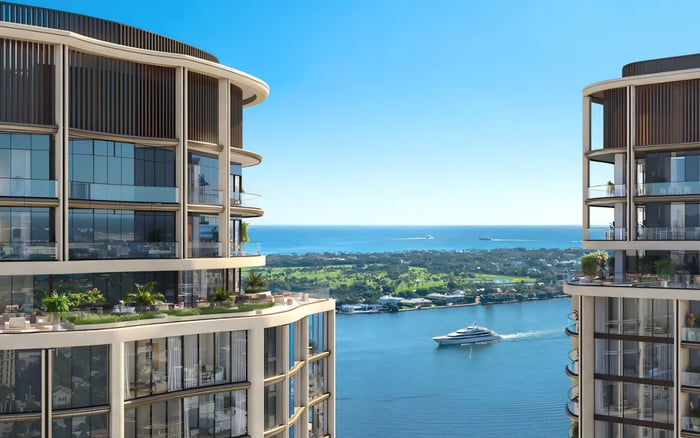
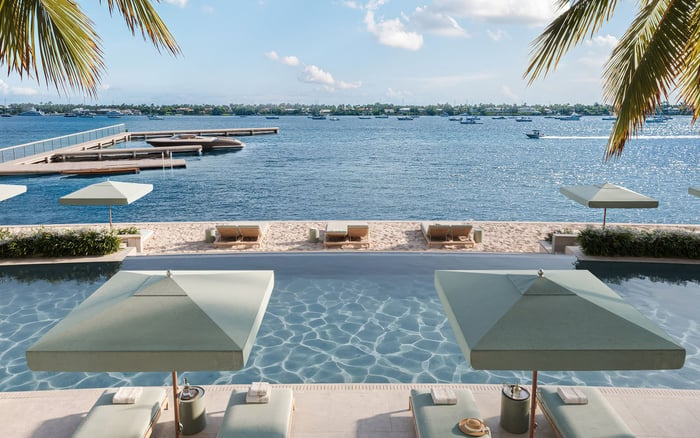
A discreet buyer’s guide to the ownership structures, governance questions, waterfront obligations, and due diligence distinctions behind three South Florida luxury condominium positions.

At the top of South Florida’s condominium market, ownership is not merely a choice of the most cinematic waterline. The more discerning question is legal and financial: what, precisely, is the buyer entering? A residence may face Biscayne Bay, the Atlantic, or the Intracoastal, yet the ownership experience is ultimately shaped by association control, reserve funding, insurance, amenity rights, rental rules, and the long-term maintenance burden that comes with coastal living.
That is why The Cove Residences Edgewater, Oceana Key Biscayne, and Shorecrest Flagler Drive West Palm Beach should not be treated as interchangeable luxury addresses. Each sits within a distinct neighborhood context and presents a different ownership-risk profile. Edgewater, Key Biscayne, and West Palm Beach all speak to affluent waterfront demand, but the documents behind the purchase determine how flexible, predictable, and durable that ownership is likely to feel.
Edgewater has become one of Miami’s defining vertical waterfront neighborhoods, favored by buyers who want bay views, proximity to cultural districts, and a residential setting that remains connected to the city’s financial and dining corridors. For The Cove Residences Edgewater, the ownership angle begins with a disciplined refusal to assume anything not confirmed in the buyer’s document set.
Before underwriting a purchase, buyers should verify the project’s current status, legal condominium structure, anticipated association framework, amenity ownership, rental rules, deposit protections, delivery obligations, and any rights reserved by the developer or related entities. Edgewater’s appeal is clear, but appeal is not the same as recorded entitlement. A private pool deck, club space, marina-style feature, valet operation, or wellness amenity may be economically and legally structured in ways that materially affect an owner’s cost and use.
For high-net-worth buyers, the central question is not whether the presentation is elegant. It is whether the offering documents support the lifestyle being marketed. That distinction matters in every new-construction or pre-construction setting, where timing, control turnover, construction obligations, and future association budgets can shift the risk profile from a conventional residence to a more complex contract position.
Oceana Key Biscayne is the more stabilized ownership case in this comparison. Because it is already established, the diligence emphasis moves away from delivery risk and toward how the association actually operates. In a built oceanfront condominium, a buyer acquires not only an individual residence but also a share in a working governance system, with existing budgets, board practices, insurance policies, reserve positions, and a history of maintenance decisions.
That makes the review package especially important. Buyers at Oceana Key Biscayne should study the condominium declaration, bylaws, house rules, operating budget, reserve position, insurance coverage, assessment history, building condition, and rental or use restrictions. Together, those materials provide a clearer view of how the building has been managed and how future obligations may be allocated among owners.
Key Biscayne also brings the realities of oceanfront ownership into sharper focus. Salt air, wind exposure, storm planning, façade maintenance, waterproofing, insurance renewal costs, and coastal-resilience priorities are not peripheral. They are part of the ownership equation. A luxury residence may offer privacy, views, and prestige, but the association’s long-term ability to manage the building envelope and shared infrastructure is central to protecting the asset.
Oceana is best framed as a residential luxury-condominium ownership play, not as a hotel-condo or short-term rental vehicle. Buyer utility therefore depends heavily on lifestyle rules and governance culture. A purchaser seeking quiet residential use may view that structure as a strength. A buyer seeking frequent rental flexibility should examine the documents closely before assuming the property fits that strategy.
Shorecrest Flagler Drive West Palm Beach belongs to a different ownership conversation. Its Flagler Drive and Intracoastal setting places it within a market increasingly associated with wealth management, private capital, and high-net-worth migration. That demand can support resale positioning, but it should not distract buyers from the legal architecture behind the waterfront promise.
For Shorecrest, the first diligence question is status. A fully delivered building, an under-construction project, and a planned development each carry different exposures. Deposit timing, default remedies, construction completion, developer control, and the first years of association budgeting can vary significantly depending on where the project sits in its life cycle.
The second question is amenity rights. Any ownership pitch involving water access, docks, marina privileges, waterfront terraces, or Intracoastal lifestyle should be checked against recorded property rights. Buyers should confirm whether the relevant amenities are common elements, limited common elements, shared facilities, licenses, or assets controlled by a separate entity. The distinction can affect access, cost, exclusivity, and future control.
This is especially important in waterfront markets, where lifestyle language can be broad. A buyer should know whether a waterfront amenity is owned by the association, reserved to particular units, shared with another component, or subject to rules that may evolve after turnover. In West Palm Beach, where the luxury market has deepened around finance and private wealth, that level of precision is part of intelligent asset selection.
Across these three properties, the most sophisticated buyers tend to ask the same core question in different forms: what system am I entering? The answer sits in governance documents, not renderings. Association control, board composition, developer rights, reserve studies, insurance coverage, special-assessment exposure, rental rules, pet policies, guest use, parking rights, and waterfront maintenance obligations all influence the lived and financial experience of ownership.
For stabilized buildings such as Oceana Key Biscayne, the advantage is visibility. There may be resale history, comparable sales, established budgets, known maintenance patterns, and a board record to evaluate. For emerging projects such as The Cove Residences Edgewater, or a project-positioned purchase at Shorecrest, the advantage may be early selection and contemporary design, but the buyer must be comfortable with more forward-looking assumptions.
Neither position is inherently superior. A stabilized condominium can carry legacy maintenance or assessment exposure. A new project can carry construction, budget, and turnover risk. The refined approach is to match the buyer’s purpose with the ownership structure: primary residence, second-home use, long-term hold, family office asset, seasonal retreat, or future resale strategy.
A precise buyer should begin with document control. Ask for the governing documents, current or projected budget, reserve information, insurance summary, assessment history where applicable, rules and regulations, rental restrictions, amenity exhibits, parking and storage allocations, and any waterfront rights documentation. If the purchase is pre-construction, the contract, deposit structure, cancellation rights, construction obligations, and developer-controlled components deserve equal attention.
Then consider lifestyle fit. Does the association culture support quiet residential living, entertaining, seasonal occupancy, frequent guests, or long-term leasing? Are amenities accessible in the way the buyer expects? Are maintenance obligations reasonable in light of the building’s coastal exposure? Does the budget appear aligned with the level of service being promised?
Finally, think about exit. Resale liquidity is shaped by more than finishes and views. Future buyers will review the same rules, insurance picture, reserve funding, assessments, and governance history. A beautiful residence within a well-capitalized, well-governed building can feel more durable than a comparable unit with uncertain shared obligations.
Are these three properties comparable simply because they are luxury waterfront condominiums? No. They differ by neighborhood, project status, legal posture, and the specific ownership risks a buyer must evaluate.
What is the main ownership angle at Oceana Key Biscayne? Oceana is best evaluated as a stabilized oceanfront condominium where association operations, reserves, insurance, and rules matter most.
Why is Key Biscayne diligence different from inland condominium diligence? Oceanfront exposure makes insurance, salt-air maintenance, coastal resilience, and building-envelope planning central to ownership.
What should Shorecrest buyers verify first? Buyers should confirm whether the project is delivered, under construction, or planned, because that changes deposit and timing risk.
Are water access or marina-style privileges automatically included at Shorecrest? No. Any such rights should be confirmed through recorded documents and the legal structure of the amenities.
What should buyers review for The Cove Residences Edgewater? Buyers should verify the offering documents, association structure, delivery obligations, amenity rights, and rental rules before underwriting.
Do association rules affect luxury ownership value? Yes. Use restrictions, leasing rules, guest policies, and governance culture can materially affect both utility and resale appeal.
Why do reserves matter in waterfront buildings? Reserves help fund long-term maintenance obligations, which can be especially significant in coastal environments.
Is Pre-Construction always riskier than Resale? Not always, but it requires different diligence around contracts, deposits, completion obligations, and future budgets.
What is the central question for a high-net-worth buyer? The buyer should ask what governance system, shared-cost structure, use restrictions, and waterfront obligations come with the unit.
To compare the best-fit options with clarity, connect with MILLION.
If branded residences are on your mind — as a home or as an allocation — we would be glad to share what we are seeing, privately.
Begin a quiet conversation