A buyer-focused operational brief for Faena Residences Miami and Mandarin Oriental Residences, West Palm Beach, separating their residential positioning from the telecom, emergency-power and private-workspace commitments that require written confirmation.
For a buyer whose residence must also support confidential calls, investment decisions and an international working day, operational continuity belongs alongside architecture and service in the purchase brief. A waterfront setting establishes an atmosphere. It does not establish whether a call will continue through a power interruption or whether a resident workspace offers genuine privacy.
At Faena Residences Miami and Mandarin Oriental Residences, West Palm Beach, that distinction matters. Both merit consideration for their branded residential identities, but telecom resilience, generator-backed connectivity and dedicated private-workspace specifications are not established in this brief. That does not mean these provisions are absent. It means written technical confirmation should be part of the buying decision.
The useful comparison is not which brand promises the more effortless working life, but which documented provisions meet the buyer's requirements.
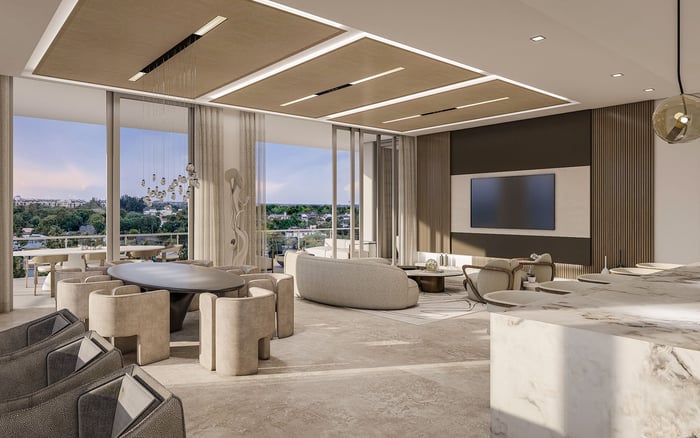
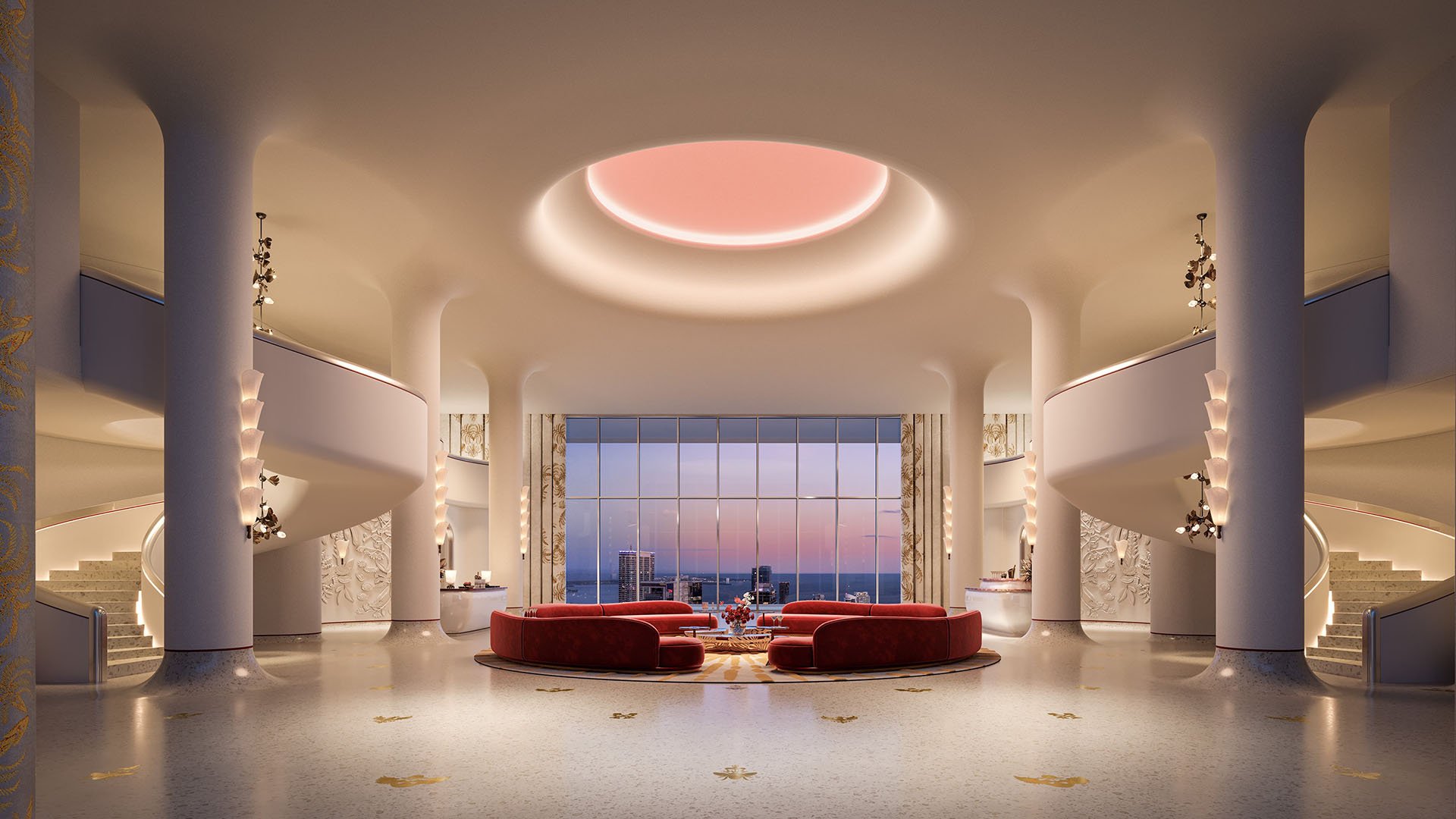
Planned on the Miami River in Downtown Miami, Faena Residences Miami Downtown Miami is distinct from the brand's Miami Beach district. Designed by Rafael Viñoly Architects, the two-tower development is positioned as the brand's first standalone residential project, with hospitality-style services.
Faena's announced concept places culture, wellness, dining, a marina, recreation and public art at the center of residential life. The connecting, two-story cultural epicenter was announced at 45,000 square feet. These are meaningful elements of the lifestyle proposition, but neither scale nor cultural programming establishes the availability of private offices or resilient networking.
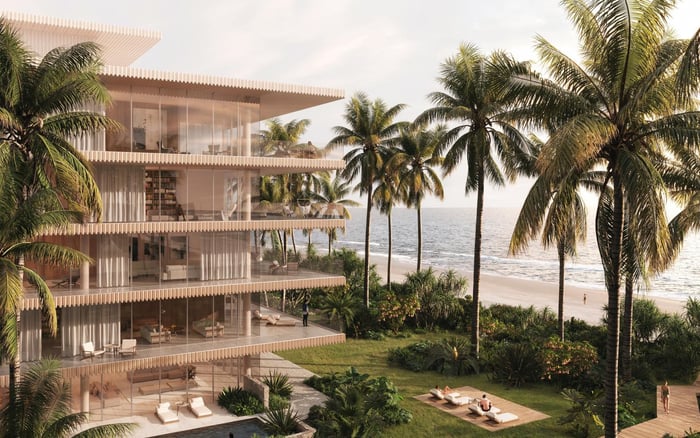
Mandarin Oriental Residences, West Palm Beach is presented as a branded waterfront residential development at 5400 N. Flagler Drive. Its identity and location offer a different residential context. Neither, on its own, establishes multiple internet providers, emergency-powered workspaces or dedicated meeting rooms.
Choose between the settings on their own merits, then apply the same operational standard to both.
The first request should go beyond internet speed. Ask for carrier names, the services available to individual residences and a diagram showing how connections enter the property. Confirm whether separate providers use physically distinct entry routes; two carrier names alone are not sufficient evidence of resilience.
Next, establish the failover arrangement. Which connection takes over if the primary service is interrupted? Is the transition automatic, who monitors it, and what service commitments apply? Ask separately about cellular reinforcement and backup internet rather than assuming either is included.
At both Faena and Mandarin Oriental, dual carriers, diverse fiber entrances, cellular reinforcement and backup internet require written confirmation. Neither project can responsibly be ranked ahead on connectivity resilience from these details alone.
Finally, establish responsibility inside the residence. Ask who supplies, maintains and replaces the gateway and other active networking equipment. The operational brief should distinguish building infrastructure, carrier obligations and equipment the owner must arrange.
An emergency-power review should trace the connection from the building's telecom rooms to the resident's working position. Request a load schedule identifying which equipment receives backup power, together with generator capacity, fuel autonomy, transfer time and the testing regime.
The checklist should explicitly cover telecom rooms, active network equipment, in-unit gateways, Wi-Fi and the cooling required by the intended workspace. Ask whether the relevant outlets are supported and whether any equipment needs an interim power arrangement during transfer. These are diligence questions, not confirmed features at either development.
At Faena, those coverage details, generator capacity and fuel autonomy require confirmation. At Mandarin Oriental, emergency-power coverage for networking equipment and workspaces, generator sizing, fuel duration and load schedules likewise require confirmation.
The objective is a clear operating scenario: what is intended to remain available, for how long, under which load assumptions and with whose support. A broad assurance about backup power is no substitute for that schedule.
A beautifully furnished resident lounge should not be treated as a dedicated office without confirming its intended use. For sensitive conversations, ask specifically about enclosed rooms, acoustic treatment, reservation rules and whether other residents or guests can enter during a booking.
Neither Faena's dedicated-office and conference-room specifications nor Mandarin Oriental's provision of dedicated private workspaces is established in this brief. At Mandarin Oriental, even the distinction between dedicated offices or meeting rooms and multipurpose lounges requires confirmation. At Faena, wired connectivity, sound isolation and outage availability also require confirmation.
Request room counts, operating hours, booking limits and Ethernet availability. Then ask whether access, connectivity and cooling continue during an outage. A room suitable for occasional correspondence may not meet the requirements of a confidential board discussion.
Apply the same brief if the search extends to Mr. C Residences West Palm Beach. The comparison should rest on documented provisions, not an assumption that another residential brand supplies the same facilities or operating arrangements.
Before reviewing technical responses, define the working life the residence must accommodate. Specify whether the priority is an occasional private call, a full working day or continuity for time-sensitive responsibilities. Identify which needs must be met inside the residence and which could be served by a reservable shared room.
Then request current condominium documents, engineering specifications and the final amenity schedule. Have the appropriate legal and technical advisers distinguish committed provisions from conceptual marketing and clarify responsibility for unresolved items. Record who maintains each relevant system and which services require separate owner arrangements.
For both projects, organize the comparison around three written schedules: connectivity, emergency power and workspace access. Leave unresolved provisions open rather than assigning them an optimistic score. This approach respects the residential vision while anchoring the purchase decision to the functions the owner actually needs.
Faena's Downtown Miami riverfront concept and Mandarin Oriental's North Flagler waterfront setting offer distinct starting points for a residential decision. The details in this brief support that contextual comparison, not a reliable ranking of business continuity or workspace quality.
For the buyer who intends to work from home, the decisive distinction should emerge from current specifications and enforceable commitments. Privacy, connectivity and continuity deserve the same careful attention as the plan, the view and the service proposition.
Explore South Florida residences with MILLION and make operational requirements part of your property brief.
If branded residences are on your mind — as a home or as an allocation — we would be glad to share what we are seeing, privately.
Begin a quiet conversationIt is planned on the Miami River in Downtown Miami, distinct from the brand's Miami Beach district.
The project is identified at 5400 N. Flagler Drive in West Palm Beach and is presented as a branded waterfront residential development.
Multiple providers, physically diverse fiber routes and backup connectivity are not established in this brief for either project. This does not establish that those systems are absent.
Request carrier names, physical-entry routes, failover arrangements and service commitments. Clarify responsibility for equipment inside the residence.
Emergency-power coverage for the full connectivity chain is not established in this brief for either development. Buyers should request explicit coverage for telecom rooms, active networking equipment, in-unit gateways and Wi-Fi.
Request generator capacity, fuel autonomy, transfer time, the testing regime and the load schedule. Confirm whether the intended workspace and its supporting cooling receive backup power.
Dedicated offices, reservable conference rooms, sound isolation, wired connectivity and outage availability are not established in this brief and require written confirmation.
Dedicated private-workspace provision requires confirmation, including whether offices or meeting rooms are offered rather than multipurpose resident lounges.
Confirm room counts, reservation limits, operating hours, acoustic treatment and Ethernet availability. Ask separately about access, connectivity and cooling during outages.
The details in this brief do not support a reliable ranking of connectivity resilience or private-workspace quality. Compare current engineering specifications, condominium documents and final amenity commitments against personal requirements.