Onda advertises EV charging, but buyers should distinguish the amenity from documented access. A focused review of electrical capacity, billing, parking rights, and expansion procedures can clarify what ownership will actually deliver.
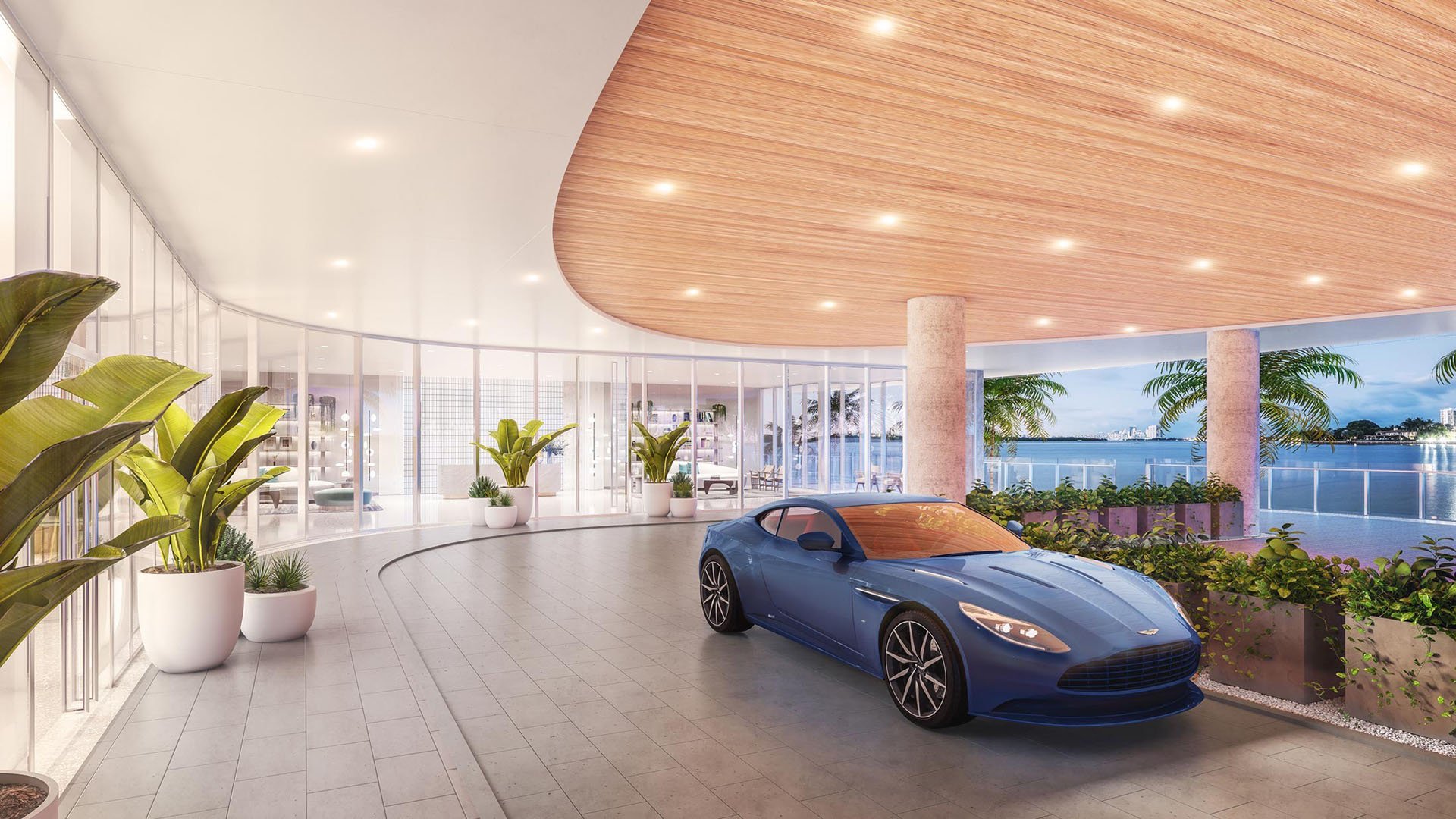
For a luxury residence, EV charging should be evaluated as part of the daily arrival experience: predictable, accessible, and clearly priced. At Onda Bay Harbor, the essential distinction is between an advertised amenity and a documented arrangement that serves a particular owner’s vehicle.
Onda Residences is located at 1135 103rd Street, Bay Harbor Islands, Florida 33154. Advertised amenities include electric-vehicle charging stations and personal parking spaces in a fully enclosed garage. That offering does not establish the installed charger inventory, commissioning status, or guaranteed access for every residence.
The buyer’s task is to connect three elements: the equipment available, the right to use it, and the obligation to pay for it. The checks below are due-diligence recommendations, not descriptions of confirmed Onda policies or legal conclusions.
The advertised charging amenity leaves key specifications unestablished: charger count, models, amperage, kilowatt output, and charging speed. Reserved EV electrical capacity and the number of vehicles that can charge simultaneously also remain unconfirmed. The amenity alone cannot establish whether charging will suit a household’s routine.
Request an equipment schedule identifying each installed charger, its location, specifications, and operating status. Pair it with the garage plan and written confirmation of which chargers residents may use. Ask for electrical load calculations, simultaneous-use limits, and documented spare capacity rather than relying on a verbal assurance that expansion is possible.
The practical question is what happens when several residents need to charge at once. Ask whether power is shared, whether output changes with demand, and what performance the system is designed to deliver under concurrent use. If charging is central to the purchase decision, have an appropriately qualified professional interpret the electrical documentation.
A buyer also considering Bay Harbor Towers should apply these questions independently. This is a comparison framework, not an assertion that the buildings have equivalent charging equipment or operating arrangements.
“Personal parking spaces” is not a complete description of parking rights. The phrase does not establish whether spaces are deeded, limited common elements, leased, or subject to reassignment. Nor does it establish whether charging serves individual spaces, shared bays, or a valet-managed arrangement.
Obtain the declaration, relevant parking documents, garage plans, and any EV-charging addendum. Ask management to identify the space associated with the residence and explain, in writing, how it relates to charging access. Treat parking assignment and charging eligibility as separate questions until the documents connect them.
For a household with more than one vehicle, ask whether eligibility attaches to the residence, the parking space, an individual account, or a registered vehicle. Request any limits on additional vehicles and the process, if any, for changing vehicles. These are points to establish, not restrictions known to apply at Onda.
The advertised amenity does not establish charging prices or whether billing is based on energy consumed, sessions, connection time, or subscriptions. It also leaves open whether chargers are individually metered or costs are allocated through a common meter.
Do not infer that EV electricity is included in association fees simply because charging is offered as an amenity. Confirm its treatment in the current budget and charging terms.
Request the current charging fee schedule, an explanation of metering, and a sample billing statement, if available. Establish who bills the owner, how usage is attributed, and whether minimum charges, subscriptions, session fees, or idle fees apply. Ask how an owner can review or dispute a charge.
Then separate electricity from infrastructure expenses. Responsibility for installation, software, networking, maintenance, repairs, and replacement remains unestablished. Request the association budget and any applicable agreements to determine which costs, if any, fall on individual users, participating owners, or the association generally.
A residence used intermittently warrants the same operational scrutiny as a primary home. Ask how charging access is activated, whether reservations are required, and what happens when an owner returns while every available charging position is occupied.
The advertised amenity does not guarantee access for every residence or establish reservations, waiting lists, or priority rules. Eligibility for tenants, guests, and other vehicle users also remains unspecified. Obtain written procedures addressing those categories, along with session limits, vehicle-moving responsibilities, and outage handling.
For buyers comparing Onda with Rivage Bal Harbour, the useful benchmark is documented service rather than assumed convenience. Apply the same access review to each property without inferring another building’s policies from Onda’s advertised amenity.
Present access and future allocation are separate questions. The advertised charging amenity does not establish how additional chargers would be approved, who would receive newly available capacity, or how expansion costs would be divided.
Request any adopted expansion policy and ask who has approval authority. Clarify how an owner submits a request, whether requests enter a queue, how priority is determined, and whether approval reserves electrical capacity or remains conditional. Ask how additional demand from existing users would be handled alongside first-time requests.
Expansion review should also address utility and equipment constraints, approval requirements, and responsibility for upgrade costs. Ask specifically how costs would be divided between users and non-users, and whether owner-installed chargers follow a separate approval process. A suggestion that capacity can be added is not evidence of an approved, funded expansion.
Before relying on charging as part of the purchase, assemble a coherent file: governing documents, current association rules, the budget, parking and garage plans, equipment specifications, electrical calculations, charging terms, and any EV addendum. Request confirmation that the supplied operating rules are current and apply to the residence under consideration.
Have counsel review parking and charging rights, and seek technical review where capacity remains material to the decision. For any charging privileges represented in the sale, ask whether they transfer and what documentation supports that understanding. Keep unresolved questions distinct from confirmed entitlements.
The most persuasive outcome is not a longer amenity list. It is a clear explanation of where the vehicle charges, when access is available, how costs are calculated, and what process governs future demand. That clarity allows the convenience of ownership to be evaluated with the same care as the residence itself.
For a discreet perspective on South Florida residences and ownership due diligence, connect with MILLION.
If branded residences are on your mind — as a home or as an allocation — we would be glad to share what we are seeing, privately.
Begin a quiet conversationYes, EV charging is an advertised amenity. That does not establish installed inventory, commissioning status, or guaranteed access.
A charger count is not confirmed here. Request a current equipment schedule and written confirmation of operational availability.
Charger models, amperage, kilowatt output, and charging speed remain unconfirmed here. Request equipment specifications and simultaneous-use limits.
That is not established. Request electrical load calculations, simultaneous-use limits, and documentation of reserved EV capacity.
No such guarantee is established by the amenity description. Review parking documents and charging terms to determine how the residence’s parking relates to charging access.
That is not established here. Confirm whether EV electricity is included or separately billed by reviewing the current budget and charging terms.
The billing method and prices remain unconfirmed here. Request the current fee schedule, metering explanation, and any applicable service charges.
Their eligibility remains unconfirmed here. Obtain current written rules before assuming access extends beyond the owner.
Responsibility for those costs remains unconfirmed here. Review the association budget, charging agreements, and governing documents.
Request written procedures covering approval authority, waiting lists, spare capacity, expansion constraints, and cost allocation. Do not assume a proposed addition is approved or funded.