A buyer-oriented comparison of One Thousand Museum Downtown Miami and Cipriani Residences Brickell, focused on how each prestige condominium translates into floor-plan flexibility, secondary-bedroom usefulness, and staff-room practicality.

At the top of Miami’s condominium market, prestige alone is too blunt a measure. A buyer can admire two towers equally and still find that one works more naturally for the way a household actually lives. That is the most useful lens for comparing One Thousand Museum Downtown Miami with Cipriani Residences Brickell. Both sit in the upper reaches of Miami residential expectation, yet they translate luxury into daily function through very different planning philosophies.
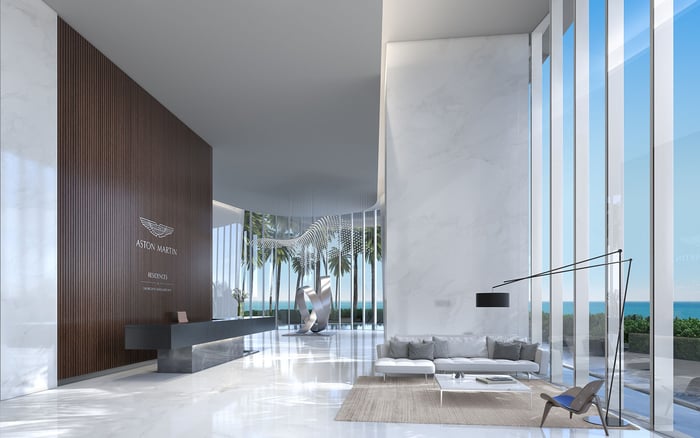
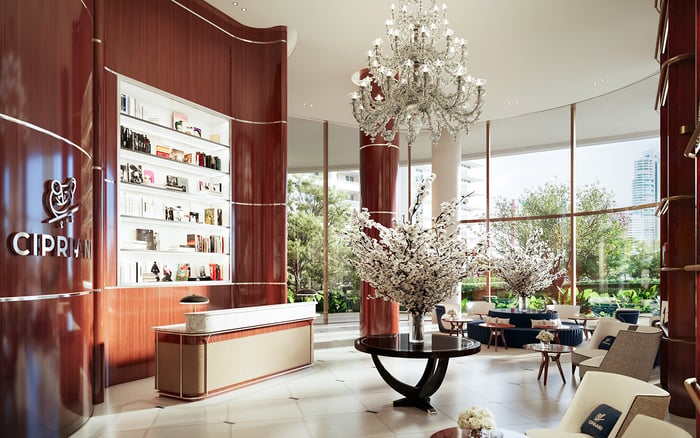
One Thousand Museum is the Downtown comparison point, shaped by the Biscayne Boulevard cultural and civic corridor rather than the business-district rhythm of Brickell. Its appeal is rooted in architecturally distinctive, ultra-luxury condominium living and in the scale of its large half-floor and full-floor residences. Cipriani Residences Brickell, by contrast, is best understood as a branded, hospitality-influenced residential environment within Miami’s dense urban luxury core.
That distinction matters because floor plans are not merely drawings. They determine whether a second bedroom becomes a proper guest suite, whether a family office can evolve into a media room, and whether staff or service space feels genuinely useful rather than nominal. In this pairing, the answer is less about which address is more prestigious and more about which kind of prestige serves the buyer’s household.
One Thousand Museum Downtown Miami has the clearer advantage when the buyer values spatial adaptability over time. Large half-floor and full-floor formats provide a broader canvas, allowing secondary rooms to be interpreted with more imagination. A buyer may see a bedroom today, a study tomorrow, and a more specialized private room later, without making the entire plan feel compromised.
This does not mean every residence should be altered, nor does it imply that customization is unlimited. It means that scale gives the owner more options. In a large-format plan, circulation, room separation, and the relationship between public and private zones can make conversions feel intentional rather than improvised. For owners who plan to live in the residence through changing family needs, that flexibility can become a quiet luxury in itself.
Cipriani Residences Brickell approaches the issue differently. Its planning is more efficient and vertically dense, with a mix that includes one- to four-bedroom layouts. The result is not a lesser form of luxury, but a more edited one. Rather than emphasizing expansive personal canvases, Cipriani delivers its appeal through efficient layouts, branded residential identity, and service-oriented living in Brickell.
For buyers who want a polished city residence with a hospitality-inflected rhythm, that precision may be exactly the point. The plan is expected to work cleanly, with less emphasis on reinvention and more emphasis on a composed daily experience.
Secondary bedrooms are often where luxury floor plans reveal their discipline. In a smaller or more compact residence, a secondary bedroom must justify itself immediately. It may serve as a guest room, child’s room, office, or occasional overflow space, but its usefulness depends heavily on dimensions, privacy, storage, and adjacency to the rest of the plan.
At One Thousand Museum, secondary bedrooms are best evaluated within the generosity of the overall residence. In the larger formats, these rooms can be less rigidly assigned. A secondary bedroom might become a library, wellness room, private office, family den, or long-stay guest suite. The surrounding space helps protect the room’s flexibility because the plan is not relying on every room to perform multiple duties at once.
At Cipriani Residences Brickell, secondary-bedroom usefulness should be considered through the lens of compact luxury planning. The question is not whether the room is prestigious, but whether the selected layout gives that room the privacy and function the buyer needs. A one- to four-bedroom mix can serve many household profiles, but the best fit depends on the particular unit type rather than on a broad assumption of spatial surplus.
This is especially important for buyers comparing a full-time Miami residence with a second home. A secondary bedroom in a primary residence may need to support daily family life. In a second residence, it may be more about guest comfort, remote work, or occasional staff accommodation. The same room can carry very different expectations.
Staff-room and service-space usefulness is one of the most misunderstood subjects in luxury condominium buying. A room that looks helpful on paper may feel marginal if it lacks the right relationship to the kitchen, service entry, laundry area, or private bedroom zones. Conversely, a well-placed support space can materially improve daily life even if it is modest in size.
In this comparison, One Thousand Museum benefits from the overall generosity of its larger half-floor and full-floor residences. Where a staff room or service-oriented space is part of the selected plan, the surrounding scale can make that space more practical. There is more room for separation between household life and support functions, and the residence is more likely to absorb changing uses over time.
Cipriani Residences Brickell should be evaluated more specifically. Because its prestige is tied to brand, service, and efficient urban living, the usefulness of staff or service space depends heavily on the unit selected. Buyers should resist making assumptions based on the building identity alone. In Brickell, where vertical living is dense and convenience is central, the right plan can be highly effective, but it should be reviewed with precision.
For investment-minded owners, this distinction can also influence long-term appeal. Flexible secondary spaces may widen the future audience for a residence, while branded service and a Brickell setting may appeal to buyers who prioritize convenience, identity, and turnkey urban luxury.
One Thousand Museum is the more compelling answer for the buyer who wants room to evolve. It is especially well aligned with owners who expect their residence to change function over time, whether through family growth, remote work, visiting guests, or a desire to reassign rooms without diminishing the dignity of the overall plan. The building’s Downtown setting also suits buyers who prefer a cultural and civic corridor rather than the daily energy of Brickell.
Cipriani Residences Brickell is the more direct fit for buyers who want branded residential identity, hospitality-style living, and efficient planning in the center of Miami’s business-district luxury market. Its appeal is less about modifying a grand canvas and more about living within a curated urban environment where service and brand language are central to the experience.
Neither answer is inherently superior. The better choice depends on whether the buyer prizes adaptable space or composed efficiency. One Thousand Museum makes the stronger case for long-term reinterpretation of rooms. Cipriani makes the stronger case for a service-led Brickell lifestyle with layouts designed to support modern city living.
Before deciding, buyers should study the exact residence plan rather than the building name alone. In One Thousand Museum, the key questions are how the half-floor or full-floor configuration handles privacy, whether secondary bedrooms can evolve without awkward compromises, and how service spaces relate to the working parts of the home.
In Cipriani Residences Brickell, the questions are more plan-specific. Which one- to four-bedroom layout best matches the household? Does the secondary bedroom have the independence required for its intended use? If staff or service space is important, does the selected residence support that need in a practical way?
The most sophisticated buyers will not treat floor-plan flexibility as an abstract premium. They will test it against real routines: early calls, visiting family, live-in help, children, long weekends, entertaining, and privacy. That is where these two prestigious Miami addresses begin to separate.
Is One Thousand Museum more flexible than Cipriani Residences Brickell? In this comparison, yes. Its large half-floor and full-floor formats create a broader canvas for adapting secondary spaces over time.
Is Cipriani Residences Brickell less luxurious because it is more efficient? No. Its luxury is expressed through branded residential identity, service-oriented living, and efficient Brickell planning rather than sheer spatial scale.
Which building is better for buyers who want to customize rooms? One Thousand Museum is better aligned with buyers who want to modify, convert, or repurpose rooms as household needs change.
How should buyers judge secondary bedrooms at Cipriani Residences Brickell? They should evaluate the exact unit type and layout. The usefulness of secondary bedrooms depends on privacy, proportion, and role within a compact luxury plan.
Does One Thousand Museum suit full-time living? It can suit full-time living particularly well for buyers who value large-format residences and long-term adaptability in Downtown Miami.
Does Cipriani Residences Brickell suit a second-home buyer? Yes, especially for buyers who want a polished Brickell base with branded service, efficient layouts, and a hospitality-style residential identity.
Are staff rooms equally useful in both projects? Not necessarily. At One Thousand Museum, usefulness is tied to larger plan generosity, while at Cipriani it depends more on the specific residence selected.
Which location is more business-district oriented? Brickell is the more business-district oriented setting. Downtown offers a different identity tied to the Biscayne Boulevard cultural and civic corridor.
Should investment buyers focus on brand or flexibility? They should consider both. Flexibility may broaden future use, while brand, service, and location can strengthen lifestyle appeal.
What is the simplest way to choose between them? Choose One Thousand Museum for scale and adaptability, and Cipriani Residences Brickell for branded service, efficient planning, and Brickell energy.
For a confidential assessment and a building-by-building shortlist, connect with MILLION.
If branded residences are on your mind — as a home or as an allocation — we would be glad to share what we are seeing, privately.
Begin a quiet conversation