Mr. C Residences West Palm Beach pairs planned private residences with a hotel component and an extensive hospitality program. For buyers, its appeal rests on the balance between residential privacy, everyday service and downtown convenience, with operating terms deserving careful review.
The appeal of hospitality-led ownership is not simply a longer amenity list. It is the possibility of a home that asks less of its owner: fewer arrangements before arrival, more options for entertaining and services that support everyday life. At Mr. C Residences West Palm Beach, that proposition takes shape through planned private residences alongside a hotel component, associated with the Cipriani family’s Mr. C hospitality brand.
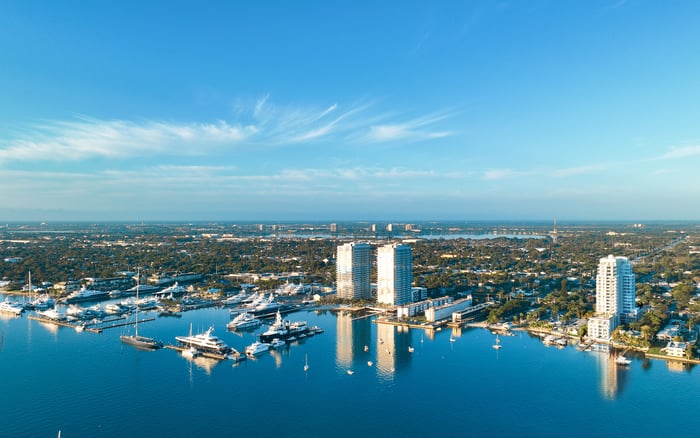
The planned 27-story tower includes 146 private residences and approximately 110 hotel accommodations. Near Okeechobee Boulevard and South Dixie Highway, the project sits in downtown West Palm Beach. For buyers, the distinction matters: this is an urban residential offering with hospitality woven into its program, rather than a home defined solely by its amenity floor.
The central question is how well that service model can coexist with the privacy, predictability and control expected of a private residence.
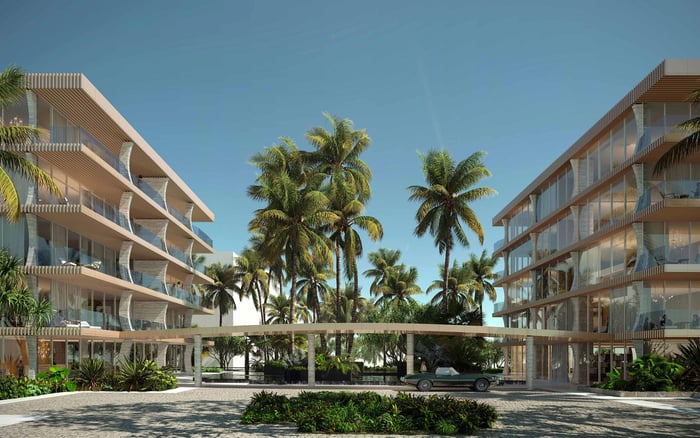
The planned residential arrival sequence includes a dedicated porte-cochère, concierge reception, a lobby with lounge seating and private high-speed elevators. These details deserve scrutiny: arrival is where the relationship between a hotel and its neighboring residences becomes tangible.
A dedicated residential entrance can help establish a distinct sense of home. Buyers should still examine the circulation plans rather than assume every route or facility is exclusive to owners. The full division between hotel guests and residents across the building remains to be established.
During a sales presentation, ask how visitors, deliveries and service personnel will move through the property. Clarify which amenities are residential, which may be shared and how access will be managed. The best expression of branded living is not constant exposure to hospitality activity; it is access to service without sacrificing personal space.
Housekeeping and butler service are advertised as available. The planned dining program includes Bellini Café, in-residence dining, event catering and poolside food-and-beverage service. Together, these offerings suggest a home designed for both quiet routines and more elaborate entertaining.
For a seasonal owner, the practical appeal may be help preparing for an arrival or managing household tasks during a stay. For a full-time resident, it may be the option to arrange dinner at home without organizing every detail. These are potential uses of the service program, not confirmation of specific packages or operating arrangements.
Availability is not the same as inclusion. Buyers should not assume that advertised services fall within condominium fees. Request written details on charges, scheduling, minimum commitments and any limits on access. Service has the greatest value when its scope and cost are as clear as its presentation.
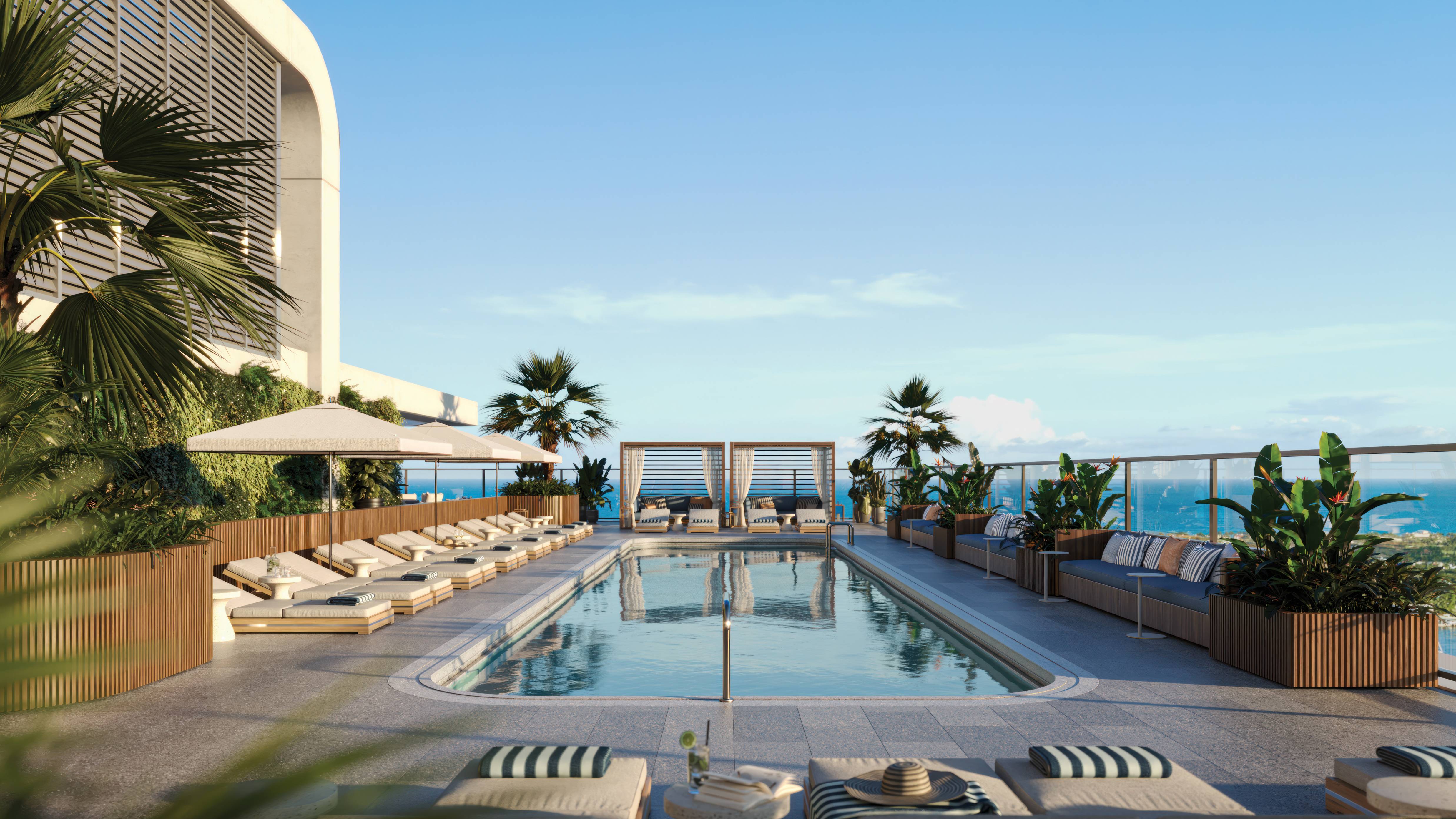
The planned residential amenities include a garden-level lap pool, cabanas, and a pool bar and lounge area. The outdoor program accommodates several uses: exercise, a quiet interval and informal social time. Buyers should assess the proposed layout and operating rules against how they expect to spend a day at home.
The wellness offering is similarly varied. A fitness center, indoor yoga area, Pilates studio and Peloton studio are planned, alongside a signature spa with sauna and steam rooms. These facilities may reduce the need to travel elsewhere for parts of a daily routine, though access arrangements and service charges warrant confirmation.
An outdoor cinema, bocce court and Little C’s outdoor playground broaden the recreational program. Indoors, a library, business lounge, meeting rooms, billiards room and casual lounges provide places to work or gather outside the residence. The relevant measure is not the length of the amenity list, but which spaces an owner would use regularly-and under what conditions.
Location deserves the same scrutiny as the hospitality offering. The project’s position near Okeechobee Boulevard and South Dixie Highway makes its downtown context central to the buying decision. Visit the surrounding streets at different times, test likely arrival routes and assess the experience at street level rather than relying solely on a presentation of the building.
A broader West Palm Beach search might also include Alba West Palm Beach. The purpose is not to assume equivalent amenities or services, but to establish which address and ownership model best suit your priorities. A compelling brand should sharpen that evaluation, not replace it.
For the same reason, considering Forté on Flagler West Palm Beach can help keep the search focused on the residence itself. Review each property’s materials independently, comparing arrival arrangements, recurring expenses and the spaces you expect to use. Do not assume that one development’s service structure applies to another.
Advertised entry pricing begins at $1.7 million. That is a starting point, not a comprehensive price schedule or an assurance of current availability. A meaningful comparison requires the price and terms for a specific residence, along with its recurring expenses.
The anticipated completion year is 2027, not a guaranteed delivery date. Buyers coordinating a sale, relocation or seasonal occupancy should review the contractual delivery provisions and plan for timing uncertainty.
Before committing, confirm current inventory, deposits, condominium charges, hospitality-service costs and the proposed operating structure. Rental permissions and any hotel-management terms also require direct clarification. A hotel component does not establish that private residences participate in a rental program, permit short stays or generate a particular return.
Mr. C’s proposition is strongest for a buyer who values access to hospitality without wanting to organize every element independently. The planned separation of residential arrival, breadth of dining options and variety of wellness and social spaces give that proposition substance.
The final decision should nevertheless rest on the residence and its governing documents. Request the applicable plans, review access rights and distinguish between an advertised service and a contractual obligation. Privacy, cost transparency and operational clarity matter as much as the promise of convenience.
For a tailored perspective on hospitality-led ownership in South Florida, explore MILLION.
If branded residences are on your mind — as a home or as an allocation — we would be glad to share what we are seeing, privately.
Begin a quiet conversationIt is a planned development combining branded private residences with a hotel component, associated with the Cipriani family’s Mr. C hospitality brand.
The project is near the intersection of Okeechobee Boulevard and South Dixie Highway in downtown West Palm Beach.
The planned 27-story tower includes 146 private residences and approximately 110 hotel accommodations.
Planned features include a dedicated porte-cochère, concierge reception, a residential lobby with lounge seating and private high-speed elevators.
Housekeeping and butler service are advertised as available. Buyers should confirm their scope, scheduling and charges directly.
The planned program includes Bellini Café, in-residence dining, event catering and poolside food-and-beverage service.
Plans include a garden-level lap pool, fitness center, indoor yoga area, Pilates studio, Peloton studio and a signature spa with sauna and steam rooms.
Advertised entry pricing begins at $1.7 million. Current inventory and residence-specific pricing require confirmation.
The anticipated completion year is 2027. This is a target rather than a guaranteed delivery date.
Buyers should not assume that advertised hospitality services are included in condominium fees. Request written confirmation of service charges and operating terms.