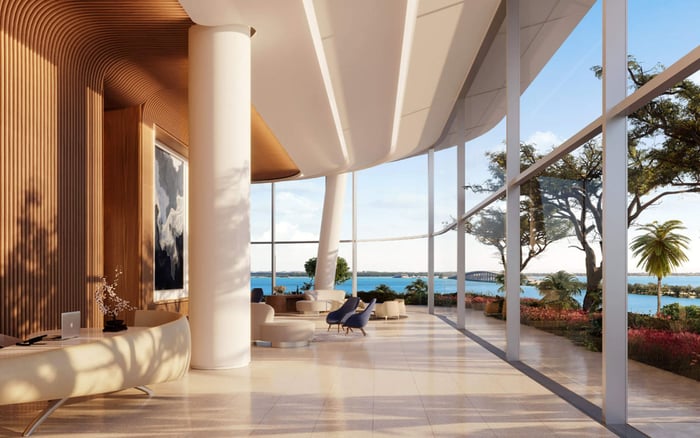
For collectors moving from London to Miami, the residence should shape the shipping plan. Address-specific flood checks, verified receiving arrangements, insurance effective dates and realistic ownership assumptions belong ahead of a fixed arrival date.

Moving a collection from London to Miami is not simply a transport decision. It is a residential decision with a transport plan attached. Before confirming the final shipment, establish whether the prospective home can receive, accommodate and protect the works as your advisers consider appropriate. The right address must satisfy more than the eye.
A compelling room, a generous wall and an exceptional outlook may earn a residence a place on the shortlist. They should not settle the purchase. For a collector, the more useful sequence is to identify the home, investigate its property-specific risks, verify practical arrangements and then finalize the shipping calendar. Preliminary transport discussions can proceed alongside the search, but the destination should shape the final instructions.
The residence should determine the shipping plan, not the reverse.
Waterfront living can be central to the Miami brief, but a neighborhood name is no substitute for a property investigation. An address-based flood-zone map allows buyers to check mapped exposure before choosing a home. Special Flood Hazard Areas identify locations susceptible to flooding, making the exact designation relevant to collection-protection planning.
For a buyer considering Miami Beach, including a residence at The Perigon Miami Beach, the question is not whether the setting feels suitable for art. It is what can be established about the particular property and the collection’s proposed location. A project name alone cannot answer that question.
The exact flood-zone designation can also be confirmed by calling 305-372-6466. Elevation certificates may be available for properties built after 1995, providing additional information for the assessment. Ask your advisers to interpret the documents rather than treating any single designation as a complete protection strategy.
Standard homeowners insurance does not cover flood losses. Flood coverage therefore needs its own discussion; it should not be assumed to sit within the ordinary property policy. For properties with federally backed mortgages in Special Flood Hazard Areas, flood insurance is required.
That requirement does not establish whether an individual collection is adequately insured. Ask the insurance adviser to explain, in writing, what protection applies to the residence and what applies to the works. Do not infer that either homeowners or flood coverage necessarily insures the collection’s full value.
Timing matters as much as policy selection. Flood-insurance coverage may not take effect until 30 days after the policy is purchased. Confirm the actual effective date before scheduling arrival, and ask separately about protection during transit, any interim storage and installation. These are collection-specific coverage questions, not benefits to presume from a residential policy.
In Brickell, a buyer evaluating The Residences at 1428 Brickell should apply the same discipline: establish the relevant insurance arrangements for the particular purchase before fixing a delivery date.
A residence can be visually persuasive while leaving important receiving questions unanswered. Before purchase, ask the appropriate property representatives and collection specialists whether a receiving survey would help establish feasibility. What route would the packed works take from the delivery vehicle to their intended rooms? Which dimensions, access permissions and scheduling arrangements need confirmation?
Where elevators are involved, request verification of the relevant dimensions and limits rather than relying on a general description of service access. For substantial objects, ask whether a qualified professional should review structural loading at the intended location. These are property-specific investigations, not assumed shortcomings or universal requirements.
The same approach applies in Coconut Grove. When considering Four Seasons Residences Coconut Grove, have the relevant team verify the actual receiving route and proposed installation locations. Neither the address nor the architectural presentation should stand in for that work.
The aim is not to turn a home into a warehouse. It is to resolve practical questions discreetly, before they compromise either the collection or the residential experience.
Ask a collection-care specialist what environmental conditions the particular works require, then ask the property team what can be demonstrated in the intended rooms. Climate specifications should be verified for the residence and the collection, not borrowed from a generic checklist.
Consider the rooms as they will actually be used. Where will the works sit, and what should the specialist assess about those locations? If alterations are contemplated, establish which permissions and professional reviews may be needed before assuming the home will be ready on completion.
For a Surfside shortlist that includes Ocean House Surfside, keep the distinction clear between aesthetic preference and verified suitability. A beautiful presentation can guide the search; it cannot resolve collection-specific environmental questions. Document the answers for the exact residence under consideration, not merely the building in general.
The ownership brief should be as precise as the installation brief. Purchasing a Miami property alone does not establish eligibility for Florida’s homestead exemption. Permanent residents of a primary home may qualify, subject to the applicable eligibility requirements.
New owners seeking the exemption must apply by March 1 and meet all requirements. An online application is available, as is a property-tax estimator with purchase-related and homestead disclosures. Use those tools to inform the ownership budget, not to presume an exemption before eligibility has been established.
For a London-based buyer, distinguish the desire for a Miami home from the question of whether it will qualify as a primary residence for exemption purposes. Keep that discussion with the appropriate advisers separate from decisions about where the collection will be displayed.
Before final instructions leave London, consolidate the outstanding points in one written plan: the selected residence, confirmed access arrangements, specialist advice on the display environment and the relevant insurance effective dates. Ask who will coordinate receipt and what alternative arrangements should be considered if the residence is not ready.
Any contingency storage, transport insurance or customs arrangements should be verified by the relevant professionals for the actual move. Do not build the timetable around assumed export procedures, import treatment or collection-specific relief.
The objective is a home that welcomes both owner and collection without forcing last-minute compromises. Once the destination has been properly assessed, the shipping plan can follow the residence with clarity.
Explore a residence-led approach to your Miami search with MILLION.
If branded residences are on your mind — as a home or as an allocation — we would be glad to share what we are seeing, privately.
Begin a quiet conversationYes. Establish the destination and verify property-specific risks, receiving arrangements and insurance timing before committing to a final arrival date.
Use the address-based flood-zone map and confirm the exact designation through the local Flood Zone Hotline at 305-372-6466.
It identifies a location susceptible to flooding. The designation is relevant to evaluating the property and planning collection protection.
No. Flood coverage must be addressed separately, and neither policy should be assumed to insure a collection’s full value.
It is required for properties with federally backed mortgages in Special Flood Hazard Areas.
Yes. Coverage may not take effect until 30 days after the policy is purchased, so confirm the actual effective date before scheduling delivery.
Elevation certificates may be available for properties built after 1995. They can provide additional information for evaluating flood risk.
Ask them to assess the proposed delivery route, relevant access dimensions and permissions. Elevator limits, structural loading and environmental conditions should be investigated where appropriate to the property and works.
No. Permanent residents of a primary home may qualify, but purchasing the property alone does not establish eligibility.
New owners seeking the exemption must apply by March 1 and meet all eligibility requirements. An online application is available through local property-appraiser resources.