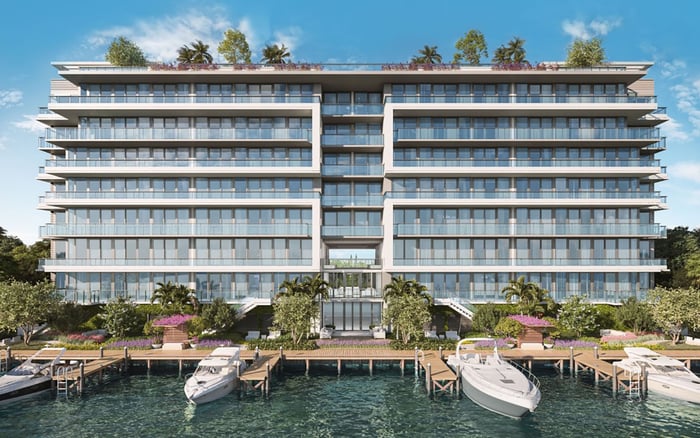
A practical framework for turning legal occupancy at La Baia North into a fully furnished, season-ready waterfront residence.

At La Baia North Bay Harbor Islands, the transition from closing to effortless residence should be understood as a sequence of controlled milestones. Furniture, art, lighting, and personal objects allow each owner to complete the interior individually.
Legal occupancy does not necessarily mean a home is ready for immediate seasonal use. A disciplined plan separates four stages: the date legal occupancy becomes possible, the installation of essential furniture, the completion of final customization, and the first period of full residential use. Treating them as distinct decisions gives owners room to protect valuable pieces, coordinate trades, and avoid compressing complex work into the days before arrival.
For buyers evaluating the broader Bay Harbor market, the same planning lens can be useful when considering nearby options such as Alana Bay Harbor Islands. The decisive question is not simply when a residence can be entered, but when it can perform at the standard the owner expects.
Furniture procurement should align with confirmed building access and the developer’s delivery schedule-not an aspirational arrival date. Begin with the intended first stay, then work backward through installation, inspection, delivery, staging, freight, and production. Preserve flexibility between phases so one adjustment does not disrupt the entire calendar.
The first installation should focus on functional essentials: principal seating, beds, dining requirements, window treatments where applicable, and the pieces required for daily routines. Decorative layers, collectible design, art, and less critical rooms can follow. This creates a move-in-ready core without forcing every creative decision before the owner has experienced the residence’s light, views, circulation, and proportions.
Design choices should also account for the practical route into the home. Before releasing large pieces for shipment, the owner’s team should verify the dimensions of service areas, elevators, corridors, doorways, and final placement locations. Building-specific procedures, insurance requirements, deposits, contractor rules, and blackout dates should be confirmed directly with management before any vendor receives a firm appointment.
A polished installation can involve the owner, interior designer, furniture receiver, installers, contractors, condominium association, and building staff. The most effective structure gives one person authority to maintain the master schedule, confirm access, consolidate documentation, and communicate changes.
For a second-home or internationally based owner, that role can be handled by a trusted local representative. The representative can inspect deliveries, document condition, approve placement within agreed parameters, and resolve routine questions without waiting for the owner to travel. Written decision limits are essential: the representative should know which changes can be approved immediately and which require direct consent.
A concise daily brief can keep the process discreet. It should identify the teams entering the residence, the planned work, delivered items, any damage or exceptions, and the next confirmed appointment. Photographs can support remote approvals, but they should complement rather than replace an in-person inspection by the designated local lead.
The same operational planning is relevant when evaluating Onda Bay Harbor and The Well Bay Harbor Islands. Common spaces are shared assets, and move-ins should respect current protocols intended to protect elevators, loading areas, corridors, and finished surfaces.
Owners targeting winter occupancy should establish a realistic readiness date well before their intended arrival. The schedule should allow time for furniture placement, contractor corrections, cleaning, systems checks, and a final walkthrough. The first night should feel composed-not like the conclusion of an installation shift.
Hurricane season adds another layer of planning. Deliveries, contractor access, and prolonged absences should be considered together, especially when the owner will not be nearby to address schedule changes. A local representative should maintain current contacts for building management and every active vendor, while the residence should be left in accordance with current building guidance before an extended absence.
Seasonal use also favors a two-pass approach. The first makes the home comfortable and functional. The second follows lived experience, allowing the owner and designer to refine furniture placement, storage, lighting, and decorative details after understanding how the residence is actually used.
Before declaring the residence complete, conduct a room-by-room review that distinguishes among building matters, vendor matters, and owner preferences. Confirm that installed pieces are undamaged, pathways remain clear, customization work is complete, and every outstanding item has an assigned party and target resolution window.
The final handoff should include an inventory of delivered furnishings, installation photographs, vendor contacts, access items, care information, and a concise list of unresolved details. This record is particularly valuable when household staff or property managers will prepare the home between visits.
True readiness is operational as well as visual. At La Baia North, the objective is not merely to furnish a residence, but to create a calm arrival in which the building, interiors, and owner’s seasonal rhythm work together.
Is legal occupancy the same as full move-in readiness? No. Legal occupancy, furniture installation, final customization, and full seasonal use are best treated as separate milestones.
When should furniture be ordered? Procurement should be coordinated with the developer’s delivery schedule and the confirmed date when legal occupancy becomes possible.
Should every room be completed before the first stay? Not necessarily. Prioritize essential living and sleeping spaces, then complete decorative layers and secondary rooms after experiencing the residence.
Who should manage furniture installation? One designated lead should coordinate the owner, designer, contractors, condominium association, installers, and building staff.
Why appoint a local representative? A local representative can oversee deliveries, document condition, handle routine approvals, and coordinate with management while the owner is away.
What building rules should be verified? Confirm current delivery policies, insurance requirements, contractor access rules, deposits, protective measures, and any blackout dates directly with management.
Why do elevator and loading protocols matter? They help protect shared elevators, loading areas, corridors, and other common spaces during move-ins and major installations.
How should winter occupancy affect scheduling? Work backward from the intended arrival, preserving time for installation, corrections, cleaning, systems checks, and a final walkthrough.
What changes during hurricane season? Delivery timing, contractor access, and extended absences require additional coordination, current contacts, and adherence to building guidance.
What belongs in the final handoff file? Include a furnishing inventory, installation photographs, vendor contacts, care information, access items, and a clear record of unresolved work.
To compare the best-fit options with clarity, connect with MILLION.
If branded residences are on your mind — as a home or as an allocation — we would be glad to share what we are seeing, privately.
Begin a quiet conversation