An art-first framework for evaluating Miami residences, from display geometry and environmental control to delivery access, building rules, privacy, and location.
For an art collector, a Miami home is more than an attractive setting. It is a working environment for viewing, protecting, moving, documenting, and periodically rotating valuable objects. The buying process should therefore begin with a collection brief, not a finishes schedule.
Before touring, identify the works most likely to live in the residence. Document their dimensions, weight, framing depth, sensitivity to light, installation method, and preferred viewing distance. Note potential acquisition categories as well. A home that accommodates the current collection but offers no flexibility for larger sculpture, photography, or works on paper can quickly become restrictive.
Bring the appropriate specialists into due diligence before committing. An art adviser, conservator, experienced installer, lighting designer, insurance professional, and property attorney will each examine different forms of risk. Their observations should supplement, not replace, independent engineering and legal review.
Total interior area reveals little about curatorial usefulness. Measure uninterrupted wall lengths, ceiling heights, corners, door swings, millwork, outlets, switches, vents, glazing, and sightlines. A broad wall may offer limited display value if controls interrupt it or intense daylight reaches it.
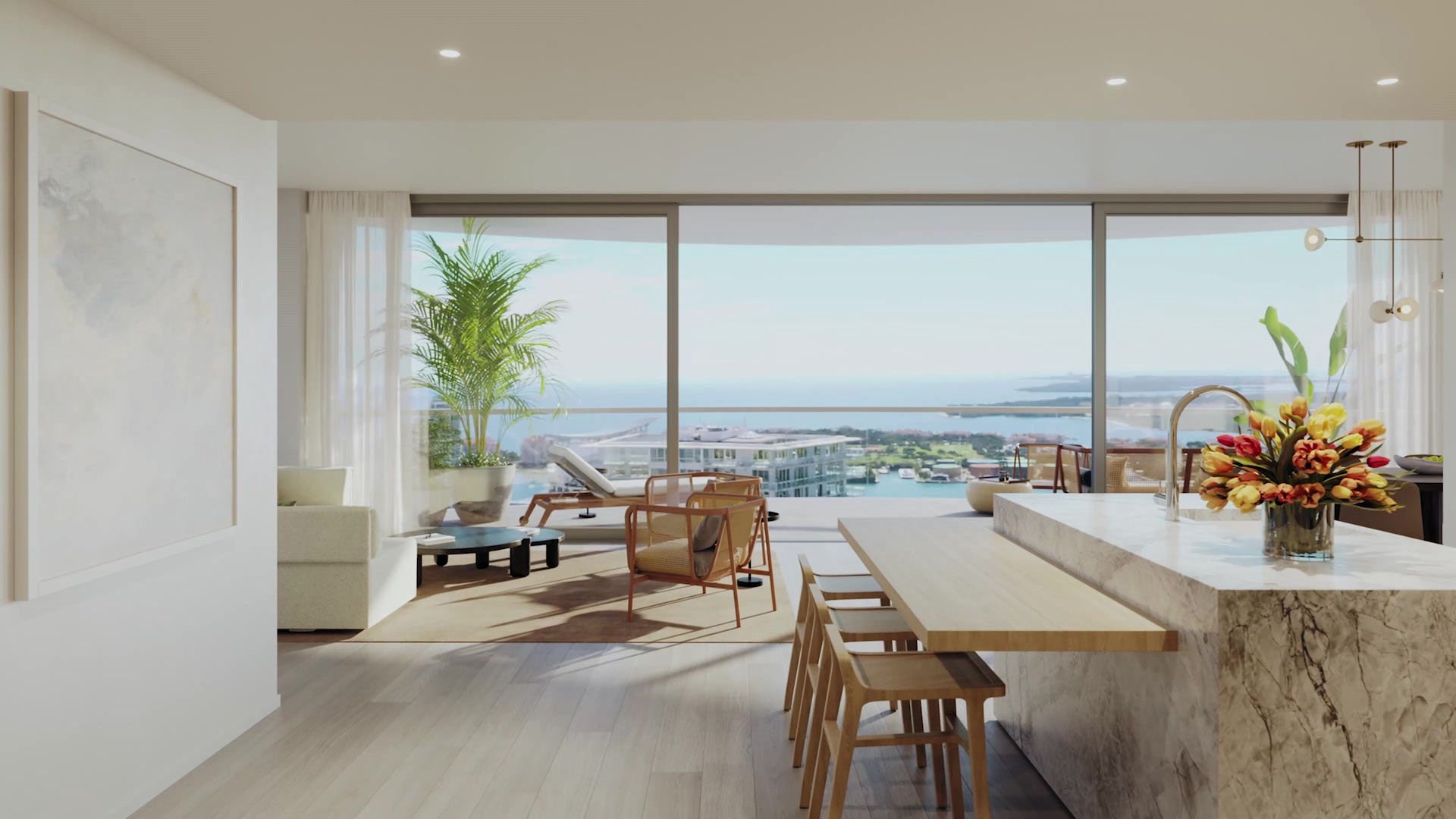
Study circulation from both seated and standing positions. Consider how a work reads upon arrival, from adjoining rooms, and against exterior views. Open plans can create elegant perspectives, but they can also reduce hanging surfaces. Curved walls, stone cladding, mirrored panels, and integrated cabinetry may further constrain installation options.
Request precise guidance on what may be drilled, reinforced, altered, or restored. For substantial works, obtain professional advice on substrate, anchoring, floor loading, and vibration. Never infer structural capacity from appearance alone.
Miami buyers should treat environmental performance as a central due-diligence concern. Ask a conservation specialist to assess direct and reflected sunlight, heat near glazing, humidity stability, airflow, condensation risk, and mechanical-equipment placement. Window treatments and specialized lighting can help, but they should be designed around the collection rather than added casually after closing.
Review the residence’s controls in practical terms. Determine which rooms can be managed independently, how conditions are monitored, which alerts are available, and what happens during a power interruption or equipment failure. Confirm the exact scope of backup systems and building responsibility in writing. Establish an emergency plan for water intrusion, severe weather, prolonged absence, and mechanical service.
Every shortlisted property warrants an artwork-access study. Begin at the vehicle or loading point, then measure each gate, corridor, elevator, landing, doorway, and turn leading to the intended room. Confirm elevator dimensions and capacity, protective requirements, reservation procedures, permitted delivery hours, and vendor insurance rules directly with building management.
Large pieces may require rigging, façade access, temporary door removal, or another specialized method. Do not assume such work will be approved. Ask the installer to conduct a site visit and prepare a written route plan before the purchase-contingency period ends.
Condominium documents and management policies can shape life with a collection as much as the floor plan. Review rules governing deliveries, contractor access, freight elevators, drilling, renovation, floor protection, security credentials, storage, and work hours. Clarify who approves unusual installations and whether outside conservators, photographers, registrars, or handlers may enter without unnecessary exposure.
Privacy deserves equal scrutiny. Discuss visitor procedures, staff access, key control, camera coverage, package handling, and record retention with qualified advisers. The objective is discreet operational control, not conspicuous security.
Location should reflect the collector’s habits, not a generic prestige hierarchy. A buyer comparing Miami Beach with Brickell might weigh quiet viewing time, travel patterns, entertaining style, and the ease of coordinating specialist visits. Residences such as Faena House Miami Beach and The Residences at 1428 Brickell can serve as starting points for distinct, property-specific investigations-never as substitutes for technical review.
The same discipline applies around the Design District and Wynwood. Buyers may begin with Kempinski Residences Miami Design District or Frida Kahlo Wynwood Residences, then compare the precise residence, access route, management protocols, and environmental conditions under consideration.
For those drawn to Coconut Grove and a more residential lifestyle, Ziggurat Coconut Grove offers another reference point for inquiry. In every area, the decisive question is whether a particular home supports the collection’s daily care and the owner’s preferred rhythm.
Before closing, align the residence policy, building coverage, collection insurance, transportation arrangements, and installer requirements. Confirm how values are documented, when appraisals should be updated, which movements require notice, and whether temporary storage or off-site conservation requires separate treatment. Legal and insurance professionals should review exclusions, deductibles, territorial limits, and responsibilities during installation.
Create a property file containing measured plans, wall elevations, access diagrams, approved vendors, mechanical information, emergency contacts, condition records, and written building approvals. This file becomes the operating manual for the collection within the home.
Score each residence against the same criteria: display geometry, daylight exposure, environmental control, access, installation permissions, privacy, emergency readiness, storage, and operating complexity. Distinguish correctable issues from permanent constraints. Lighting can often be redesigned; an undersized elevator or immovable structural condition may be far more difficult to resolve.
The most persuasive residence is not necessarily the one with the most dramatic presentation. It is the one that allows art, architecture, and daily life to coexist with minimal compromise.
Should an art adviser attend property tours? An adviser can identify curatorial limitations early, while the relevant specialist should confirm technical conclusions.
Is total square footage a useful guide to display capacity? Only partially. Uninterrupted walls, ceiling height, circulation, glazing, and fixed finishes are more revealing.
When should an art installer inspect the residence? Ideally during due diligence, especially when the collection includes oversized, heavy, or unusually shaped works.
Can window treatments solve every daylight concern? No. A conservator and lighting professional should evaluate exposure, materials, placement, and the proposed treatment together.
What building documents deserve special attention? Review rules covering deliveries, elevators, contractors, alterations, security, insurance, work hours, and restoration obligations.
How should buyers assess backup power? Verify which systems and residence circuits are supported, for how long, and under whose responsibility.
Does a private elevator eliminate artwork access issues? Not necessarily. Dimensions, capacity, turns, door clearances, loading access, and management approval still matter.
Should collection insurance be arranged before closing? Coverage planning should begin early so the home, transit, installation, storage, and occupancy arrangements can be coordinated.
Is a dedicated art storage room essential? Not for every collector, but any proposed storage area should be assessed for security, environment, access, and shelving suitability.
What is the final question before choosing a residence? Ask whether the home can protect, present, and move the collection without compromising privacy or everyday enjoyment.
To compare the best-fit options with clarity, connect with MILLION.
If branded residences are on your mind — as a home or as an allocation — we would be glad to share what we are seeing, privately.
Begin a quiet conversation