Key Biscayne favors a village-scale routine centered on beaches and parks, while Miami Beach offers broader recreational choice and more neighborhood variation. For families, the right decision turns on daily access, housing type, and the distinction between residential privacy and a secluded shoreline.

For families seeking sand and seclusion, Miami Beach and Key Biscayne offer different versions of coastal living. Key Biscayne is the natural starting point for a village-scale routine organized around beaches and major parks. Miami Beach offers a broader urban setting, where neighborhood selection is central to finding the right balance.
Neither choice should rest on the promise of an empty shoreline. The parks discussed here have public beach access, and controlled entry to a residence does not make the adjacent coast private. The more useful question is how a home supports ordinary family life: getting outdoors, reaching activities, returning with beach gear, and making mainland trips.
The most persuasive address makes those movements manageable. Architecture and views matter, but so does the journey from the front door to the sand.
Key Biscayne's geography gives families a clear outdoor framework. Crandon Park lies north of the residential village, while Bill Baggs Cape Florida State Park occupies the island's southern end. Beaches and substantial park settings are central to residential life, rather than incidental weekend destinations.
Crandon offers approximately two miles of sandy beach, with a shallow beach gradient that makes it a family-oriented option. Playgrounds, picnic pavilions, restrooms, and concessions support longer outings. Tennis and nature-based recreation extend the experience beyond swimming. Water conditions still need checking before entering, however inviting the shoreline appears.
At the southern end, Bill Baggs combines beach access with the historic Cape Florida Lighthouse, picnic areas, and kayaking opportunities. For a household that wants outdoor time to anchor its schedule, these two parks provide a compelling reason to begin the search on Key Biscayne. They do not, however, mean every outing will be quiet or uncrowded.
The island's housing choices include inland single-family homes, oceanfront condominiums such as Ocean Club and Grand Bay, and bayfront properties with boating access. These are distinct ways of living near water. A family should decide which experience matters most before comparing interiors.
An inland house calls for scrutiny of the route to the beach. An oceanfront condominium warrants a close look at the transition from residence to shoreline. A bayfront property may meet a family's boating needs without meeting its beach priorities. Waterfront ownership and convenient swimming access are not interchangeable.
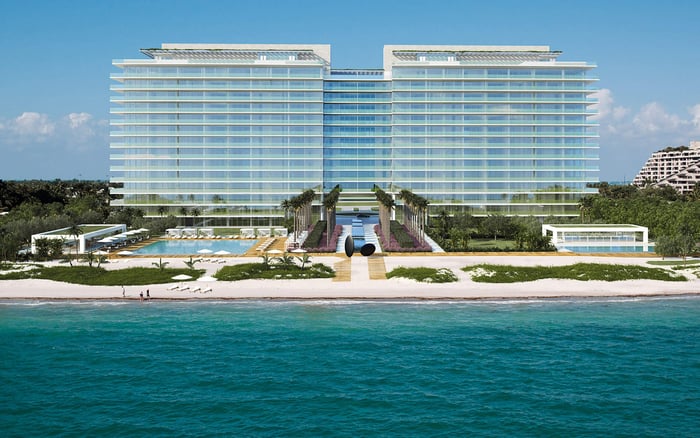
For buyers considering Oceana Key Biscayne, the next step is to evaluate the individual residence against that same family checklist: the path outdoors, storage needs, and how shared spaces would fit daily life. A project name should begin the inspection, not substitute for it.
Miami Beach requires a more granular search. Families seeking a quieter beach base should consider Mid-Beach and North Beach as alternatives to the more energetic South Beach setting. That is a starting point for exploration, not a guarantee of quiet or privacy at a particular address.
The city's municipal recreation offerings add another dimension: more than 40 parks and facilities, alongside hundreds of recreational programs. For families whose interests extend beyond beach outings, that breadth is a reason to examine Miami Beach closely. The practical task is to identify activities that suit the household, then test the routes from prospective homes.
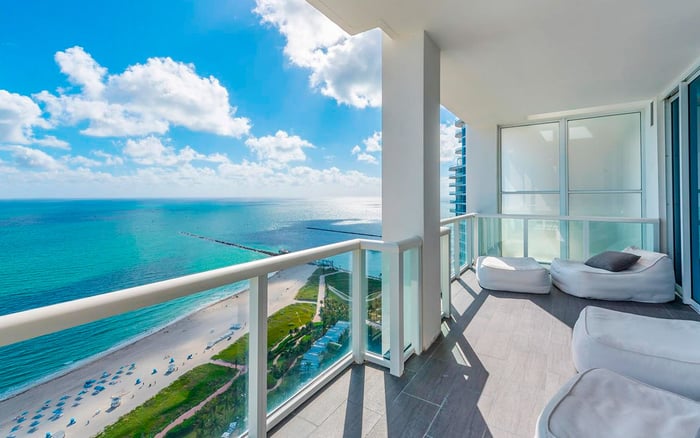
A viewing at 57 Ocean Miami Beach can form part of that broader neighborhood assessment. Walk the surrounding area, examine the beach approach, and return at a different time of day. The objective is not to judge Miami Beach as a single destination, but to understand the small area the family would actually use.
Privacy has several layers: entry to the property, exposure within the residence, the character of shared spaces, and activity along the shoreline. A home can perform well on one measure and less well on another. Families should identify which layer matters most rather than rely on a general impression of exclusivity.
Miami Beach's waterfront options include gated island communities and homes with private docks. Those features address residential access or boating, not necessarily beach seclusion. On Key Biscayne, the public parks offer generous outdoor settings, but public access remains part of their character.
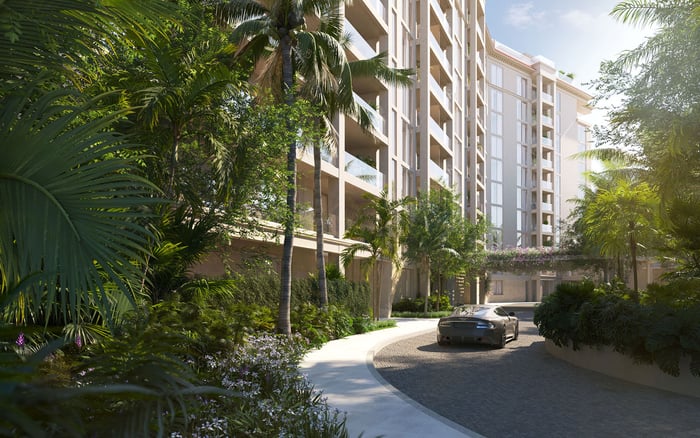
When assessing The Perigon Miami Beach, apply the same property-level questions: what is visible from the residence, how do arrival and movement through shared spaces feel, and how does the beach environment compare with the family's expectations? These are matters to inspect, not qualities to assume from a waterfront label.
Key Biscayne connects to the mainland through the Rickenbacker Causeway. Dependence on that single access corridor deserves attention when a household has regular mainland commitments. Test the route using the family's likely departure times and destinations, rather than relying on a generalized claim about commute duration.
For either location, rehearse an ordinary day. Consider the school journey, work obligations, children's activities, and the return home. Then rehearse a beach day, including carrying equipment and accommodating different ages. Assess school suitability for the individual child, separately from the appeal of the neighborhood.
Resale buyers should also examine the property's condition, rules, and operating arrangements. Ask how those details affect the intended use of the home. A beautifully presented residence still needs to function through wet towels, visiting relatives, and changing family schedules.
Key Biscayne is the stronger lifestyle fit when the central ambition is a park-and-beach-centered family routine in a village-scale setting. Its appeal comes with a clear logistical consideration: mainland access depends on the causeway corridor.
Miami Beach is the stronger starting point for a family seeking a broader urban context and substantial recreational choice, provided it is willing to select the neighborhood carefully. Mid-Beach and North Beach deserve particular consideration when a quieter beach base is the priority.
Neither conclusion is a ranking of schools, prices, crowds, or travel times. The final decision rests with the address and the household. Choose the setting that supports the week you intend to live, then judge each residence by how convincingly it delivers that routine.
Explore your family's next coastal address with MILLION.
If branded residences are on your mind — as a home or as an allocation — we would be glad to share what we are seeing, privately.
Begin a quiet conversationKey Biscayne is the stronger starting point for a village-scale routine centered on parks and beaches. Miami Beach offers a broader urban setting and extensive recreational options.
No. The parks discussed have public beach access, and residential privacy does not establish that a shoreline is private or uncrowded.
Mid-Beach and North Beach are alternatives to the more energetic South Beach setting. Conditions should still be assessed around each prospective address.
Crandon has approximately two miles of sandy beach, a shallow beach gradient, playgrounds, picnic pavilions, restrooms, and concessions. Families should check water conditions before swimming.
The park combines beach access with the historic Cape Florida Lighthouse, picnic areas, and kayaking opportunities. It occupies Key Biscayne's southern end.
Key Biscayne depends on the Rickenbacker Causeway corridor for mainland access. Families should test routes against their actual schedules and destinations.
Options include inland single-family homes, oceanfront condominiums, and bayfront properties with boating access. Each supports a different relationship with the water.
A private dock serves a boating purpose and should not be treated as evidence of convenient beach access. Buyers should inspect the actual route to the sand separately.
The municipal recreation department operates more than 40 parks and facilities and offers hundreds of recreational programs. Families should identify suitable activities and test their accessibility from prospective homes.
Inspect the route outdoors, the beach approach, shared circulation, and practical storage needs. Revisit the surrounding area at different times and rehearse everyday journeys.