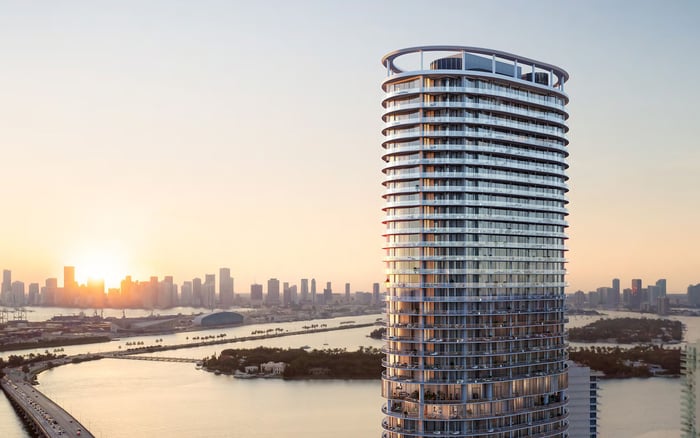
For Miami Beach buyers with household staff, financial diligence and daily service planning belong in the same conversation. Review the transition to owner control, separate operating costs from reserves, and test whether the budget supports the way your household intends to live.

For a Miami Beach buyer who employs a housekeeper, chef, nanny, or estate manager, a condominium must function as both a private retreat and a working household. The question is not simply whether the building offers attentive service, but whether its rules, staffing arrangements, and financial commitments support the owner's daily routine.
Developer turnover makes that inquiry especially important. A change in board control is a governance milestone, not evidence that expenses have settled into a durable pattern. The first owner-controlled budget deserves scrutiny, but it remains a forecast, not a promise.
A buyer considering The Perigon Miami Beach should separate the residence's appeal from the documentary review needed to evaluate ownership costs. No project's name or positioning establishes its turnover status, private-staff permissions, or future assessment.
Under Florida's condominium framework, developer turnover is the transition when owners other than the developer become entitled to elect a majority of the association's board. It is not synonymous with the first closing, completion of amenities, or a buyer's move-in date.
Statutory triggers include three years after 50% of units are conveyed or three months after 90% are conveyed, with the earliest applicable statutory trigger controlling. These are not the only possible triggers. Ask condominium counsel to confirm which provision applies and to distinguish entitlement to owner control from the election and document handover.
Request the relevant conveyance information, election records, board minutes, and turnover materials. Establish who adopted the current budget and whether an owner-controlled board has since revised it. If turnover is still ahead, keep the eventual owner-controlled budget on the list of unresolved diligence items.
Keep this analysis within Chapter 718, the condominium framework. Do not substitute Chapter 720 homeowners' association rules.
An annual association budget estimates revenues and expenses for the coming year. It becomes more useful when compared with actual spending and the commitments behind each line.
Request the last developer-controlled budget, the first owner-controlled budget if adopted, the current budget, and available budget-to-actual statements. Seek explanations for material changes, supported where possible by contracts, renewal terms, or board decisions. Identify what changed, why, and whether the change is recurring.
For a buyer evaluating Five Park Miami Beach, this is a document request, not a prediction about that building's costs. Apply the same comparison wherever a residence sits on the turnover timeline.
Organize the review around three questions:
Does each major expense reflect a full year of the intended service level?
Is any developer support, credit, or temporary arrangement documented, and when would it end?
Are apparent savings supported by a durable contract or by a temporary assumption?
Do not presume developer support exists. If it does, ask the accountant to distinguish the underlying expense from the funding that temporarily offsets it. A post-turnover increase is a risk to investigate, not an inevitable outcome.
Recurring operating expenses include management, utilities, maintenance, security, and insurance. Reserves serve a different purpose: restricted funding for capital expenditures and deferred maintenance. A substantial reserve balance does not establish that the recurring service budget is sufficient.
Florida condominium budgeting requirements include reserve accounts, with identified categories such as roof replacement, building painting, and pavement resurfacing. Request a schedule separating operating assessments from reserve contributions so you can understand the monthly payment, not merely compare it.
Before turnover, a developer-controlled association may not vote to waive reserves or reduce reserve funding. Owner control does not automatically make every reserve category waivable. Where a waiver or reduction is legally permitted, a failed vote or a meeting without a quorum leaves the budgeted reserves in effect.
For buildings subject to structural integrity reserve study requirements, include the SIRS in the turnover review. Structural reserve amounts are tied to the findings and recommendations of the most recent study. Have counsel and the financial reviewer reconcile the applicable requirements with the proposed funding schedule.
Do not assume a universal developer contribution upon every new-condominium sale. Section 718.618 requires pro rata funding upon unit sales for the reserve account specified there; counsel should establish its applicability before you rely on it.
Private household staff and association personnel belong in separate diligence categories. A security budget does not establish a nanny's access rights, and a service description does not establish whether a private chef may receive deliveries without the owner present.
When considering Faena House Miami Beach, translate your household's actual routine into questions for management. Obtain the applicable written rules; these questions are not evidence of any particular building policy.
Ask whether recurring employees need registration or credentials, how access works during the owner's absence, and whether hours or entry routes are restricted. Confirm any service-elevator procedures, delivery arrangements, parking permissions, and staff-related charges. Clarify which provisions govern employees and which govern occasional vendors.
Your estate manager can prepare a typical weekly schedule for review. Establish what is permitted, what requires advance coordination, and what is charged separately. Check written answers against the governing documents rather than treating them as a substitute.
For a purchase evaluation, treat stabilized service costs as a working estimate supported by recurring obligations, an agreed service scope, and actual operating evidence. The phrase is not a guarantee that assessments will remain unchanged.
Build a household ownership schedule with three separate lines: association operating charges, reserve contributions, and private household expenses. Add any documented building charges for staff access or services separately. This prevents a seemingly modest assessment from obscuring costs paid elsewhere.
A comparison involving Setai Residences Miami Beach should use the same service assumptions as any alternative. Compare what the household needs and what the documents support, not just the stated monthly total.
Ask the financial reviewer to distinguish confirmed costs from unresolved renewals, proposed service changes, and temporary arrangements. Any sensitivity analysis should label assumptions clearly, not present an unsupported increase as a forecast.
Before proceeding, bring counsel, the financial reviewer, and your household manager into the same review. Resolve turnover status, budget assumptions, reserve obligations, and staff permissions together. For each open issue, identify who must answer it and which document will establish the answer.
The strongest fit is not necessarily the lowest assessment. It is the residence whose documented operating model supports your household with the fewest unresolved assumptions.
For a discreet conversation about your Miami Beach residence search, connect with MILLION.
If branded residences are on your mind — as a home or as an allocation — we would be glad to share what we are seeing, privately.
Begin a quiet conversationIt is the transition when unit owners other than the developer become entitled to elect a majority of the association's board. It is distinct from a first closing or move-in date.
Triggers include three years after 50% of units are conveyed or three months after 90% are conveyed. Counsel should identify the earliest applicable statutory trigger, including any other relevant provisions.
No. A post-turnover increase is a risk to investigate through budgets, actual expenses, and contractual commitments, not an automatic outcome.
Request the last developer-controlled budget, the current budget, and available budget-to-actual statements. Seek documented explanations for material changes and any temporary funding arrangements.
Before turnover, a developer-controlled condominium association may not vote to waive reserves or reduce reserve funding. Owner control does not automatically make every reserve category eligible for waiver.
The reserves included in the budget go into effect. The same applies when the meeting lacks a quorum.
Operating expenses cover recurring items such as management, security, utilities, maintenance, and insurance. Reserves are restricted funds for capital expenditures and deferred maintenance.
Yes, for buildings subject to SIRS requirements. Structural reserve funding should be reviewed against the findings and recommendations of the most recent study.
Request written access, registration, delivery, elevator, parking, and fee provisions relevant to the household's routine. Do not infer permissions from a building's service descriptions.
Use the term as a working estimate supported by recurring obligations, defined service levels, and actual operating evidence. It is not a guarantee that assessments or household expenses will remain fixed.