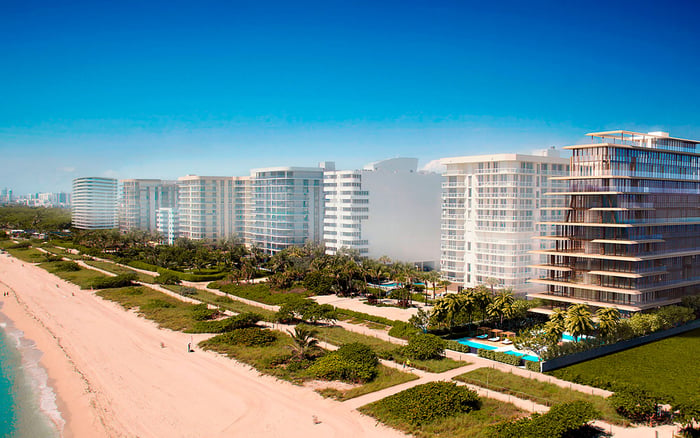
At Eighty Seven Park, operational diligence should test whether governance, staffing, finances, safety systems and daily service support the promise of effortless oceanfront living.

Eighty Seven Park Surfside occupies a distinctive threshold: oceanfront living beside North Beach Oceanside Park, with Miami Beach access on one side and Surfside’s more residential character on the other. Its minimalist, glass-forward architecture presents an appealing proposition, particularly for buyers who value coastal green space and distance from the area’s densest tourist corridors.
Yet architecture is only the visible layer of ownership. At Eighty Seven Park Surfside, the more consequential question is whether the building’s operating ecosystem delivers calm every day. Security, arrivals, maintenance, resident requests, amenity access and emergency response must function together without requiring owner intervention.
This is the standard of luxury without friction. It cannot be inferred from finishes, landscaping or a polished showing. It must be demonstrated through records, accountable management and direct observation.
A beautiful unit can sit within an association whose decision-making is opaque or reactive. Buyers should therefore review condominium governance with the same care they apply to title, condition and price. Board and meeting records should reveal how priorities are set, major questions are resolved and management follows through.
Ask who holds operational authority, which matters require board approval and how owners receive material updates. Review recent meeting records for recurring issues, deferred decisions and repeated resident concerns. The purpose is not to demand a building without disagreement, but to determine whether decisions are documented, responsibilities are clear and problems move toward resolution.
This distinction is central: an owner acquires both private space and exposure to collective decision-making. In a resale purchase, the historical record can be especially valuable because it shows how the building has functioned over time, not merely how it is presented today.
Professional management should be identifiable, with a clearly defined mandate. A buyer should understand who directs the property, which duties are handled internally, which are contracted and what performance standards apply. Contracts and service procedures can clarify reporting lines, response expectations and oversight.
Staffing depth matters as much as visible courtesy. Examine headcount, role coverage, schedules, turnover, training and contingency plans for absences or emergencies. A premium arrival experience during a scheduled visit proves little if service thins at night, on weekends or when multiple needs arise at once.
Observe the building at different times if access permits. Note how arrivals are handled, how security balances recognition with verification and how staff respond to routine questions. Request examples showing how resident work orders are logged, escalated and closed. The goal is evidence of a repeatable system, not a performance staged for a showing.
Buyers comparing the quieter coastal context of Arte Surfside or Ocean House Surfside can apply the same discipline. Project identity may shape expectations, but current operational quality remains specific to each building.
Luxury service requires durable funding. Review operating budgets, reserve information, contracts and available financial records to determine whether routine operations, major repairs, insurance obligations and regulatory requirements can be supported. Consider whether recurring costs are realistically recognized and whether known work has a credible funding path.
This review should connect money to outcomes. Staffing, preventive maintenance, technology, insurance and life-safety systems are not abstract budget lines. They determine whether elevators, access controls, common areas, communications and emergency procedures remain dependable.
Florida condominium counsel and qualified engineering, insurance and financial professionals should examine the relevant records before closing. Their work should address legal obligations, physical condition, coverage structure and financial resilience. Marketing can establish design and location, but not whether the association is prepared for future demands.
Oceanfront ownership warrants particular operational attention because the residence depends on building-wide systems. Ask for inspection reports, maintenance documentation and evidence that life-safety equipment, access technology and other critical infrastructure are actively maintained. Confirm that emergency procedures are current, assigned and communicated.
A plan is most persuasive when it assigns responsibility. Who contacts residents? Who coordinates vendors? How is access managed during a disruption? What happens if a key team member is unavailable? Buyers need not manage these systems, but they should verify that someone competent does.
The same lens applies across the broader Miami Beach luxury market, including The Surf Club Four Seasons Surfside. Oceanfront prestige and operating readiness are separate propositions; each deserves independent scrutiny.
Create a concise proof file containing budgets, reserve information, board and meeting records, management agreements, material vendor contracts, inspection reports, insurance materials and written service procedures. Add a record of open questions, responsible parties and answers received.
Then compare documentation with observation. If a procedure promises prompt handling of resident requests, ask how those requests are tracked. If a staffing plan appears comprehensive, verify coverage during less visible hours. If major work is contemplated, establish its status, funding and decision path with professional advisers.
The objective is not perfection. It is alignment among promise, process and capacity. When those elements agree, the residence is more likely to feel effortless for the owner. When they diverge, even exceptional design can become operationally demanding.
What should a buyer review first at Eighty Seven Park? Start with governance records, management responsibilities, budgets and reserve information before evaluating service claims.
Why is the unit inspection not enough? Daily ownership also depends on security, staffing, maintenance, common systems and association decision-making.
How can service quality be tested? Compare written procedures and performance records with direct observation at different times.
Which staffing questions matter most? Ask about headcount, schedules, turnover, training, role coverage and backup plans for absences.
What financial documents should be requested? Seek budgets, reserve information, relevant contracts and records addressing major obligations and planned work.
Why review board and meeting records? They can show how decisions are documented, whether issues recur and how management follows through.
What should be checked about building technology? Verify that access, communications, life-safety and other critical systems receive active maintenance.
How should emergency readiness be assessed? Request current procedures and confirm who coordinates residents, staff, vendors and access during disruptions.
Which professionals should assist before closing? Engage Florida condominium counsel and qualified engineering, insurance and financial professionals as appropriate.
What is the clearest sign of luxury without friction? Governance, staffing, funding and service procedures align so routine needs are resolved without owner intervention.
For a tailored shortlist and next-step guidance, connect with MILLION.
If branded residences are on your mind — as a home or as an allocation — we would be glad to share what we are seeing, privately.
Begin a quiet conversation