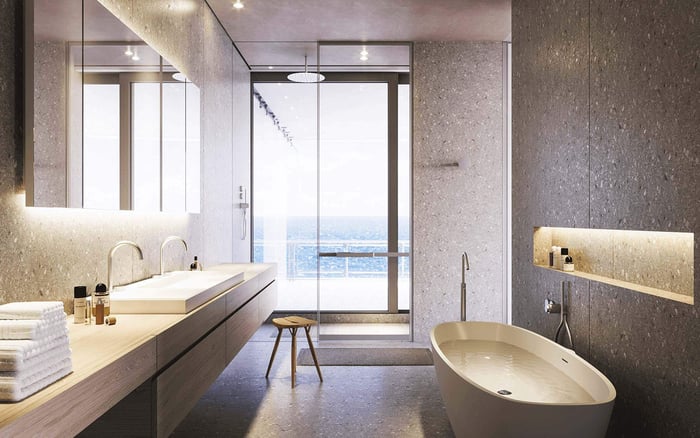
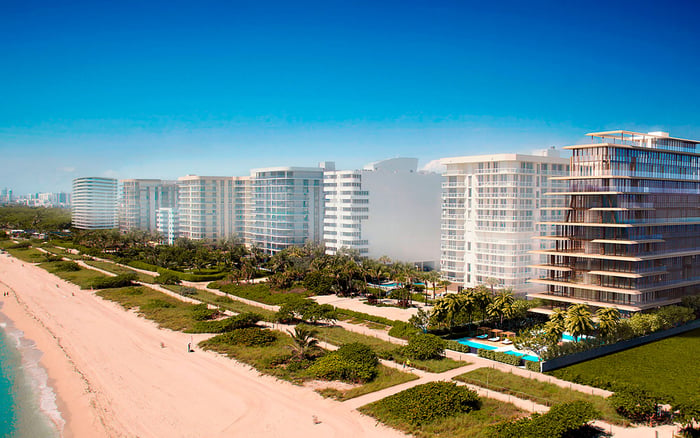
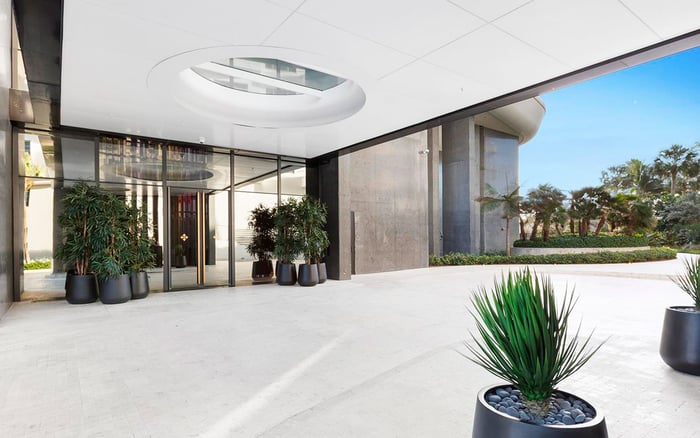
At Faena House, scarcity can support a premium, but it can also obscure the evidence needed to justify one. A disciplined 2026 buyer should isolate the value of floor, exposure, condition, terrace utility and interior area, then test the result against closed sales and the condominium association’s financial position.
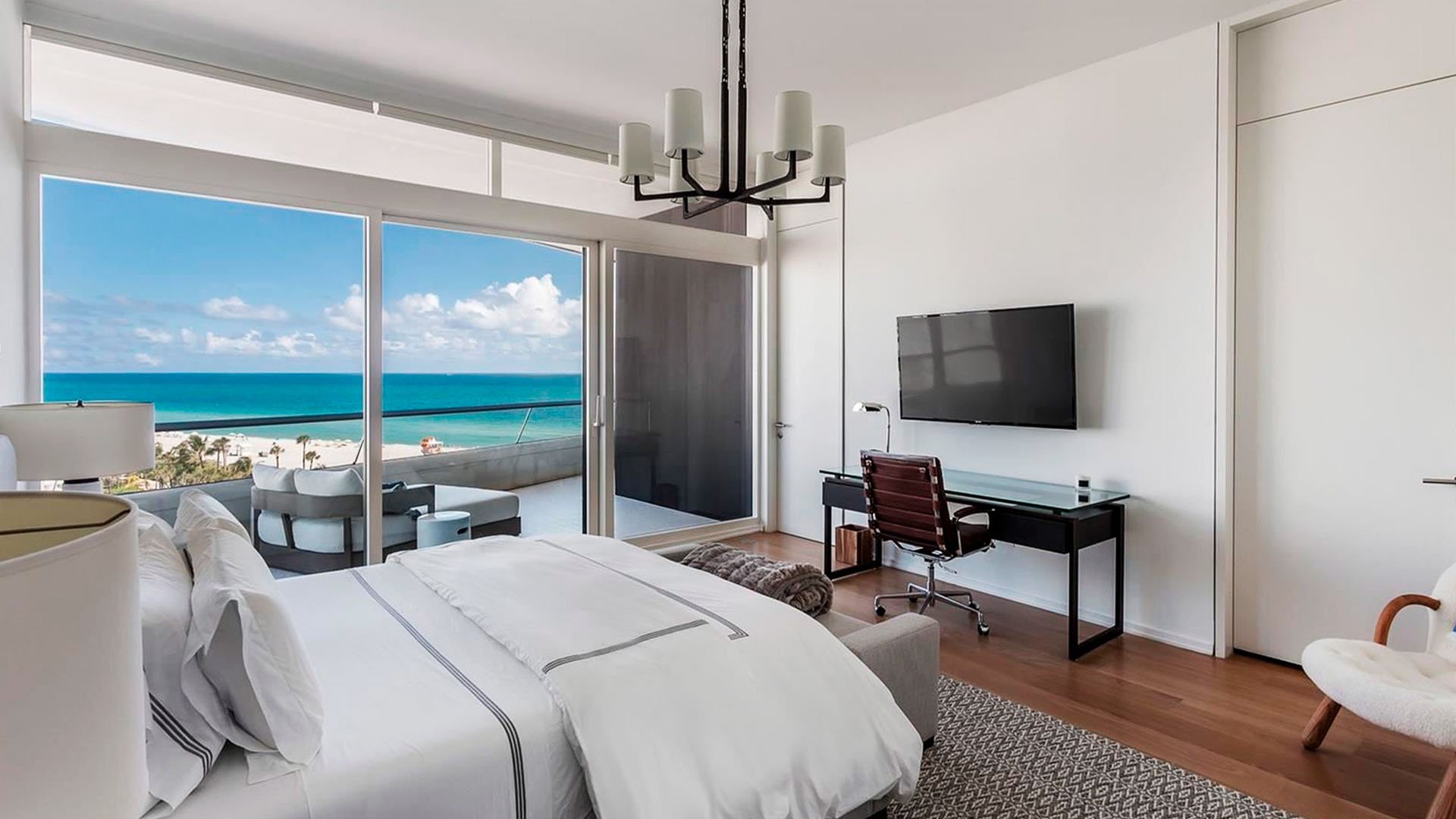
Faena House Miami Beach occupies an oceanfront address at 3315 Collins Avenue in Mid-Beach. Completed in 2015 and limited to 47 residences, the building pairs a recognizable location with an unusually thin pool of internal comparables. That scarcity contributes to its appeal, but it also complicates the price discovery essential to a disciplined resale purchase.
An April 2026 snapshot showed no units listed for sale and an average sale price of approximately $7.07 million. Both figures require context. The absence of inventory reflected a moment in time, not a permanent condition, while a building-wide average cannot establish what buyers have historically paid for a particular line.
The broader indicative range is equally expansive: approximately $3 million to more than $25 million, with pricing around $2,000 to $3,500 per square foot. That breadth makes one conclusion unavoidable: a buyer should not infer a line premium from the building name, a single asking price or a generalized average.
For MILLION readers, this is as much a Buyer's Guides question as a Pricing & Trends question. The central task is to separate the residence’s durable value from the emotional value assigned to scarcity at the moment of negotiation.
Begin with historical closed sales inside Faena House Miami Beach. Give the greatest weight to residences that most closely match the target in floor, exposure, condition, interior square footage and terrace utility. If an exact match does not exist, make every adjustment explicit rather than allowing several differences to disappear into a single price-per-square-foot figure.
Evaluate floor and exposure together. A higher residence may warrant more than a lower one, but only if the experience and eventual resale audience justify the increment. Condition also matters: renovated and unrenovated homes do not carry the same near-term capital requirements. Terrace area likewise deserves a utility test. Buyers should assess how usable the outdoor space is, not merely how prominently it figures in the total footprint.
Request a sequence of closed transactions rather than relying on one convenient comp. Record the contract and closing chronology, physical differences and price per interior square foot. A premium gains credibility when it recurs across multiple transactions. If the evidence is inconsistent, treat the premium as negotiable rather than structural.
Evaluate oceanfront ownership through the condominium association’s financial position before aesthetics dominate the decision. Review the association financials, applicable budgets, reserves, known obligations and structural-inspection status. The objective is not simply to confirm current monthly costs, but to identify potential expenses that could change the effective acquisition price or weaken the property’s resale profile.
Florida’s post-Surfside structural-inspection framework can expose condominium owners to special assessments. The premium assigned to a preferred line should therefore be reconciled with any association obligations that may increase carrying costs. A visually superior residence can still be less compelling if the buyer has not accounted for building-level liabilities.
The cleanest analysis combines three figures: the negotiated purchase price, foreseeable unit-level expenditure and reasonably identifiable association costs. This all-in basis provides a more useful comparison than the contract price alone.
Internal sales should remain the primary evidence, but nearby alternatives can clarify the opportunity cost of paying an exceptional premium. A buyer may compare the asking basis with established options such as 57 Ocean Miami Beach and Setai Residences Miami Beach, while also considering a different purchase proposition at The Perigon Miami Beach.
These references should not be merged into a single, undifferentiated comp set. They are more useful as a capital-allocation check: what other Miami Beach residence could the same total basis secure, and which ownership proposition is more likely to retain a deep buyer audience at resale?
A prudent offer should define, internally if not formally, how much of the price reflects interior area, floor, exposure, condition and terrace utility. This framework helps prevent the buyer from paying twice for the same attribute-first through a high per-square-foot basis, then through an additional unsupported premium.
Because availability can change quickly, verify active inventory when preparing the offer. Do not treat the April 2026 zero-inventory snapshot as current without confirmation. If another residence appears, it may alter the negotiating context even if it is not in the same line.
Finally, reverse the analysis. Imagine marketing the residence several years later. Which closed sales would a future buyer use? What carrying costs would be visible? How readily could the premium be explained? The strongest acquisition is not merely the residence with the best view. It is the one whose distinction can be demonstrated when the market is less scarce.
Where is Faena House located? It is an oceanfront condominium at 3315 Collins Avenue in Miami Beach’s Mid-Beach neighborhood.
When was Faena House completed? The building was completed in 2015.
How many residences are in Faena House? Faena House contains 47 residences, limiting the number of closely matched internal sales.
What did the April 2026 inventory snapshot show? It showed no Faena House units listed for sale, but availability must be verified when an offer is made.
What was the approximate average sale price in that snapshot? The April 2026 snapshot indicated an average sale price of approximately $7.07 million.
What is the indicative building price range? The 2026 indicative range was approximately $3 million to more than $25 million.
What price-per-square-foot range should buyers consider? An indicative range of approximately $2,000 to $3,500 per square foot provides context, not a substitute for line-specific analysis.
Which attributes matter most when testing a line premium? Compare floor, exposure, condition, terrace utility and interior square footage against similar closed sales.
Why review association financials before offering? Funding, inspection status and potential obligations can materially affect carrying costs and the all-in acquisition basis.
Can broad market comparables justify a Faena House premium? They can frame opportunity cost, but historical internal sales generally provide stronger evidence for a particular line.
For a confidential assessment and a building-by-building shortlist, connect with MILLION.
If branded residences are on your mind — as a home or as an allocation — we would be glad to share what we are seeing, privately.
Begin a quiet conversation