ONE Park Tower’s advertised wellness amenities offer a compelling residential proposition. Long-term buyers should distinguish the physical spaces from unresolved operating details, including capacity, guest eligibility, outside-practitioner access, and lagoon privileges.
For a long-term owner, residential wellness is less about the number of spaces than the ease of using them. A morning workout, a visiting therapist, or an afternoon swim with family matters when access fits everyday life. At One Park Tower by Turnberry North Miami, the advertised amenity collection makes those questions particularly relevant.
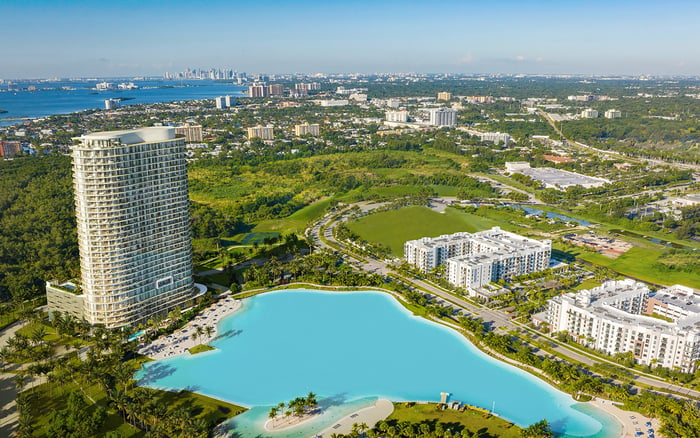
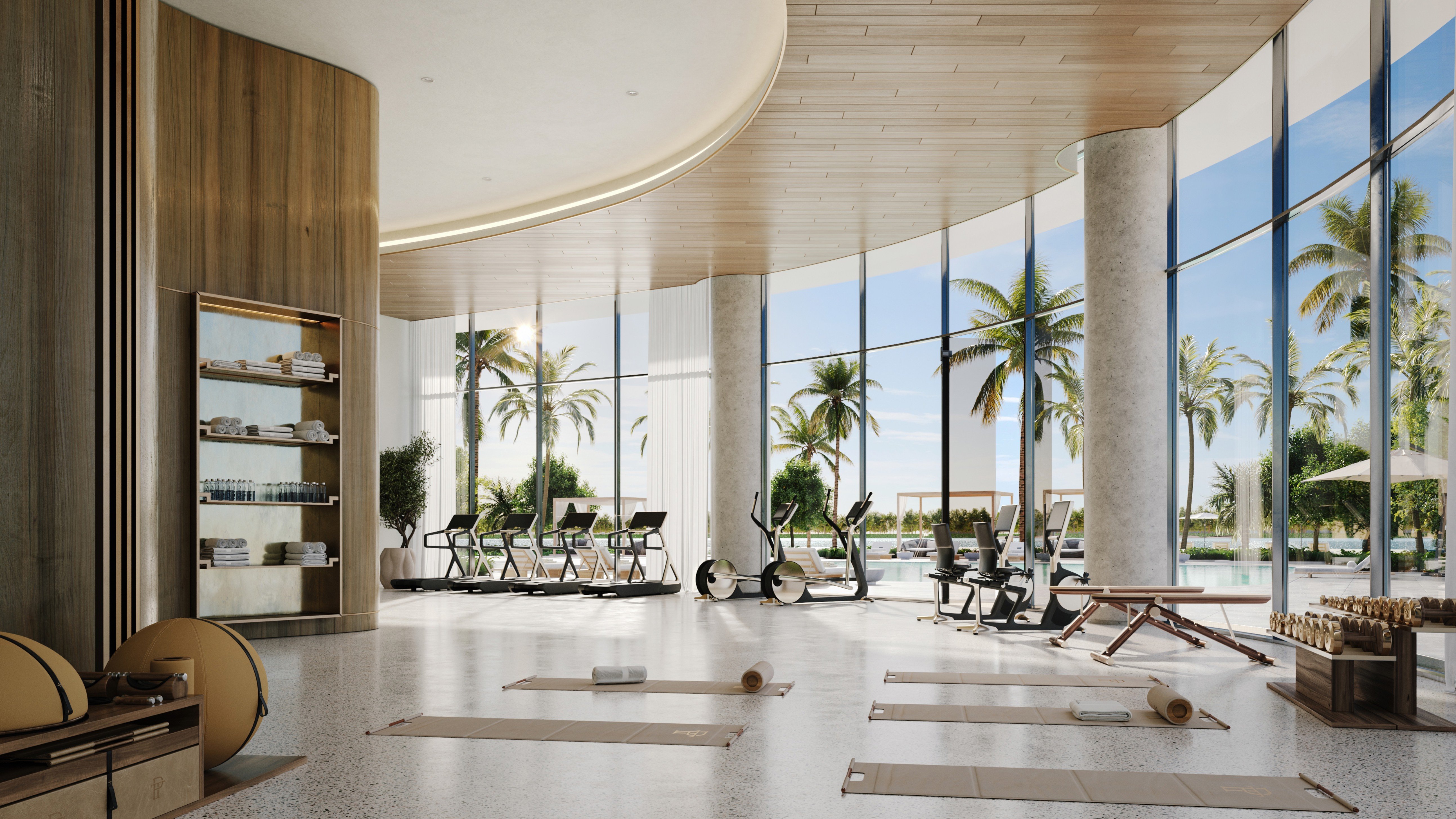
The project sits within SoLé Mia, a 184-acre North Miami community between Biscayne Boulevard and Biscayne Bay, alongside Oleta River State Park. Its advertised fitness center includes dedicated yoga, spin, and Pilates studios. Men’s and women’s spas are advertised with dedicated massage treatment rooms, sauna, and steam facilities. The sixth-floor social deck is described with a pool, spa features, and outdoor gathering areas; recreation offerings also include pickleball courts.
These are compelling physical attributes, but they do not fully define the ownership experience. The available amenity descriptions do not establish final operating rules, current opening status, or guaranteed service levels. Buyers should distinguish the spaces offered from the conditions governing their use.
More than 60,000 square feet of amenities are described for the project, encompassing fitness and wellness facilities, spa, resort-style pool, pickleball courts, and walking trails. That figure conveys breadth, but it does not establish how many residents can comfortably use any one facility at a time.
The available amenity descriptions do not specify maximum occupancy for the fitness center, studios, spa, treatment rooms, or pool. Nor do they establish resident-to-equipment ratios, class-size limits, treatment-room counts, or maximum simultaneous users. Without those details, buyers cannot translate total amenity area into predictable availability.
Request both formal occupancy limits and the proposed reservation framework. Ask whether studio attendance is capped, equipment use has time limits, and treatment rooms can be booked independently of a service appointment. For the pool, clarify how guest attendance is counted and maintenance closures are communicated.
The most useful exercise is personal: describe when you expect to exercise, how often you anticipate treatments, and how many household members would typically attend. Ask management to explain how that routine would work under the proposed rules, rather than relying on a general assurance that facilities are available to residents.
A dedicated studio is not the same as a dependable class program. Yoga, Pilates, and spinning classes are described as “planned,” not as a guaranteed operating schedule. The available descriptions do not establish class frequency, instructor staffing, reservation procedures, or treatment-room booking rules. Definitive fitness-center, spa, and pool hours are also not provided.
Request written answers that separate physical access from staffed services. A studio might be accessible when instruction is unavailable; whether that will be the arrangement here remains unresolved. Ask about booking windows, recurring reservations, cancellations, waitlists, and any charges beyond ownership expenses.
A buyer also considering The Well Bay Harbor Islands can apply the same discipline: compare documented operating commitments rather than assuming an amenity description establishes a service standard. This is a due-diligence framework, not a claim that either property has equivalent facilities or rules.
Ownership and access are related, but the available access details do not establish wellness eligibility for guests, tenants, family members, domestic staff, or practitioners accompanying residents. Detailed guest quotas, blackout periods, and suspension rights are likewise not disclosed.
For an owner who entertains or hosts extended family, these distinctions matter. Ask whether overnight visitors and day guests are treated differently, whether children have age-specific access, and whether a resident must remain present. Clarify whether allowances apply per residence, per owner, or per registered occupant, without presuming any particular arrangement exists.
Owners contemplating a lease should separately request tenant-registration requirements and written confirmation of amenity eligibility during the tenancy. Ask whether an owner retains any access while a tenant occupies the residence. The answer should address each facility, not simply building privileges in general.
Buyers comparing North Miami with Sunny Isles Beach, including Turnberry Ocean Club Sunny Isles, should bring the same household scenarios to each review. Compare the answers in writing; a shared name or regional proximity does not establish shared access policies.
A massage treatment room does not establish permission to bring a preferred massage therapist. Nor does a fitness center establish permission for an outside personal trainer, physical therapist, nutritionist, or yoga instructor to work there. Whether those practitioners may enter the building or use its wellness facilities remains unspecified in the available access details.
The operating model for the massage rooms is also unresolved. It is not established whether services will be managed by an in-house spa, an outside operator, independent practitioners, or the condominium association.
Request separate answers for appointments inside a private residence and sessions in shared amenities. Ask about licensing, insurance, management registration, resident accompaniment, advance approval, and any practitioner fees. These are questions to resolve, not confirmed requirements. Buyers with an established care team should also ask whether recurring appointments need repeated authorization and whether any operator has exclusive service rights.
Advertised access includes ONE Laguna Beach Club, associated with a seven-acre lagoon. Intended resident access to Laguna Solé and a dedicated lagoon-front beach with umbrellas and beach chairs is also described. These advertised experiences should not be treated as interchangeable with condominium pool access.
The available access details do not establish whether lagoon privileges cover every occupant or require registration, guest passes, or separate club-operator approval. Request any lagoon or club-access agreement, and clarify which entity controls eligibility, hours, fees, guest allowances, and restrictions.
For a household expecting regular beach visits with children or visitors, ask for an explicit explanation of how that scenario would work. Keep lagoon privileges separate from fitness, spa, and pool permissions throughout the review.
Before committing, assemble the declaration, association rules, amenity policies, purchase-contract exhibits, tenant-registration requirements, and any separate lagoon or club agreement. Have counsel reconcile written answers with the governing documents, particularly where a preferred routine depends on access or staffing.
Ask who may change hours, eligibility, reservation priorities, fees, and practitioner policies, and what notice owners would receive. Seek clarity on maintenance closures and suspension provisions as well. Missing marketing detail proves neither permission nor prohibition; the objective is to replace assumptions with documented terms.
The enduring appeal is the possibility of making wellness part of daily residential life. The purchase decision should rest on how convincingly the written operating framework supports that possibility for your household.
For a discreet perspective on South Florida ownership and buyer due diligence, explore MILLION.
If branded residences are on your mind — as a home or as an allocation — we would be glad to share what we are seeing, privately.
Begin a quiet conversationThe advertised offerings include a fitness center with yoga, spin, and Pilates studios, plus men’s and women’s spas with massage treatment rooms, sauna, and steam facilities.
The classes are described as planned. The reviewed descriptions do not establish a guaranteed schedule, frequency, or instructor staffing.
The reviewed materials do not specify maximum occupancy, class-size limits, treatment-room counts, or resident-to-equipment ratios.
Definitive fitness-center, spa, and pool hours are not established. Buyers should request written operating hours and distinguish facility access from staffed services.
Guest eligibility and detailed allowances are unresolved in the reviewed materials. Request facility-specific rules covering day visitors, overnight guests, accompaniment, and children.
The reviewed official materials do not establish tenant eligibility. Buyers should request tenant-registration requirements and clarify both tenant and owner access during a lease.
The reviewed materials do not establish permission or prohibition. Ask separately about appointments in a private residence and use of shared wellness facilities.
The reviewed descriptions do not identify whether an in-house spa, outside operator, independent practitioners, or the condominium association will manage them.
That scope is not established in the reviewed materials. Request any separate club agreement and clarify registration, guest passes, and operator approval.
Review the declaration, association rules, amenity policies, purchase-contract exhibits, tenant-registration requirements, and any lagoon or club agreement. Ask counsel to reconcile written access answers with those documents.