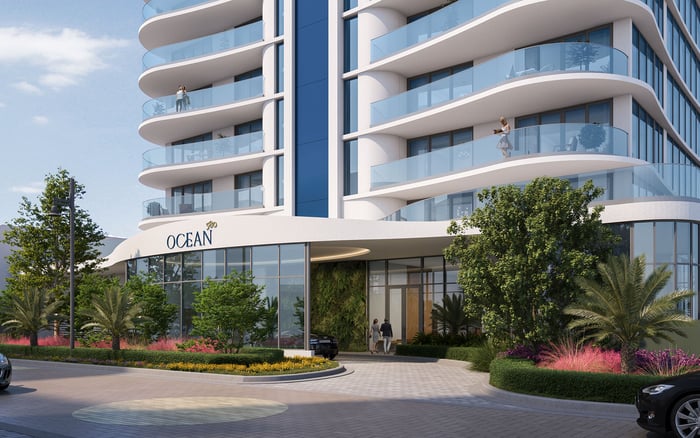
A considered approach to long-term ownership at Auberge Beach, separating listing-level fee information from assessment obligations and framing seller credits and escrow holdbacks as matters for transaction-specific negotiation.

At Auberge Beach Residences & Spa Fort Lauderdale, the lifestyle proposition is tangible: a five-acre beachfront setting, 450 linear feet of Fort Lauderdale Beach frontage, and advertised amenities that include pools, a spa, fitness facilities, and beach services. The address is 2200 N. Ocean Blvd., Fort Lauderdale, FL 33305.
For a buyer planning to hold a residence for many years, the acquisition warrants a conversation beyond outlook, layout, and service. What are the recurring ownership costs? Which separate capital obligations have been approved? If an expense remains unresolved at closing, how should buyer and seller address it?
These are distinct questions. A monthly association charge is not a special-assessment schedule, and a listing field is not an association certification. The aim is not to assume a problem exists, but to make the financial terms as deliberate as the choice of residence.
Individual residences carry separate North and South condominium designations in their legal descriptions. N703 is identified as “2200 Fort Lauderdale Beach North Condo,” while S1802 is identified as “2200 Fort Lauderdale Beach South Condo.” That distinction merits attention before a buyer treats Auberge as a single, uniform financial proposition.
Ask counsel and management which governing documents, budgets, and obligations apply to the residence. The condominium names alone do not establish how expenses are allocated, whether an obligation is shared, or whether a charge affecting one residence also affects another.
For a buyer also considering Four Seasons Hotel & Private Residences Fort Lauderdale, the same discipline provides a useful comparison framework: evaluate each residence against its own documents. A shared city or branded identity does not imply comparable obligations.
The available monthly fee snapshots illustrate why precision matters: approximately $2,790 for N703, $3,274 for S1802, $4,203 for N206, and $6,360 for S1801. These figures reflect different listing dates, not a verified current association fee schedule.
They should not be used to infer a standard charge for either condominium, a percentage increase, or the property's relative financial health. Nor do they establish which services or expense categories each amount includes.
Before setting an ownership budget, request confirmation of the residence’s current recurring charges, their effective dates, and what they cover. Keep any separate assessment on its own line to distinguish ongoing carrying costs from payments tied to a particular approved obligation.
Smaller charges also merit confirmation. N703 carries the entry “Membership Fee Required: No,” while S1801 has a listed application fee of $100. Neither entry establishes a property-wide promise about membership, applications, or transaction costs.
For S1604/1605, the “Special Assessment” field reads “No” in a record updated July 23, 2026. The same field reads “No” for S1802 in a record dated July 25, 2026. These are unit-specific listing statements, not association certification or assurance that no future assessment is contemplated.
An official building-wide or condominium-specific schedule for 2026 onward is not established here. Buyers should not treat installment amounts, payment dates, or a zero-assessment position as settled without current written confirmation.
A focused document request should ask whether an assessment has been approved, what it funds, which condominium or residences it affects, and how much is allocated to the subject unit. If installments exist, request the payment calendar and the unit’s paid and unpaid balance. Separately, ask about proposed expenditures that have not yet become approved obligations.
For long-term context, request the applicable budget, reserve information, structural reserve study, and any assessment resolution. These are matters for transaction-specific review, not assertions about Auberge’s reserves or capital needs. Keep the distinction between an approved obligation and a possible future expense clear throughout negotiations.
No Auberge-specific seller-credit policy or actual negotiated resale credit is established here. Discuss a credit as a possible transaction term, not an entitlement or customary concession.
Start with a precise question: what identified cost would the proposed credit address? An approved unpaid assessment, an upcoming installment, and uncertainty about a future project are not interchangeable negotiating subjects.
Ask counsel to distinguish the proposed financial adjustment between buyer and seller from the obligation owed to the association. A credit, by itself, should not be assumed to settle who must make a later payment. Review the purchase agreement for that separate question.
If financing is involved, discuss the proposed treatment with the lender and closing team before relying on it. The goal is a documented amount, purpose, and allocation of responsibility-not a loosely worded assurance that the seller will “take care of” an expense.
An escrow holdback is another structure to explore with counsel when a defined issue remains unresolved. No Auberge-specific holdback policy, approved form, or completed transaction structure is established here, and availability should not be assumed.
Rather than choosing an arbitrary amount, ask what exposure the proposed holdback would address and what evidence supports that figure. Who would hold the funds? Which payment or event would permit disbursement? What documentation would be needed to release any remainder?
Address timing and disagreement as well. What happens if the matter remains unresolved at the proposed deadline, the eventual expense differs from expectations, or the parties disagree about release? Have counsel explain any exposure outside the holdback; retained funds should not be treated as automatic protection against every later cost.
These are negotiation questions, not statements of Florida legal requirements or established Auberge practice. A clearly defined unresolved issue is more useful than a broad promise to cover unspecified future assessments.
A buyer also exploring Shell Bay by Auberge Hallandale should carry over the questions, not the answers. A shared brand reference does not establish common fees, assessment exposure, or closing arrangements.
At Auberge Beach, the decision framework is straightforward: identify the condominium, confirm current charges, establish any approved assessment schedule, and ask counsel to translate negotiated responsibility into clear terms. Long-term ownership is easier to evaluate when known costs remain separate from unresolved questions.
For a discreet conversation about your South Florida residential search, connect with MILLION.
If branded residences are on your mind — as a home or as an allocation — we would be glad to share what we are seeing, privately.
Begin a quiet conversationThe property is at 2200 N. Ocean Blvd., Fort Lauderdale, FL 33305, on a five-acre beachfront site with 450 linear feet of beach frontage.
Advertised amenities include pools, spa, fitness facilities, and beach services. Buyers should confirm what their residence’s current charges cover.
N703’s legal description identifies 2200 Fort Lauderdale Beach North Condo, while S1802’s identifies 2200 Fort Lauderdale Beach South Condo. Buyers should confirm the documents and obligations applicable to their residence.
The snapshots show approximately $2,790 for N703, $3,274 for S1802, $4,203 for N206, and $6,360 for S1801. These are unit-specific figures from different dates, not a verified current fee schedule.
An official building-wide or condominium-specific schedule is not established here. Request current written confirmation of any approved assessment, unit allocation, and payment dates.
No. That field appears in the identified S1604/1605 and S1802 listing records, but it is not association certification or assurance about future assessments.
Consider requesting the applicable budget, reserve information, structural reserve study, and any assessment resolution. For an approved assessment, also request the unit balance and installment calendar.
No Auberge-specific seller-credit policy is established here. Discuss a proposed credit as a transaction-specific term with counsel, including its purpose and the separate allocation of payment responsibility.
Ask about the defined exposure, funding amount, fund holder, disbursement evidence, release conditions, and unresolved disputes. No Auberge-specific holdback policy or approved structure is established here.
Uniform charges are not established here. N703’s listing states Membership Fee Required: No, while S1801’s listing identifies a $100 application fee; confirm the terms for the residence being purchased.