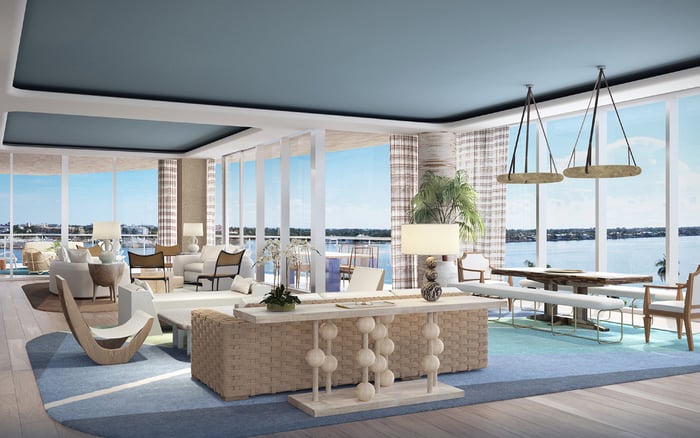
A discreet West Palm Beach retreat depends on more than its interiors. Evaluate arrival routes, retail servicing, event restrictions, and written management procedures before choosing a part-time residence.

For a part-time owner in West Palm Beach, the most persuasive luxury is a home that feels effortless on return. Beautiful interiors matter, but so does the sequence from street to front door: where the car stops, who shares the entrance, how luggage moves upstairs, and what happens when the neighborhood hosts an event.
Mixed-use living deserves neither an automatic premium nor an automatic discount. The question is whether residential routines remain distinct from commercial activity. A nearby restaurant and one that shares service infrastructure with residences raise different questions. Investigate the arrangement rather than relying on the address alone.
For buyers considering Mr. C Residences West Palm Beach, begin with that practical brief. Request building-specific plans and operating procedures before drawing conclusions about circulation or privacy. Public street conditions cannot establish how a particular property manages resident access.
Before arriving, check current road and dock access notices for your planned route. Review whether downtown events, markets, construction, or other activities will affect traffic patterns, parking, or access to the residence, and allow additional time where needed.
Evaluate the full staging, setup, event, and breakdown window-not just the advertised entertainment hours. Ask management whether any restrictions affect resident arrivals, guest parking, or scheduled deliveries. Do not assume that arrangements from an earlier visit still apply.
For each candidate residence, map both an ordinary arrival route and an alternative. Confirm whether the alternative reaches the residential entrance, the garage, or only a nearby curb.
Ask for a circulation plan and trace five journeys: an owner arriving with luggage, a guest visiting for dinner, a retail customer, a commercial vendor, and a residential delivery. Mark every shared doorway, corridor, elevator, parking area, and loading point. This exercise should reveal where access is separated and where management must actively control overlap.
A private-looking lobby is not enough. Ask whether retail customers can enter residential circulation, how vendors receive authorization, and whether service access changes outside staffed hours. Where elevators or loading areas are shared, request scheduling and access rules rather than accepting a general assurance of separation.
Use the same questions when evaluating Alba West Palm Beach or another shortlisted property, without assuming it contains retail or shares facilities. The purpose is to assess each building's actual configuration on comparable terms, not to judge it by branding or architectural presentation.
Evaluate a part-time residence as carefully for the days its owner is absent as for the days it is occupied. Obtain written loading hours, freight-elevator procedures, vendor-access rules, valet protocols, package policies, and event-related delivery restrictions.
Test those rules against realistic situations. Ask how management would handle a furniture delivery during a street closure, a perishable package before your arrival, or a service appointment while you are away. Confirm who authorizes access and who communicates a failed or rescheduled delivery. These are questions to resolve, not services to presume.
Where commercial space is involved, ask the association which governing documents address retail hours, loading rights, service access, noise, and shared expenses. Have your adviser distinguish an operating practice from a right or restriction established in those documents. An attractive current arrangement is more useful when you understand what governs it-and how it can change.
For a residence along Flagler Drive, review the specific route you expect to use rather than drawing a blanket conclusion about waterfront access. Check for both event restrictions and transportation work; an event calendar alone should not be your arrival plan.
If Forté on Flagler West Palm Beach is on your shortlist, request an explanation of how you would reach its entrance during any relevant restriction. Do not infer a building-level disruption simply because a corridor appears in a closure notice.
If your routines include Palm Beach, check connecting routes as part of the same review. For any waterfront alternative, confirm current dock access and applicable safety restrictions rather than treating a familiar road or dock as an assured fallback.
Visit during a weekday morning, an evening, and a public event. Repeat the curb-to-unit journey rather than limiting each visit to the residence itself. Observe where vehicles queue, where vendors wait, and whether guests can identify the correct entrance without entering service areas.
Inside the actual unit, assess exposure to loading areas, restaurant servicing, headlights, and public gathering spaces. Listen from the rooms where you expect to sleep or work. A quiet showing at one hour does not establish conditions across a full day, and neighborhood closure information says nothing about sound insulation.
Apply this unit-level review to Shorecrest Flagler Drive West Palm Beach as you would to any alternative. If direct observation is not possible, keep the question open and request relevant plans and written specifications. Neither a rendering nor a general privacy claim replaces that assessment.
Before committing, ask how management communicates closures, alternate entrances, guest-parking changes, and waterfront restrictions. Confirm who receives notices while you are away and which contact handles an arrival problem after hours. If a household representative coordinates visits, establish whether that person can receive the same operational updates.
Create a concise comparison sheet for each residence: ordinary arrival route, event-day alternative, shared circulation points, delivery rules, unit exposure, and unresolved questions. Favor documented answers over verbal reassurance. Distinguish what you observed from what remains to be confirmed.
The objective is not to eliminate the life of the neighborhood. It is to choose a home whose boundaries and operating rules let you enjoy that activity on your own terms, with a clear plan for returning quietly.
Explore your West Palm Beach residential options with MILLION.
If branded residences are on your mind — as a home or as an allocation — we would be glad to share what we are seeing, privately.
Begin a quiet conversationTrace the journey from the street to the unit, including parking, luggage handling, and entrance access. Then identify where residents share circulation with guests, retail customers, or vendors.
No conclusion follows from the neighborhood alone. Review the building's actual entrance, elevator, parking, and vendor-access arrangements.
Check current notices before traveling and review any restrictions affecting the planned arrival route. Do not rely on conditions from an earlier visit.
Confirm whether it reaches the residential entrance, the garage, or only a nearby curb. Ask management how residents should enter during any relevant restriction.
Access restrictions can include staging, setup, and breakdown outside the advertised event hours. Review the full restriction window when planning arrivals and deliveries.
Request loading hours, freight-elevator procedures, vendor-access rules, valet protocols, package policies, and event-related delivery restrictions in writing.
Ask which governing documents address retail hours, service access, noise, loading rights, and shared expenses. Clarify the difference between current operating practices and documented rights or restrictions.
Visit during a weekday morning, an evening, and a public event. Assess the actual unit's exposure to servicing, headlights, loading activity, and gathering spaces.
Not without checking current access conditions. Confirm any road or dock restrictions and applicable safety rules before relying on that alternative.
Confirm how management sends closure notices, alternate-entry instructions, guest-parking changes, and waterfront updates. Establish an after-hours contact and whether an authorized household representative can receive notices.