A considered second home begins with a precise understanding of space. Learn to separate marketed dimensions from appraisal area, test furnished layouts and align seasonal occupancy with the right permissions and budget in Sunny Isles Beach.
A part-time home in Sunny Isles Beach should make arrival feel effortless. Yet no single square-foot figure captures how well a residence works. A generous marketing total, an appraiser’s adopted area and a furnished room’s usable footprint answer different questions. Understanding those distinctions is essential before comparing prices or committing to a season by the ocean.
The objective is not to find one universally correct number. It is to understand what each number includes, then determine whether the residence accommodates your life. For a seasonal household, luggage storage, visiting guests, a place to work and comfortable circulation deserve as much scrutiny as the view.
Create a simple comparison sheet for each residence. Keep brochure interior area, balcony or terrace area, marketing total, county-recorded area and the appraiser’s adopted area in separate fields. Leave unknown fields unresolved rather than substituting another available figure.
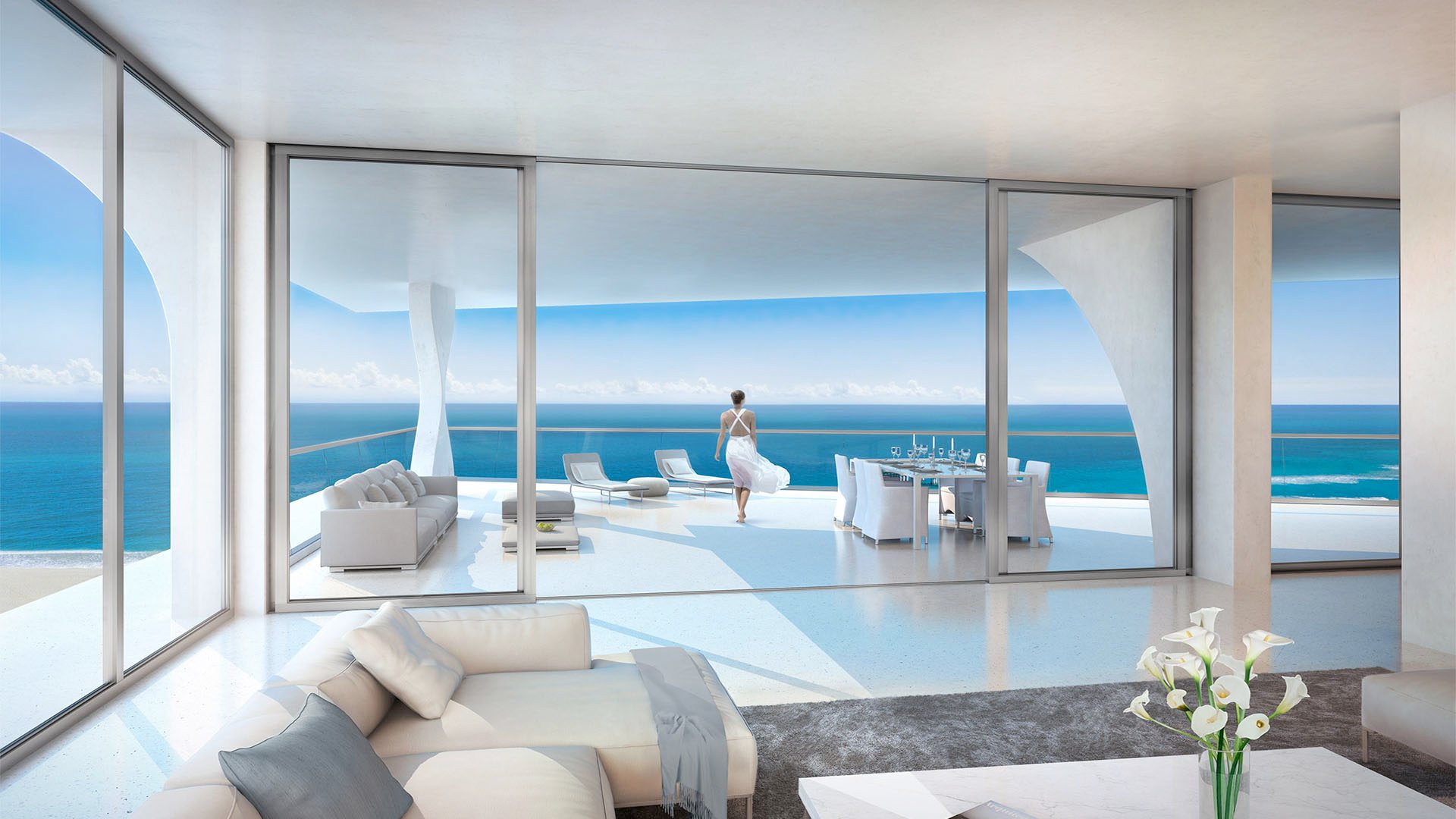
At Jade Signature Sunny Isles Beach, Residence 1701, Model A1S, illustrates the distinction: 3,412 square feet of interior space, 867 square feet outdoors and 4,279 square feet total. That total combines two different categories of space. Comparing it directly with another residence’s interior-only figure would distort the comparison before layout or finishes enter the discussion.
Apply the same discipline to price per square foot. Label the denominator explicitly and use comparable area definitions wherever possible. A calculation based on marketed total area is not interchangeable with one based on recorded interior area. A seemingly lower ratio should not settle a purchase decision when the underlying measurement remains unclear.
At Regalia Sunny Isles Beach, the figures for a typical full-floor residence distinguish 4,992 square feet of county-recorded building area from 5,515 square feet of marketed interior area. The difference reflects measurement conventions. It should prompt questions about definitions, not an automatic conclusion that either figure indicates missing space.
The Beach House offers another example: 8,446 square feet on the county roll versus 9,515 square feet of marketed interior area. These comparisons are residence-specific, not a basis for applying a standard adjustment across the building or neighborhood.
Request the detailed floor plan, its measurement definitions and a written explanation of how walls, structural elements and outdoor areas are treated. Ask your transaction team to reconcile the figures for the exact unit under consideration. Preserve the original labels in your comparison sheet rather than renaming every figure “living area.”
Public listing fields do not establish the area a lender’s appraiser will adopt. For Regalia Unit 16, the structure-area and interior-livable-area fields both display 4,992 square feet. Those labels and matching values do not reveal an appraiser’s measurement approach or valuation reasoning.
For a financed purchase, ask the lender and appraiser which area is being used, how it was established and how differences from the marketing materials are addressed. Seek clarification through the appropriate transaction channels before relying on a price-per-square-foot comparison.
Do not assume that a universal paint-to-paint convention or a mandatory measurement standard applies to every condominium discussed here. Nor should you predict a valuation shortfall simply because the adopted area is smaller than the brochure figure. The discrepancy requires explanation; on its own, it does not establish a valuation outcome.
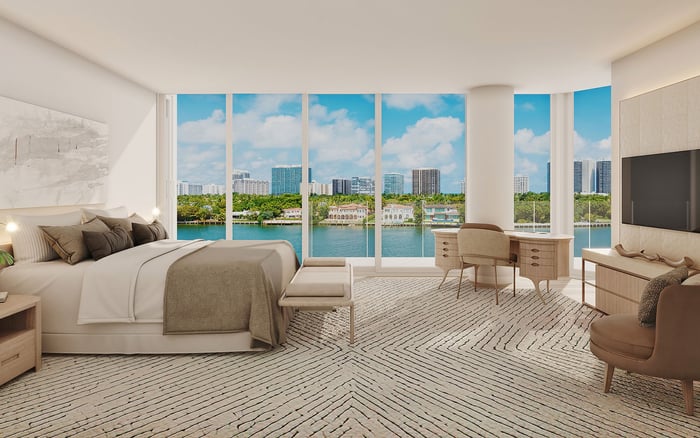
Interior area is not synonymous with floor area usable for furniture. Before committing, arrange a measured walkthrough with the actual furniture inventory or a scaled furnishing plan. Treat photography as an introduction, not a clearance test.
Walk through the residence as you would use it. Can bedside tables stay in place while you unpack luggage? Can dining chairs pull out without blocking the route to the terrace? Does a desk remain functional when guests occupy the second bedroom? Check doors, drawers and closets with adjacent furniture in position.
Storage deserves particular attention when personal belongings remain between visits. Confirm which storage is available for your use, and distinguish furniture included in the transaction from pieces shown only for presentation. No room-by-room measurements or furniture inventories establish these answers for the example residences. Each requires its own inspection.
Outdoor square footage deserves its own usability test. Sketch your intended seating and dining arrangement, then check circulation and door access against measured dimensions. The question is not simply how much outdoor area exists, but whether its configuration supports the way you intend to spend time there.
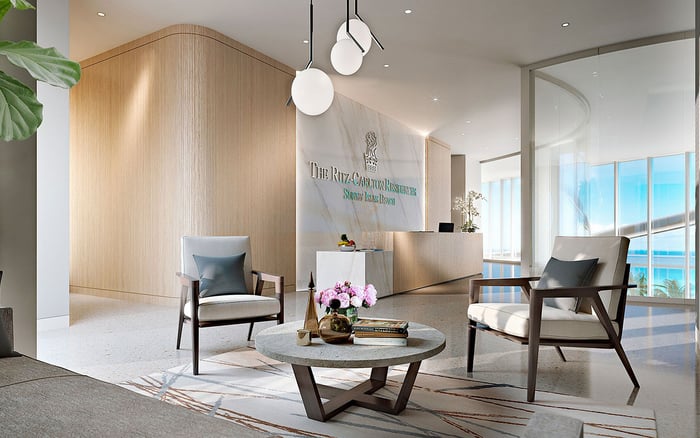
Services belong in a separate column as well. The Ritz-Carlton Residences® Sunny Isles offers facilities and services including pools, spa, fitness and beach service. For a part-time buyer, these may matter alongside private space. Confirm access and inclusions for the particular residence and occupancy arrangement rather than treating amenities as additional private square footage.
Furnished does not necessarily mean available for your preferred lease term. Sunny Isles Beach furnished apartments and condos are marketed for one- to six-month stays, and 19201 Collins Avenue, Unit 230, is advertised with renewable four- to six-month seasonal leases. Neither establishes building-wide permission elsewhere.
Before planning occupancy or rental income between visits, confirm minimum lease duration, annual lease limits and any hotel-program restrictions in the applicable documents. Have your proposed dates and renewal terms checked against those requirements.
In a September 21, 2026 rental snapshot spanning 767 homes and condos, 75% were furnished, while only 8% explicitly welcomed seasonal or snowbird tenants. That distinction concerns advertising; it is not a definitive count of properties legally available for seasonal use.
Use market benchmarks as context, not quotations. The same rental snapshot had a $5,300 median monthly asking rent. A separate September 2026 furnished inventory of 198 listings had a $5,675 median asking rent. Different inventories should not be averaged into a supposed market price for an ultra-premium residence.
For ownership, the median association fee in September 2026 was $1.18 per square foot monthly across 955 retained condo listings with at least 300 square feet of recorded living area. Applied to 2,000 square feet, that produces an illustrative $2,360 monthly fee-not a building-specific assessment or an all-in ownership budget.
Obtain the actual charges for the residence. For tenants, check the lease rather than automatically adding association fees to advertised rent. The strongest decision aligns documented area, furnished usability, permitted occupancy and the appropriate budget, without asking one headline number to stand in for all four.
For a considered approach to your Sunny Isles Beach second home, explore MILLION.
If branded residences are on your mind — as a home or as an allocation — we would be glad to share what we are seeing, privately.
Begin a quiet conversationA marketing total can combine interior and outdoor areas. Jade Signature Residence 1701 lists 3,412 interior square feet and 867 outdoor square feet, totaling 4,279 square feet.
Keep brochure interior area, outdoor area, marketing total, county-recorded area and the appraiser’s adopted area separate. Do not substitute one for another without understanding its definition.
Published figures distinguish 4,992 square feet of county-recorded building area from 5,515 square feet of marketed interior area for a typical full-floor residence, attributing the difference to measurement conventions. The exact unit still requires reconciliation.
No. Identical structure-area and interior-livable-area figures do not establish how a lender’s appraiser will measure or value the residence.
The area discrepancy alone does not establish a valuation outcome. Ask how the adopted area was established and how the difference from marketing materials is addressed.
Label the area used as the denominator and compare figures with consistent definitions wherever possible. A ratio based on marketing total area is not interchangeable with one based on interior-only area.
Arrange a measured walkthrough using the actual furniture inventory or a scaled furnishing plan. Test circulation, storage, door operation and the routines of working, hosting and unpacking.
No. Confirm minimum lease duration, annual lease limits and any hotel-program restrictions in the applicable documents before relying on an advertised seasonal arrangement.
It applies a September 2026 median association-fee benchmark of $1.18 per square foot monthly to a hypothetical 2,000-square-foot condo. It is neither a residence-specific fee nor an all-in ownership budget.
Not automatically. Check the lease to determine which charges are included in rent and which, if any, are separately payable.