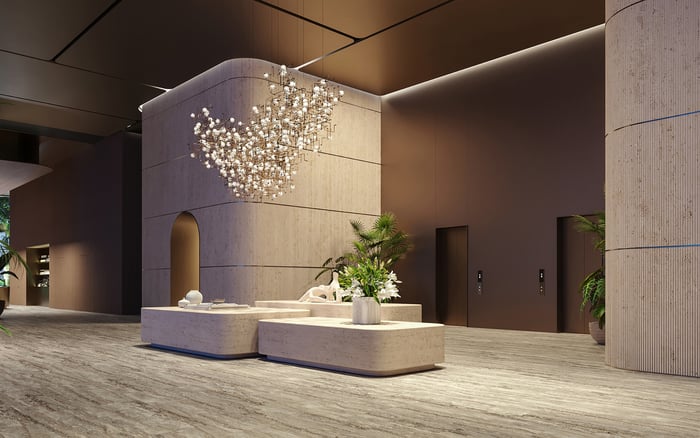
A discreet move from Vancouver to Brickell begins with operational clarity: written access permissions, coordinated security responsibilities, carefully scoped surveillance, and a household privacy plan that respects building boundaries.

For a Vancouver household considering Brickell, a successful relocation is more than a change of address. It is the transfer of a private operating system: the people who enter the residence, the security professionals who accompany the family, and the information exchanged to keep daily life running smoothly. The objective is continuity-not an assumption that familiar arrangements will transfer unchanged.
A residence can be architecturally compelling and still require careful discussion of household operations. When evaluating The Residences at 1428 Brickell, make operational compatibility a distinct diligence exercise, not an inference from the address or presentation. Request written clarification of access permissions, approval responsibilities, and any proposed security installation before committing to arrangements that depend on them.
The essential distinction is between a building's security infrastructure and permission for your people to use it.
Electronically controlled entry does not, by itself, establish whether a housekeeper may enter unaccompanied or a private protection professional may remain in a common area. Evaluate security features separately from household-staff and private-security access rights.
For any shortlisted condominium, propose a written access plan that separates residents, regular household employees, visiting contractors, and security personnel. Ask management which categories require advance approval, what identification is necessary, and whether permissions change when the owner is away. Treat these as questions, not presumed requirements.
Designate one household contact and a backup to communicate with management. A clear approval structure is preferable to several assistants issuing conflicting instructions. Ask who can authorize an exception, how after-hours questions are escalated, and how a disputed arrival should be resolved without confrontation at the entrance.
For a Brickell Key residence, request current island-entry instructions separately from the destination condominium's rules. Ask how incoming deliveries, tow vehicles, household employees, and security vehicles are handled, and who must verify an arrival.
Confirm whether overnight arrivals involve different checks or logging, and whether any vehicle credential is limited to particular users or vehicles. Do not treat a resident's credential as authorization for every employee, contractor, or accompanying vehicle.
For a late arrival or scheduled delivery, confirm both island access, where applicable, and the destination building's instructions. Do not assume that one approval satisfies the other.
When comparing those logistics with a residence such as 2200 Brickell, investigate the property's own arrival and service-access arrangements. The relevant question is how each address accommodates the household's actual schedule-not whether a neighboring property's procedures sound reassuring.
Plan private protection and condominium security as separate responsibilities. Propose a coordination meeting between the household's security lead and building management to clarify permitted activities, points of contact, and escalation paths. Do not presume that a private detail receives exemptions from visitor registration, parking controls, or common-area rules.
A Vancouver credential should not be treated as proof of Florida eligibility. Have qualified advisers confirm applicable Florida licensing and U.S. work-authorization requirements for each proposed role before scheduling personnel to work in Brickell.
The handover should distinguish routine inconvenience from a genuine emergency. Agree on how the household will communicate arrival changes and who will speak for it during an access dispute. Circulate only the operational information each recipient needs, rather than distributing the family's full itinerary for convenience.
Lifestyle continuity depends on ordinary arrivals working as smoothly as the family's own. A chef, housekeeper, personal assistant, and maintenance contractor may require different permissions. Proposed access rosters should identify each person's role, expected attendance, household sponsor, and intended duration of authorization, subject to management's actual procedures.
In discussions concerning Cipriani Residences Brickell, use a realistic household schedule to frame questions about entrances, deliveries, service elevators, and owner-absent access. None of those permissions should be inferred from residential branding or assumed to be interchangeable across towers.
Ask how credentials are issued, replaced, and withdrawn. Propose a household departure checklist for employees and contractors covering returned keys, removal from household systems, and confirmation that management has received any required access change. This is a proposed control, not a verified building policy.
Confidentiality agreements can support discretion, but they do not replace clearly defined permissions or appropriate legal review.
Ask management to explain the scope of common-area surveillance and how privacy concerns are addressed. Do not assume that a resident can direct the association's camera placement or obtain access to its system.
For household monitoring, have qualified Florida counsel review proposed camera locations, fields of view, and privacy implications before installation. Treat video-only monitoring and microphone-enabled recording as separate legal questions. Obtain advice on applicable consent requirements before enabling audio, particularly where staff or visitors may be recorded.
Installation approval is a separate question. Before commissioning security work at a Miami-Dade residence, confirm the specific installation's permit status with the relevant permitting authority and obtain any required association approval. Do not assume that wireless equipment is automatically exempt or that a permit exemption would resolve condominium restrictions.
At Una Residences Brickell or another shortlisted address, request a privacy discussion alongside the access review. Ask what visitor information is collected, who can view entry records or footage, how long records are retained, and how access to those systems is controlled. Do not assume a retention period or a right to receive recordings.
For household-managed information, propose secure communications, limited distribution of rosters, and a process for removing former employees from shared accounts. Seek cross-border legal advice before transferring Canadian personnel files or other sensitive personal data to U.S. recipients. Building registration and cross-border data compliance are separate issues.
Before arrival, reconcile the household plan with written management responses and unresolved legal questions. The most discreet outcome is not unrestricted access, but agreed boundaries that allow daily life to proceed without improvisation.
For a considered approach to your Brickell residence search, connect with MILLION.
If branded residences are on your mind — as a home or as an allocation — we would be glad to share what we are seeing, privately.
Begin a quiet conversationYes. Request current island-entry instructions and the destination building's rules separately rather than assuming one approval covers both.
Ask how these vehicles are admitted, who verifies the arrival, and what to do if access is declined. Confirm the destination building's instructions as well.
Confirm whether overnight arrivals involve different checks or logging and who handles after-hours access questions. Obtain current instructions before scheduling a late arrival.
Do not assume it does. Ask whether the credential is limited to particular users or vehicles and confirm staff permissions separately.
No. Electronically controlled entrances do not establish whether private security personnel or household staff may enter or remain in particular areas.
Do not assume that a Vancouver credential establishes Florida eligibility. Qualified advisers should confirm applicable licensing and U.S. work authorization before work begins.
A proposed plan should distinguish roles, attendance, household contacts, and intended authorization periods. Confirm entrances, owner-absent access, and credential withdrawal with management.
Have qualified Florida counsel review camera locations, fields of view, and privacy implications. Review audio recording and applicable consent requirements separately before enabling microphones.
No. Confirm the specific installation's permit status with the relevant permitting authority and obtain any required association approval separately.
Ask what visitor data and footage are collected, who can access them, and how long they are retained. Address Canadian-to-U.S. transfers of sensitive household or personnel information separately with qualified counsel.